 Lightning Tracker
App Store
Using the app
Perry Weather vs a personal lightning alert app
November 15, 2026 · 5 min read
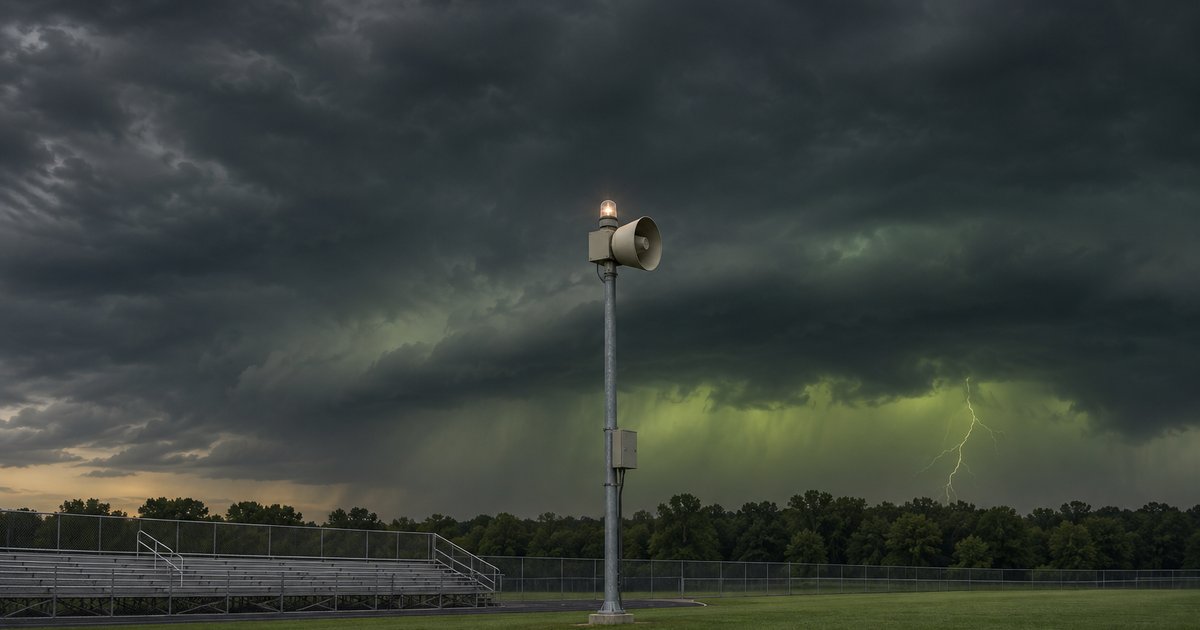
Perry Weather describes a lightning system for an organization: configured zones can alert staff and activate site sirens, strobes and public-address messages. Lightning Tracker gives one iPhone owner a map and alerts for places they choose; it does not carry out a field or school's lightning policy. As of November 12, 2026, this comparison uses each product's own public descriptions, not a side-by-side test. lightningtracker.cc is the website of Lightning Tracker, the iPhone app compared here.
The jobs differ before the first alert
Perry Weather's product page, read November 12, 2026, describes multiple lightning detection zones with recipients chosen by person, team, location or role. Its outdoor warning option adds a siren, strobe lights and a public-address message for people at the site. The company's App Store listing describes user management and policy-based notifications. A coach using the system would be receiving an organization's configured instructions, while people at the field may hear or see a site signal. The exact signal and action still depend on that site's own rules; lightning warning systems at fields shows why horn patterns vary among operators.
Lightning Tracker has a different scope. Its iPhone map shows recent detected strikes, the nearest strike's distance and direction, and its age. A user can choose an alert radius for the current place or saved places. The free version covers the current place; Premium adds up to five saved places. Those settings help one person watch places of interest. A parent can use them to observe a nearby storm, while the school's procedure still governs activity. A personal app does not satisfy an organization's lightning policy.
Compare the published features, as of November 2026
The Perry Weather column below reports what its own pages say, without independent testing. The Lightning Tracker column describes the app. “Not stated” describes only the public pages checked on November 12, 2026.
| Question | Perry Weather, as described by Perry | Lightning Tracker |
|---|---|---|
| Who is it for? | Teams and organizations managing sites, staff alerts and outdoor warning hardware | One iPhone owner watching current and saved places |
| Platforms | iPhone app and web dashboard | iPhone app |
| Strike data | National Lightning Detection Network (NLDN), according to Perry; on-site stations measure other weather conditions | Xweather observations |
| Recent strike map | App Store listing says live radar includes lightning | Live map of recent detected strikes, nearest distance, direction and age |
| Alert setup | Custom detection zones and radius; recipients by role, person, team or location; optional site sirens and strobes | Radius set for each place; alert on entry or notable approach, optional every-strike mode |
| Waiting after a strike | Zone countdown resets after each strike; Perry describes an organizational all-clear via text or siren | 30-minute wait resets after each detected strike in radius; completion asks the user to assess conditions |
| History and logs | Timestamped lightning-delay logs | 30 minutes of strike history free; longer history in Premium |
| Radar | Live radar in app listing; pricing page lists past, present and future radar | Free latest radar frame and Premium timeline on map |
| Storm forecast | Pricing page lists hourly and daily forecasts and meteorologist support | Premium storm forecast: multi-day probabilities, hourly when available |
| Cost model | Organization quote; Perry says annual subscription and hardware lease, with tiers and optional hardware | Free iPhone app with Premium subscription |
| Limits and official warnings | Perry's app listing includes NWS alerts; detection limits: not stated on its lightning feature page (checked November 12, 2026) | Detection can miss or delay strikes; iOS can delay background checks; app does not replace official warnings or local procedures |
Where the lightning observation comes from
Perry Weather says its lightning feed comes from the National Lightning Detection Network, a network of sensors that locates lightning. Its 2026 summer update says the feed covers cloud-to-ground and in-cloud activity. Perry also offers on-site weather stations for other weather conditions. The distinction matters: a station at a field is not, by itself, the source Perry names for lightning locations. How lightning is detected explains what a ground network's sensors measure and why any map can have gaps.
Lightning Tracker's documented strike feed comes from Xweather, while Tomorrow.io supplies its storm forecast and Rainbow.ai its radar. The app's map marks data delay or a gap rather than treating missing observations as quiet. Neither product's feed can be inferred to match the other's dots or timestamps from the pages alone.
All-clear is an organizational message, not a weather verdict
Perry Weather's lightning page says each zone starts a countdown when lightning is detected inside its radius, resets it after a new strike, then sends what Perry calls an “All Clear” alert. The same page describes text and siren versions, and a countdown visible in the app and dashboard. The organization chooses the radius and recipients. Its lightning page says the system can export timestamped records of delays. That gives staff a shared record of what the configured system did, without establishing that a particular field's policy is fulfilled.
Lightning Tracker's 30-minute wait also restarts after a detected strike inside the user's chosen radius, but its completion message reports what was observed and asks the person to assess conditions. It does not declare the storm over. The National Weather Service says thunder is a reason to go indoors; its guidance also says to wait 30 minutes after the last thunder or lightning before returning outside. The 30-minute lightning wait explains why a new observation restarts the count. At a school or venue, the posted procedure and responsible staff govern resumption, regardless of a personal phone's timer.
Which one fits?
Perry Weather fits the job of a school, park or sports organization that needs shared alerts, an outdoor signal and a record of delays, according to its product and pricing pages. Its web dashboard and team roles matter when more than one person coordinates a site. Its siren and strobe option reaches people who are not looking at a phone. Whether a particular installation or policy is suitable is a decision for that organization.
Lightning Tracker fits an individual who wants recent strike observations, a chosen radius at a few places and an iPhone notification. A coach can use a personal map as additional context, but should follow the organization's procedure for stopping and resuming activity. Anyone comparing personal apps can use the lightning alert app checklist; on iPhone, notification and background settings affect when the app can check and deliver alerts. No screen overrides thunder, official warnings or the weather a person can see and hear.
Not a substitute for official weather warnings.
If you hear thunder, seek shelter even if the app shows no nearby strike.
Sources
- Perry Weather, Lightning detection and warning system
- Perry Weather, Perry Weather App Store listing
- Perry Weather, Pricing
- Perry Weather, 2026 summer platform update
- Perry Weather, Historical weather reporting
- National Weather Service, Overview: Lightning Safety