 Lightning Tracker
App Store
Lightning safety
Why wait 30 minutes after the last strike?
November 17, 2026 · 4 min read
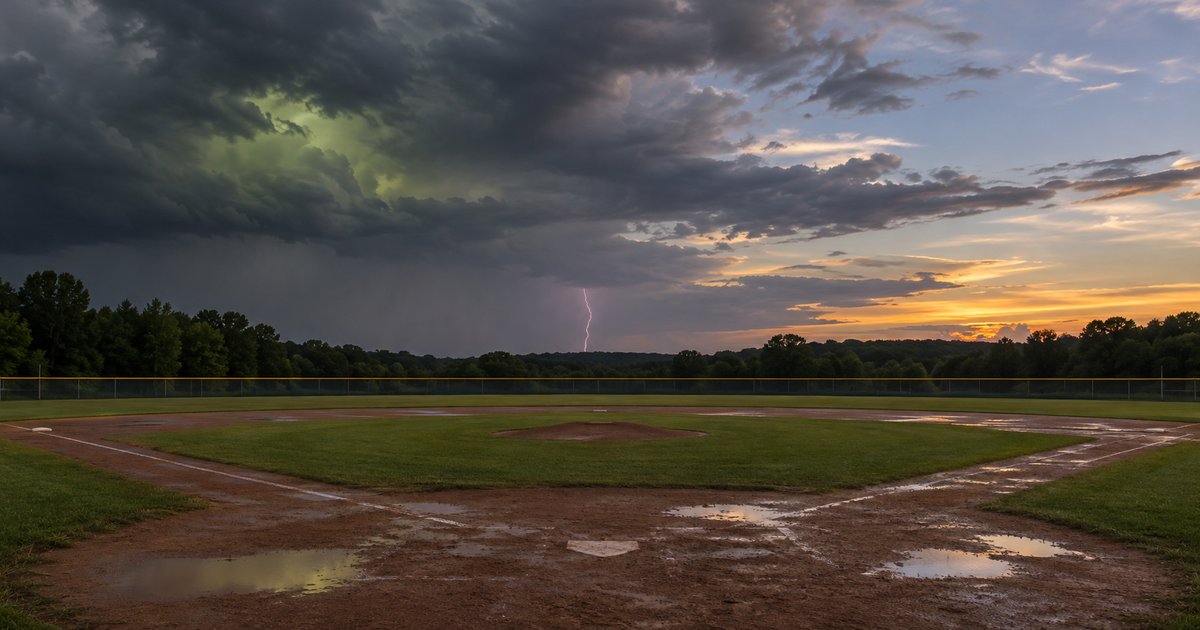
The U.S. National Weather Service puts it in one sentence: wait 30 minutes after the last lightning or thunder before going back outside. It is easy to remember and easy to ignore — the rain stops, the sky brightens, and everyone wants to get back to the game.
What is the 30/30 rule?
The 30/30 rule is the older, two-part version of this advice. A 2002 fact sheet hosted by the National Weather Service Houston office spells it out: when you see lightning, count the seconds until you hear thunder; if the count is 30 seconds or less, the storm is close enough to be dangerous and you should seek shelter. Then wait 30 minutes or more after the last flash before leaving shelter.
The 30-minute wait remains in NWS guidance. The NWS lightning safety overview and outdoor sports page, checked in November 2026, tell people to move at the first thunder rather than wait for a 30-second count. A count of 30 seconds is about six miles at five seconds per mile, while the NWS says “bolts from the blue” can strike 10 to 15 miles from a storm, so waiting for a short count can leave people outside while they are already within reach. Flash to bang explains the counting and its limits.
The end of a storm is still part of the storm
Thunderstorms don't switch off when the rain moves on. The trailing part of a storm and its spreading anvil cloud can keep producing lightning after the heaviest rain has passed. Lightning doesn't stay under the rain either: the National Weather Service notes that strikes can land more than three miles from the center of a storm, and that “bolts from the blue” can strike 10 to 15 miles away from it, as ten lightning myths explains.
So blue sky overhead tells you very little. The question isn't whether it is still raining where you stand, but whether the storm is still producing lightning within reach.
If rain has stopped but you still hear thunder, stay in shelter: the National Weather Service says people often return too soon when rain ends, and its return rule is 30 minutes after the last lightning or thunder. A new rumble restarts the wait even if the sky above you looks clear.
Why the clock restarts
The National Weather Service says the 30 minutes count from the last lightning or thunder, not the first. Every new strike or rumble starts the count again, so a slow-moving storm can keep you inside far longer than half an hour. Coaches can compare the restart rule for school games in lightning delays in youth sports.
Thirty minutes is a practical rule of thumb, not a measurement of when a storm has ended. It gives a departing storm time to move away, and it gives a storm that is only pausing the time to show that it isn't finished.
The number has evidence behind it. The National Athletic Trainers' Association's 2013 position statement on lightning says that waiting 30 minutes after the last thunder or lightning gives 90 to 95 percent confidence that no more lightning will occur. It also cites research showing that deaths happen at about equal rates at the start, the middle and toward the end of a storm, so the fading part of a storm is as deadly as the rest. Event managers can compare how venues signal a return in lightning at outdoor events.
How the return wait in Lightning Tracker works
Lightning Tracker's return wait follows the same logic for each place you watch. It starts after the last detected strike inside your alert radius and restarts with every new one. The timer uses the same alert radius and units as your alerts and the map, so they never disagree.
When the wait ends, the app reports what it observed — no detected strike inside your radius for 30 minutes — and asks you to check conditions for yourself. It doesn't announce that the storm is over, for good reasons:
- Detection networks don't catch every strike, especially weak ones.
- Data can arrive late. The app labels delayed or missing data instead of counting it as quiet.
- iOS decides when the app can check in the background, so a closed app may not see the latest strikes until you open it.
Your ears are part of the system too. If you hear thunder, the 30 minutes start again from that thunder, whatever the timer says.
Habits that make the wait easier
- Decide who calls it. Agree in advance who starts and ends the wait for a practice, a job site or an event, so nobody negotiates in the moment.
- Know your shelter. The National Weather Service points to substantial buildings and hard-topped vehicles. Rain shelters, small sheds and open vehicles don't protect you from lightning, and a covered porch doesn't count either: the NWS tells people to stay off porches and balconies during a storm.
- Don't finish the inning. Many lightning casualties happen because people wait too long to head for shelter. Move as soon as you hear thunder.
- Restart without debate. One more rumble means 30 more minutes. That is the whole rule.
Not a substitute for official weather warnings.
If you hear thunder, seek shelter even if the app shows no nearby strike.
Sources
- National Weather Service, Lightning Safety Overview
- National Weather Service, Lightning Myths
- National Weather Service, Lightning Safety and Outdoor Sports Activities
- National Athletic Trainers' Association, Walsh et al., Position Statement: Lightning Safety for Athletics and Recreation, Journal of Athletic Training, 2013
- National Weather Service Houston/Galveston, Lightning Safety Facts (PDF, May 4, 2002)
- National Weather Service, Lightning Indoors