 Lightning Tracker
App Store
Lightning safety
The 30-30 lightning rule: where it came from and what the NWS says now
November 12, 2026 · 9 min read
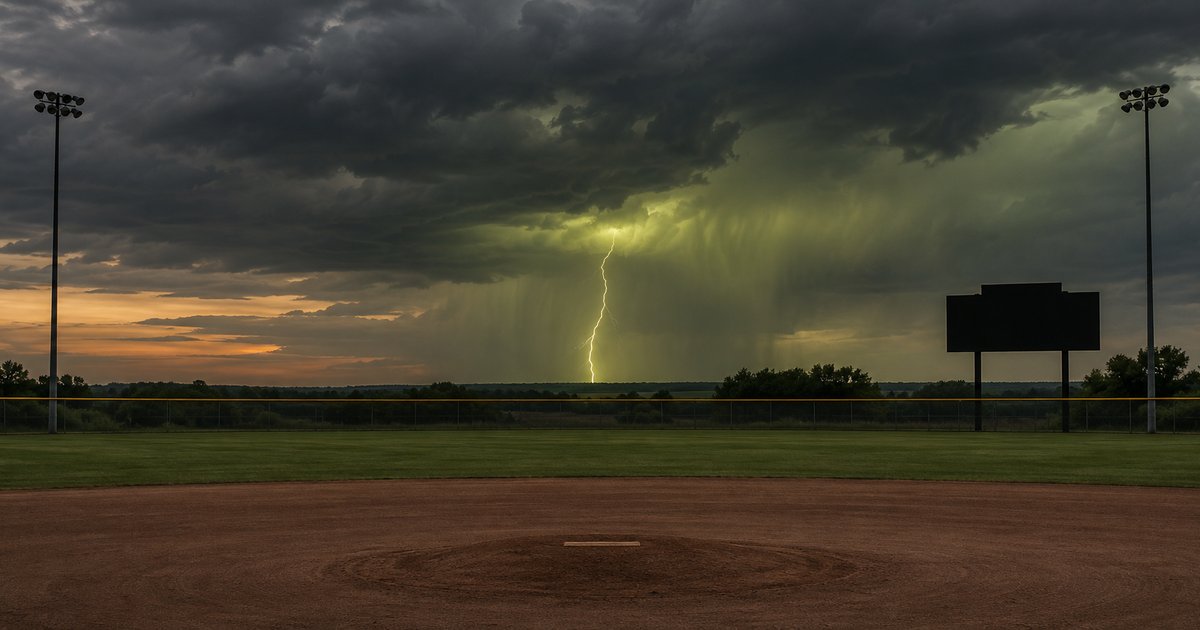
The 30-30 rule was a two-part lightning guide: take shelter when the count from flash to thunder is 30 seconds or less, and wait 30 minutes after the last flash or thunder before going back out. As of November 2026 the National Weather Service (NWS) keeps the 30 minutes, but its current safety pages give thunder, not a 30-second count, as the signal to go indoors.
The Lightning Safety Group agreed on the 30-30 rule in 1998
The Lightning Safety Group first met informally at the American Meteorological Society's annual meeting in Phoenix in January 1998, in response to what its later paper calls inconsistent safety recommendations. Holle, López and Zimmermann published the group's recommendations in the Bulletin of the American Meteorological Society in October 1999, and the paper notes that the group agreed on the text internally and that it was not reviewed externally.
The paper reports a general agreement on a “30-30 rule.” The first 30 is the number of seconds between flash and bang that starts safety precautions, and the second 30 is the number of minutes after the last flash or thunder that sets an “all clear.” At the five seconds per mile the NWS gives for thunder, a 30-second flash-to-bang count puts the flash about 6 miles (10 km) away, the same figure the paper states.
The six miles came from research on how far apart successive flashes land. According to the paper, earlier recommendations used a finding that successive flashes average two to three miles apart, but later work found larger distances in bigger, more organized storms. The NCAA News reported in April 1999 that Holle described a range from two or three miles in smaller storms to nearly six miles in larger ones, and that the National Severe Storms Laboratory (NSSL) took the six-mile boundary as the minimum standard. Holle also said the rule would not cover everything but would handle a large majority of situations, and that a 30-minute wait was already typical in outdoor pool policies, while no policy had covered the front end of a storm.
The paper listed the count's limits in the same text. It warns that ranging by count has severe limitations, in part because it is hard to match the right thunder to its flash, and it says that beyond about 30 seconds lightning is not perceived as very close even though the next flash may reach the observer. It also opens by noting that earlier NOAA publications disagreed on when to go to shelter: one recommended going at the first sound of thunder, a 1985 publication did not say when, and a 1970 publication did not address the decision.
The NCAA put the count into its Sports Medicine Handbook
The NCAA News of April 26, 1999 noted that until the previous year the NCAA had no lightning guidelines, and that Guideline 1D of its Sports Medicine Handbook now covered them. The guideline, the article says, recommended evacuating a site when the weather monitor gets a flash-to-bang count of 30 seconds, about 6 miles, and resuming play 30 minutes after the last flash of lightning or sound of thunder.
NOAA and NWS documents from 2001 to 2006 carried the rule
A NOAA fact sheet dated May 16, 2001 names the 30-30 rule as its main lightning safety guide: 30 seconds or less between flash and thunder means the lightning is close enough to hit you, and the second 30 is the wait before leaving shelter. A second fact sheet, dated May 4, 2002 in its footer and credited there to 45 WS, the Air Force's 45th Weather Squadron, is still hosted on weather.gov. It says the rule “offers the best lightning safety guidance for the general public” and adds that hearing thunder is a good back-up when the lightning cannot be seen.
The NWS lightning safety overview page carried the same rule in Internet Archive captures from August 5, 2002 through August 28, 2006. It told readers to use the rule where visibility is good and nothing blocks the view of the storm, and said that a count of 30 seconds or less meant the storm was within 6 miles and dangerous. The same page also said that anyone who can hear thunder is within striking distance and should seek shelter immediately, so the count sat beside a thunder rule rather than replacing one.
The wait changed within that period. The capture of February 12, 2003 says to wait 30 minutes after the last lightning flash before leaving shelter, and the capture of December 6, 2004 says to wait 30 minutes after the last clap of thunder.
The count left the NWS overview page between August and November 2006
The NWS overview capture of August 28, 2006 still says to follow the 30-30 rule and stop activities at the first clap of thunder. The capture of November 6, 2006 has no count. Its summary tells readers to go to a large building or fully enclosed vehicle at the first clap of thunder and to wait 30 minutes after the last clap, and the capture of May 4, 2007 closes that summary with the line “When Thunder Roars, Go Indoors!” The captures bracket the change. They do not date the decision, and none of the documents reviewed for this page states why the NWS dropped the count.
The thunder message has its own record. A 2005 American Meteorological Society conference paper by Lushine, Roeder and Vavrek lists the slogan in a table that credits it to the 45th Weather Squadron. In a 2012 history of U.S. lightning safety efforts, Mary Ann Cooper, MD, of the University of Illinois at Chicago, writes that the 30-30 rule “was taught for many years,” and that earlier posters, slogans and magnets were abandoned in favor of the single message “When Thunder Roars, Go Indoors.”
Pieces of an explanation appear in documents from before and after the change. The 1999 paper called counting hard to do accurately. The 2005 conference paper, which still taught the 30-30 rule, worked an example: a storm moving 30 mph travels 2.5 miles in the 5 minutes someone needs to reach shelter, which calls for about 13 more seconds of count to leave time to get there, so for rapidly moving storms hearing thunder adds a level of protection. The NWS outdoor sports page says thunder can usually be heard from about 10 miles when there is no background noise, which is about 50 seconds on the count (our arithmetic), and the NWS myths page says “bolts from the blue” can strike 10 to 15 miles from a thunderstorm. Read together, these sources point to a count that is hard to take, that leaves less time as storms move faster, and that falls inside the range at which the NWS says thunder can be heard. None of them says this is why the NWS dropped it.
Dated documents show the thunder signal and the 30 minutes side by side
The table follows the shelter signal and the return wait through dated documents from 1999 to November 2026. The rows from November 2006 on contain no flash-to-bang count in their text.
| Date | Document | Signal to take shelter | Return wait |
|---|---|---|---|
| April 26, 1999 | NCAA News on Guideline 1D | Flash-to-bang count of 30 seconds (about 6 miles) | 30 minutes after the last flash or thunder |
| October 1999 | Lightning Safety Group paper | Less than 30 seconds between flash and bang | 30 minutes after the last flash or thunder |
| December 2000 | NATA position statement | Count approaching 30 seconds; shelter at the first sign of lightning or thunder “highly recommended” | At least 30 minutes after the last thunder or flash |
| August 28, 2006 | NWS overview (archive capture) | Thunder heard; count of 30 seconds or less where visibility is good | 30 minutes after the last clap of thunder |
| November 6, 2006 | NWS overview (archive capture) | First clap of thunder | 30 minutes after the last clap of thunder |
| April 2013 | NATA position statement | Storm edge 5 nautical miles (about 6 miles) from the site | 30 minutes after the last lightning seen and thunder heard; restarts |
| June 2021 | OSHA and NOAA fact sheet | Any thunder, “even a distant rumble” | At least 30 minutes after the last thunder |
| October 2024 | NFHS guidelines | Thunder heard or lightning seen | At least 30 minutes after the last thunder or lightning; restarts |
| November 2026 | NWS safety pages | Thunder heard, or the sky looks threatening | 30 minutes after the last lightning or thunder |
The NWS thunder page still teaches dividing the count by 5 to find the distance in miles, so the count survives as a way to estimate distance. The NWS overview now tells people that if they hear thunder they are likely within striking distance, and the NWS outdoor sports page lists seeing lightning, hearing thunder and threatening skies as stop criteria, with no count among them. The National Federation of State High School Associations (NFHS) sets thunder heard or lightning seen as the trigger in its default policy for youth and school sports, and adds a rule for lightning detection data within 10 miles.
The 30-second count still appears in older and local documents
The 2001 and 2002 fact sheets on weather.gov both still opened in November 2026, and both still carry the count. An NCAA.org news item of September 9, 2011 repeats a count of 30 seconds as the point by which everyone should have left the athletics site and reached shelter, and waiting 30 minutes after both the last thunder and the last flash. The 2000 NATA statement used the count too, and NATA's 2013 statement gives the 5 nautical mile storm-edge distance in the table and no count.
Little League's Appendix A, read in November 2026, lists a count of 30 seconds or less, which it equates with a storm 6 miles away or less, as one of several criteria for halting activities, next to lightning observed and thunder heard. The New York State Division of Homeland Security and Emergency Services lightning page, also read in November 2026, calls the 30-30 rule the principal lightning safety guide, and the same page says to postpone activities promptly when lightning is seen or thunder is heard. Neither page shows a date.
Where one of these documents is the rule a league, camp or employer follows, a count of 40 seconds is 8 miles by the five-seconds-per-mile rule, and the NWS says that if you hear thunder you are likely within striking distance of the storm. Under NWS guidance, then, a count above 30 seconds is not a reason to stay outside while thunder is audible.
The 30-minute wait stayed in the documents that dropped the count
The NWS lightning safety overview, read in November 2026, says to wait 30 minutes after the last lightning or thunder before going back outside. The NATA 2013 statement says that the 30-minute wait after any thunder or lightning gives 90% to 95% confidence that no more lightning will occur, and it restarts the clock for each lightning flash within 5 nautical miles and each time thunder is heard.
Employers of outdoor workers get the pairing in OSHA's June 2021 fact sheet with NOAA: get to shelter when you hear thunder, even a distant rumble, and stay at least 30 minutes after the last sound of thunder.
Lightning Tracker, an iPhone app, starts its 30-minute wait after the last detected strike inside your alert radius and restarts it with every new strike.
Not a substitute for official weather warnings.
If you hear thunder, seek shelter even if the app shows no nearby strike.
Sources
- Holle, López and Zimmermann, Updated Recommendations for Lightning Safety—1998, Bulletin of the American Meteorological Society, October 1999
- The NCAA News, Spring Championships Preview: Enlightening policy, April 26, 1999
- NCAA.org, Institutions reminded to create inclement-weather policies, September 9, 2011
- Walsh et al., National Athletic Trainers' Association Position Statement: Lightning Safety for Athletics and Recreation, Journal of Athletic Training, December 2000
- Walsh et al., National Athletic Trainers' Association Position Statement: Lightning Safety for Athletics and Recreation, Journal of Athletic Training, April 2013
- NOAA, Facts About Lightning (fact sheet, May 16, 2001)
- 45th Weather Squadron fact sheet, Lightning Safety Facts, hosted on weather.gov (footer dated May 4, 2002)
- National Weather Service, Lightning Safety Overview, Internet Archive capture of August 5, 2002
- National Weather Service, Lightning Safety Overview, Internet Archive capture of February 12, 2003
- National Weather Service, Lightning Safety Overview, Internet Archive capture of December 6, 2004
- National Weather Service, Lightning Safety Overview, Internet Archive capture of August 28, 2006
- National Weather Service, Lightning Safety Overview, Internet Archive capture of November 6, 2006
- National Weather Service, Lightning Safety Overview, Internet Archive capture of May 4, 2007
- Lushine, Roeder and Vavrek, Lightning Safety for Schools: An Update, American Meteorological Society conference paper, 2005
- Cooper, A Brief History of Lightning Safety Efforts in the United States, 2012 (hosted by Vaisala)
- National Weather Service, Overview: Lightning Safety
- National Weather Service, Lightning Safety and Outdoor Sports Activities
- National Weather Service, Lightning Science: Thunder
- National Weather Service, Lightning Myths
- Occupational Safety and Health Administration with NOAA, Lightning Safety When Working Outdoors (FS-3863, June 2021)
- National Federation of State High School Associations, Guidelines on Handling Practices and Contests During Lightning or Thunder Disturbances, October 2024
- Little League International, Appendix A: Lightning Safety
- New York State Division of Homeland Security and Emergency Services, Lightning Safety Tips