 Lightning Tracker
App Store
Storm basics
Flash to bang: how far away was that lightning?
November 13, 2026 · 3 min read
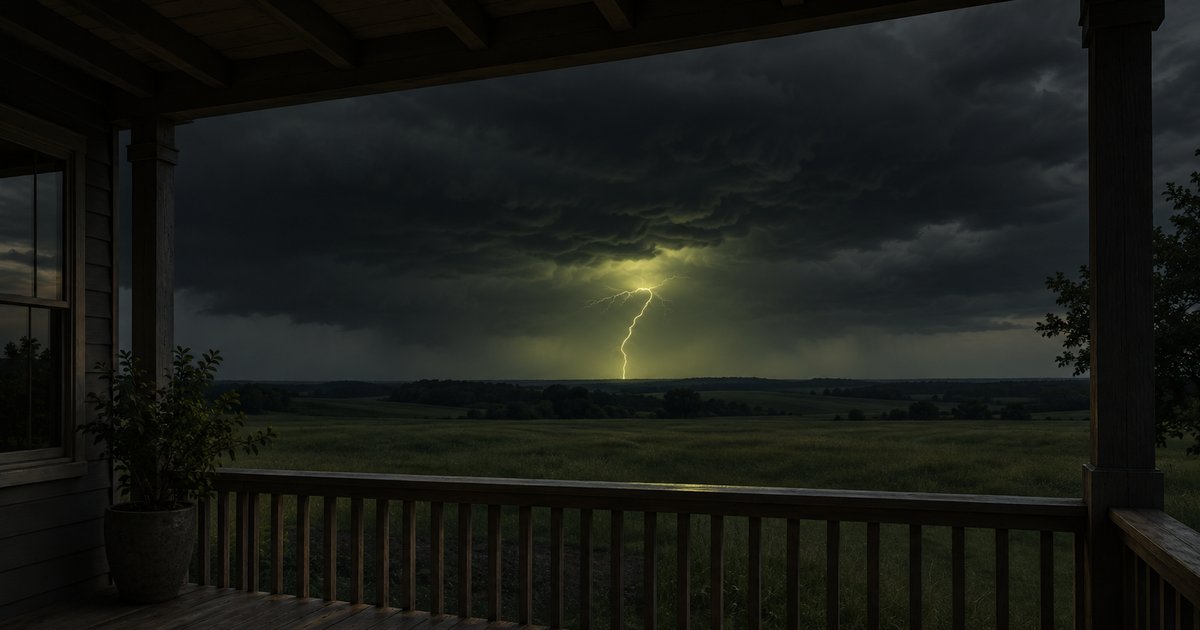
You see the flash, start counting, and somewhere around “seven” the thunder rolls in. That count is real physics: light reaches you almost instantly, while sound takes its time.
Why does lightning come before thunder? The flash and the thunder begin together, but the National Weather Service says light travels about 186,000 miles per second while thunder moves at about 0.21 mile per second. That difference makes the flash reach your eyes first; the sound takes about five seconds to travel a mile.
The math: divide by five
Thunder takes about five seconds to travel a mile, or roughly three seconds per kilometer. Count the seconds between the flash and the thunder and divide by five for an approximate distance in miles. The National Weather Service's own examples: 5 seconds is about 1 mile, 15 seconds about 3 miles.
The speed of sound shifts a little with air temperature, and nobody counts perfectly, so treat the answer as an estimate good to about a mile — not to the block.
Why thunder rumbles
Thunder is the sound of air around the lightning channel being heated — to as much as 50,000 °F, according to the National Weather Service — and expanding violently. A channel can be miles long, and every part of it makes sound at almost the same moment. The nearest part reaches you first and the farthest part last, which stretches one crack into a long roll.
That gives you a second clue. A sharp, sudden crack means the lightning was close. A low rumble usually means it was at least several miles away.
How far thunder carries
Thunder fades with distance, and the air decides how quickly. NOAA's JetStream weather school says that when air temperature falls with height, which is the usual case, thunder can normally be heard up to about 10 miles (16 km) away. When the air warms with height instead, a temperature inversion, the sound is bent back toward the ground and can carry differently. The 10-mile figure is typical rather than fixed. A long silence after a flash means the storm is probably out of earshot, not that it is out of reach. Where to shelter from lightning covers where to go once you hear it.
If you can hear it, you are in range
Thunder usually carries only about 10 miles. Lightning reaches at least that far from its storm: the National Weather Service describes “bolts from the blue” striking 10 to 15 miles away. Put those together and the conclusion is blunt — if you can hear thunder at all, you are likely within striking distance. That is the idea behind the NWS slogan “When Thunder Roars, Go Indoors.”
What is the 30 second rule for lightning?
The first half of the older 30-30 lightning rule said to seek shelter when the count from flash to thunder was 30 seconds or less. At the National Weather Service’s five seconds per mile, that count puts the flash about 6 miles (10 km) away. As of November 2026, the NWS says to get indoors if you hear thunder or the sky looks threatening, so a count above 30 seconds is no reason to stay outside. The 30-minute wait after the last lightning or thunder remains NWS guidance — see why the 30-minute wait matters.
Where counting falls short
- In an active storm it's hard to tell which rumble belongs to which flash.
- Engines, crowds, wind and surf can drown out distant thunder entirely.
- At night you can see flashes far beyond the range of their thunder. “Heat lightning” on a summer evening is ordinary lightning from a storm too far away to hear.
Counting and the app
Lightning Tracker measures distance differently: from the detected location of each strike to your position or saved place, shown in miles or kilometers with a compass direction and the strike's age. It works when it is too loud to hear anything and keeps a record of strikes you never saw.
It has limits of its own — detection, delivery and background refresh all take time, and no network catches every strike — so use both. The app gives you the picture; your ears give you the alarm. To decide how close a strike should be before the app alerts you, see how to choose an alert radius.
Not a substitute for official weather warnings.
If you hear thunder, seek shelter even if the app shows no nearby strike.
Sources
- National Weather Service, Understanding Lightning: Thunder
- National Weather Service, Lightning Safety Overview
- National Weather Service, Lightning Myths
- National Weather Service, Heat Lightning
- NOAA JetStream, The Sound of Thunder
- National Weather Service State College, Spring 2021 Spotter Newsletter
- NOAA, Facts About Lightning