 Lightning Tracker
App Store
Home and everyday
Hair standing up, buzzing: signs that come too late
November 18, 2026 · 7 min read
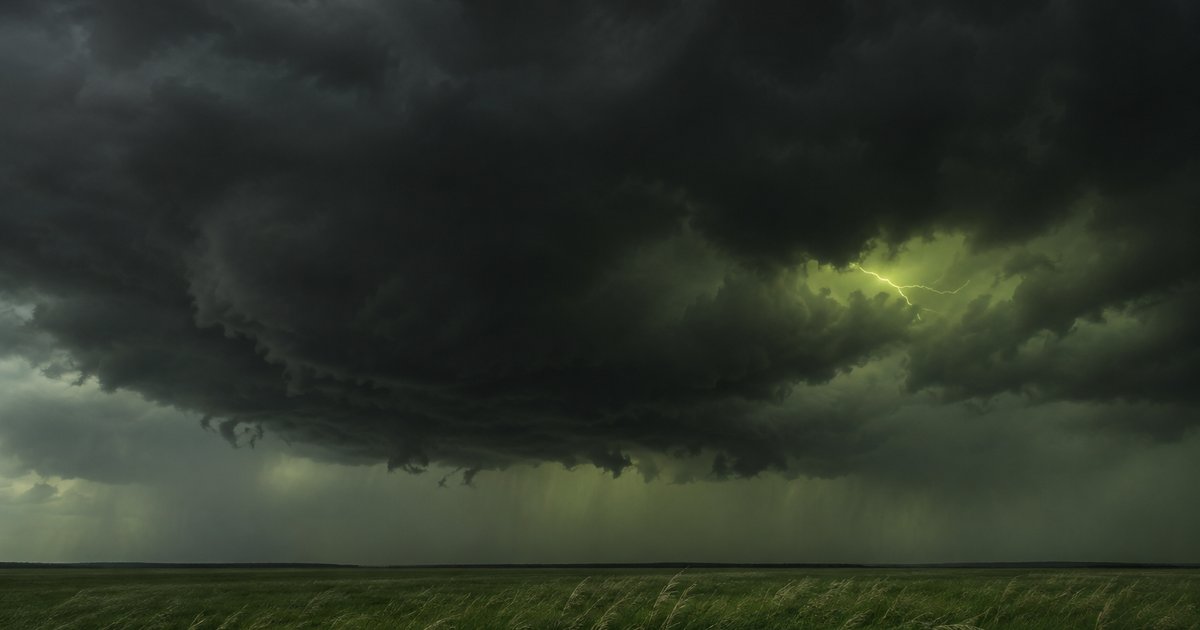
Hair standing on end, tingling skin and a buzz from nearby metal are reported just before some lightning strikes, but they are not a warning to plan around. The National Weather Service cautions against expecting a sign, and a state emergency agency page that relays NWS answers says the signs come only sometimes and leave little if any time to act. The cues worth acting on arrive earlier: the forecast, the clouds, the first thunder and, if you use one, detected strikes on a map.
What to do if your hair starts standing up?
The National Weather Service’s Miami office says hair standing on end may mean lightning is about to strike nearby. If it happens outdoors, follow the NWS national guidance: run to a substantial building or hard-topped vehicle; the National Lightning Safety Council likewise says to move as fast as possible to a better place. The NWS stopped recommending the crouch: it says crouching does not provide a significant level of protection, and that promoting it as a last resort gives the impression a warning sign will come.
The physical signs the sources list
A Maine Emergency Management Agency page, which says the National Weather Service provided its lightning answers, lists five physical signs of an imminent strike. Other pages add to or trim that list, so the table shows which source says what.
| Sign | How the sources describe it | Where it appears |
|---|---|---|
| Hair standing on end | Attributed to charge surging to the top of the head. The 1962 American Alpine Journal calls the effect corona discharge, in which hair crackles and stands up. | Maine agency page, NWS Marquette and Miami office pages, Grand Canyon National Park, American Alpine Journal |
| Tingling skin | Charge possibly moving through the body. | Maine agency page, NWS Miami office page |
| Snapping or crackling sound | Small static discharges where a strike is about to land. The 1962 article traces the crackle to spark streamers at a raised point. | Maine agency page, American Alpine Journal |
| Buzzing metal | In a 1975 account, a ring on a raised hand buzzed loudly enough for everyone to hear. | NBC News, 2013 |
| Static on portable electronics | A sudden increase in static. | Maine agency page only |
| Burning smell | An unusual odor attributed to static discharges in the air. | Maine agency page only |
Two of the six signs rest on a single page each, and the buzzing sign on a single first-person account. None of the current national NWS safety pages or the NSSL pages lists device static or a smell, so what causes a smell before a strike is unknown from these sources. The national NWS pages mention hair standing on end only when explaining why they dropped the crouch.
Why the National Weather Service does not want anyone to wait for them
The National Weather Service warns against treating hair standing on end as a warning, and says why on its page about the crouch: promoting a last-resort action for someone whose hair stands up suggests that a warning sign will come and that something can be done in that moment. The page says such beliefs could make people apathetic about seeking shelter before the threat becomes significant. Four findings from the sources show why that caution is reasonable.
- The signs do not always come. The Maine agency page, relaying NWS answers, says signs appear “sometimes, but not always,” and that there is little, if any, time to act.
- The last step of a strike is too fast to react to. The NOAA National Severe Storms Laboratory (NSSL) says an upward streamer leaves the object about to be struck, and that the stroke forms within a few thousandths of a second, too quickly for the eye to follow.
- The first flash can arrive without thunder first. NSSL notes that when the first flash of a storm is cloud-to-ground, it comes without any warning from earlier thunder.
- A sign is not proof of a strike. The 1962 mountaineering article reports corona discharge on peaks when the nearest thunderclouds seemed too far away to matter, yet advises treating the sound or sight of corona as a danger sign when nothing more precise is available.
None of this means ignoring a sign. If your hair rises while you are outside, the NWS answer is the same as for thunder: run to a substantial building or a hard-topped vehicle. Where to shelter from lightning explains what counts as one.
The 1975 photo from Moro Rock
NBC News reported on July 30, 2013 about a photograph taken on August 20, 1975 on Moro Rock in California’s Sequoia National Park. It shows two brothers, 18 and 12, grinning with their hair standing on end. The older brother, Michael McQuilken, told NBC that a ring he was wearing began to buzz when he raised his hand, loudly enough for everyone to hear. NBC says the photo was taken shortly before the strike.
The group had other cues first, according to the same account: the temperature dropped sharply and it began to hail. They started down the mountain, and the bolt hit partway down. Both brothers survived, but another hiker was killed. John Jensenius, the NOAA lightning safety specialist quoted in the story, said that planning ahead, watching the sky and reaching shelter sooner would mean many fewer deaths and injuries. Who gets struck by lightning has the U.S. numbers behind that point.
The crouch: where the sources disagree
The National Weather Service and the National Lightning Safety Council no longer recommend crouching outdoors, but other pages still describe it, so a reader searching for “what to do if your hair stands up” can find both answers. Those pages say the following.
| Source | Date shown | Position on crouching |
|---|---|---|
| NWS national safety page | Undated | Stopped recommending the crouch in 2008 because it does not provide a significant level of protection. |
| National Lightning Safety Council | April 1, 2025 | Asks educators and weather broadcasters to stop citing it, and says an NLSC and NWS analysis found it had no effect on preventing injuries. |
| NWS Miami office page | Undated | Tells people whose skin tingles or hair stands on end to squat low on the balls of the feet. |
| Wilderness Medical Society summary of its 2014 guidelines | 2014 guidelines | Lists a “lightning position” as a last resort. |
| National Park Service, Yosemite | Updated January 21, 2025 | Describes crouching on your toes with hands over your ears as a last resort. |
| National Park Service, Rocky Mountain | Updated July 3, 2024 | Says to assume the lightning position by crouching if you cannot reach a safer location. |
The NWS national page and the NLSC say what the change rested on: the NLSC cites a joint analysis, and the NWS explains that a channel arriving from directly overhead is very likely to strike a crouching person as well as a standing one. Why the other pages still carry the older advice is unknown. The NLSC’s own advice for someone caught outside is to move as fast as possible to a better place, and the NWS adds that there may be nothing outdoors that lowers your risk significantly, but it lists things to avoid: open areas, the tallest objects and tall or isolated trees. It also says to spread a group out so that some members can help others. Ten lightning myths covers lying flat.
Signals that come before the body reacts
The National Weather Service’s overview shows lightning risk rising as a storm approaches and peaking when it is overhead, and says many people wait far too long to reach shelter, some until the storm is overhead and the rain starts. The cues below come earlier, which is why they are the ones to use.
- The forecast. The NWS asks for a lightning plan and for activities to be cancelled or postponed early when thunderstorms are expected, with conditions monitored so you reach shelter before the weather turns threatening.
- The clouds. The NWS says towering cumulus clouds may be one of the first signs of a developing thunderstorm, and NSSL adds that this stage can bring little or no rain but occasional lightning. The Maine agency page lists high winds, dark clouds, rain, and distant thunder or lightning as early signs, and, for outdoor work, advises against starting anything you cannot quickly stop.
- Thunder. The NWS says that if you hear thunder you are likely within striking distance, even if it is a distant rumble. Flash to bang explains why the count is a reason to move, and the 30-minute rule covers when to come back out.
- Detected strikes. The NWS says “bolts from the blue” can strike 10 to 15 miles (16 to 24 km) from a thunderstorm, so a storm that looks distant can still produce a strike where you stand. For groups and event sites, the NWS recommends proven professional lightning detection that alerts the group as lightning nears.
Where Lightning Tracker fits
Lightning Tracker, an iPhone app, shows recent detected strikes on a live map, with the distance and direction to the nearest one and how many minutes ago it was detected. It alerts you when a strike is detected inside a radius you set for each place, 10 miles (16 km) by default, so the cue is a detected strike rather than a sensation on your skin. How to choose an alert radius shows how to match the radius to the time your people need to reach shelter.
It has limits that matter here. Detection networks miss some strikes, especially weak ones, and data can arrive late; the app marks a delay or a gap instead of treating it as quiet. iOS decides when a closed app may check for new data, and an alert needs a detected strike first, so the first flash of a storm can still come as a surprise. How lightning is detected explains why a map can miss a strike. The app does not replace official warnings or local procedures, and it cannot see your hair stand up: hearing thunder is still the signal to go inside.
Not a substitute for official weather warnings.
If you hear thunder, seek shelter even if the app shows no nearby strike.
Sources
- National Weather Service, The NWS stopped recommending the crouch in 2008
- National Lightning Safety Council, Reiterates Stance on Outdated Outdoor Safety Messaging (PDF, April 1, 2025)
- National Weather Service, Lightning Myths
- National Weather Service, Overview: Lightning Safety
- National Weather Service, Understanding Lightning Science
- National Weather Service, Lightning Safety Outdoors: when a building or vehicle is nearby
- National Weather Service Miami, Weather Safety: Lightning
- National Weather Service Marquette, Lightning Safety
- NOAA National Severe Storms Laboratory, Severe Weather 101: Lightning FAQ
- NOAA National Severe Storms Laboratory, Severe Weather 101: Thunderstorm Basics
- Maine Emergency Management Agency, Lightning Safety
- Alvin E. Peterson, Lightning Hazards to Mountaineers, American Alpine Journal, 1962
- NBC News, Decades later, hair-raising photo still a reminder of lightning danger (July 30, 2013)
- Wilderness Medical Society, A Summary: Practice Guidelines for the Prevention and Treatment of Lightning Injuries (PDF)
- National Park Service, Lightning Safety, Yosemite National Park
- National Park Service, Lightning Safety, Rocky Mountain National Park
- National Park Service, Lightning Danger, Grand Canyon National Park