 Lightning Tracker
App Store
Lightning safety
Where to shelter from lightning — and where not to
November 14, 2026 · 3 min read
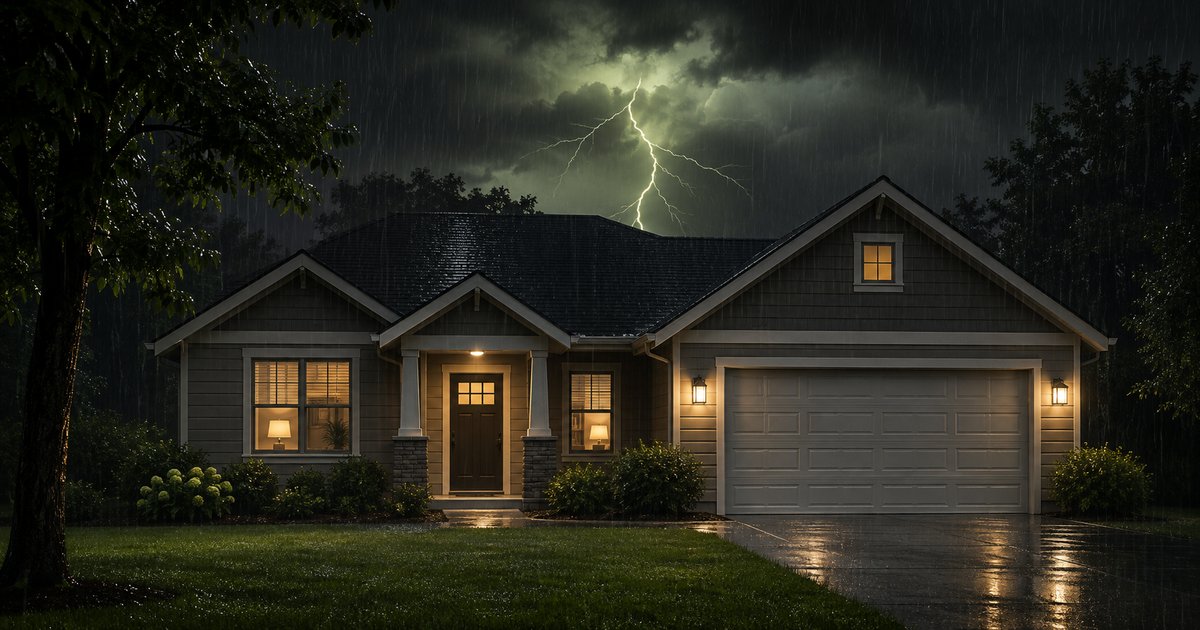
When thunder starts, the hard question isn't whether to move but where to go. The U.S. National Weather Service answer is short: a substantial building or a hard-topped metal vehicle. Most of what people reach for instead — a picnic shelter, a tent, a dugout, a big tree — feels like cover without giving any.
Two kinds of shelter
A substantial building — a home, office, school or shop with wiring and plumbing. The National Weather Service says such buildings give the greatest protection. When lightning hits one, the current has paths through the wiring, pipes and structure to the ground, around the people inside. That is also why the indoor rules below keep you off those paths.
A hard-topped metal vehicle with the windows closed. It is the fallback when no building is close. The protection comes from the outer metal shell, not from rubber tires: the NWS is blunt that tires do nothing for someone leaning against the car outside. Open vehicles don't count, the CDC says. NOAA's JetStream guide adds that a convertible gives no protection even with its top up, and the National Lightning Safety Council says motorcycles, bikes and golf carts should be avoided when thunderstorms are around. A struck car can still be damaged; the NWS lists melted antennas, ruined electronics, a shattered rear window, destroyed tires and even fire. A travel trailer needs its own check: RVs and campers in a thunderstorm distinguishes metal shells from fiberglass and pop-ups.
Cover that doesn't protect
- Picnic and rain shelters, dugouts, small sheds. The NWS sports guidance says small outdoor buildings like these don't protect you. A roof keeps rain off; it does not give lightning a path around you.
- Tents. Big or small, a tent is fabric and poles: it keeps you dry and nothing more. Campers need a building or a hard-topped vehicle as well.
- Porches, balconies, carports and open garages. They are part of a building but still open to the storm, and the NWS indoor guidance tells you to stay off them.
- Trees. Being underneath a tree is the second leading cause of lightning casualties, according to the NWS. Current can jump from a struck tree to a person a foot or two away — a side flash.
- Cliffs and rock overhangs. The NWS says never to use them for shelter.
Once you're inside
A building protects you best when you stay away from whatever carries current through it. The National Weather Service lists the habits:
- Stay off corded phones. Mobile and cordless phones are fine.
- Don't touch computers, TVs or anything plugged into an outlet.
- Avoid plumbing: no showers, baths, hand-washing or dishes until the storm has passed.
- Keep away from windows and outside doors.
- Don't lie on concrete floors or lean on concrete walls — the metal reinforcement inside them can carry current.
Conduction through wires, pipes and metal accounts for most indoor lightning casualties, the NWS notes. None of this is a reason to stay outside; it is how to get the full benefit of being in.
If you're caught far from shelter
The NWS is clear that no place outside protects you when a thunderstorm is in the area. Everything below only lowers the risk while you keep moving toward a building or a car:
- Get off hills, ridges and peaks.
- Get out of and away from ponds, lakes and other water.
- Stay away from things that conduct electricity: wire fences, power lines, metal bleachers and railings.
- Don't shelter under an isolated tree, and don't lie flat. Lying flat increases your exposure to ground current, which causes the most lightning deaths and injuries. Crouching doesn't make you any better off outdoors either.
Plan the walk before the storm
The best shelter is the one you can reach in time. For each place you watch — a field, a job site, a campsite — decide in advance which building or vehicle everyone goes to and how long the walk takes. That walk is what your alert radius should buy you; How to choose an alert radius shows how to match the two.
Lightning Tracker alerts you when a detected strike reaches the radius you set and starts a return wait after the last strike inside it. Once you're in, stay in until 30 minutes have passed without lightning or thunder — why the wait restarts with every strike.
Not a substitute for official weather warnings.
If you hear thunder, seek shelter even if the app shows no nearby strike.
Sources
- National Weather Service, Lightning Safety Overview
- U.S. Centers for Disease Control and Prevention, Frequently Asked Questions About Lightning
- National Weather Service, Lightning Safety and Outdoor Sports Activities
- National Weather Service, Lightning and Cars
- National Weather Service, Lightning Indoors
- National Weather Service, Lightning Tips
- National Weather Service, Lightning Myths
- National Weather Service, Five Ways Lightning Strikes People
- NOAA JetStream, Lightning Safety
- National Lightning Safety Council, Lightning and Cars