 Lightning Tracker
App Store
Lightning safety
Thunderstorm asthma: what it is, who is at risk and where to check
November 19, 2026 · 8 min read
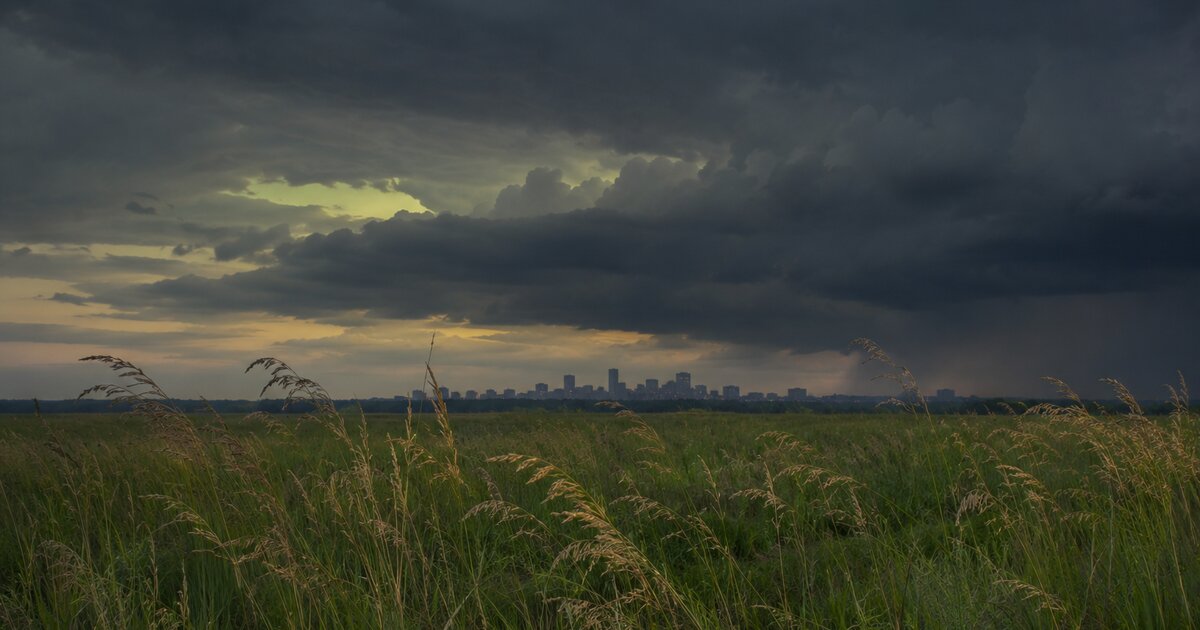
Thunderstorm asthma is a surge of asthma symptoms that health agencies link to a thunderstorm arriving when grass pollen is high. In Victoria, Australia, the Department of Health publishes a three-day risk forecast for it on VicEmergency from 1 October to 31 December each year; in England, the UK Health Security Agency explains the condition on a guidance page.
What is thunderstorm asthma?
The Victorian Department of Health’s Better Health Channel says in a page reviewed on 27 October 2026 that thunderstorm asthma can occur when there is a lot of grass pollen in the air and a specific kind of thunderstorm. When many people develop asthma symptoms over a short period of time under those conditions, the page calls it epidemic thunderstorm asthma. The UK Health Security Agency (UKHSA), in guidance published on 7 August 2025, defines the term more broadly: thunderstorm activity linked to an increase in people reporting asthma symptoms and seeking medical attention for breathing issues.
NSW Health, on a fact sheet current as of 25 September 2025, lists wheeze, chest tightness, difficulty breathing and cough as the symptoms and says they can escalate very quickly and may become life threatening. The same fact sheet calls thunderstorm asthma uncommon and says it requires very specific weather conditions. Victoria’s Department of Health describes epidemic events as relatively rare.
How does a thunderstorm turn pollen into a problem?
UKHSA says thunderstorm asthma is widely recognized as a potential public health risk in the UK but is “not fully understood”, and it sets out the likely sequence. Thunderstorms form when warm, wet air at the surface rises quickly and cooler air flows down toward the ground. The resulting strong surface winds pick up pollen grains and fungal spores, which are then thought to be pulled up into the storm, where excess moisture in the clouds breaks them into smaller granules. Rain then brings the particles down to ground level, where they can be inhaled deep into the lungs.
The Victorian and New South Wales health departments describe the same idea from the ground. Better Health says some grass pollen grains burst open and release tiny particles that are concentrated in the wind gusts that come just before a thunderstorm; the particles are small enough to be breathed deep into the lungs. NSW Health says moisture during a thunderstorm is thought to swell pollen grains until they burst, and that airflows in some thunderstorms concentrate the fragments in high numbers at ground level. NSW Health adds that the cause is not fully understood.
Victoria’s Department of Health says its forecasting system combines a forecast of “a certain uncommon type of thunderstorm” with a forecast of grass pollen levels, and that the associated weather includes wind changes and strong gusts typically observed with thunderstorms. The department names rye grass as the specific grass thought to be involved in Victorian events.
Who is at risk?
Better Health lists three groups at risk: people with current or past asthma, people with undiagnosed asthma, and people with springtime hay fever, which in south-east Australia is often triggered by grass pollen. It says the risk is even higher for people who have both asthma and hay fever, especially if the asthma is poorly controlled. Better Health also says that even a person who does not think they have asthma should not ignore wheezing or shortness of breath and should check with a GP.
UKHSA says everyone can be at risk but young adults under 30 are more likely to be affected, and that there is some limited evidence that people with asthma, diagnosed or undiagnosed, and people with hay fever are also more at risk. The Melbourne investigation published in The Lancet Planetary Health in June 2018 reports that among 1,435 people who answered a questionnaire after going to an emergency department in the 2016 event, only 28% had current doctor-diagnosed asthma. The same paper reports that all 35 people admitted to an intensive care unit had asthma, and its authors name current doctor-diagnosed asthma among the factors that portended life-threatening attacks, such as those needing intensive care.
When and where does it happen?
Better Health says Victoria’s grass pollen season usually runs from 1 October to 31 December. The Department of Health adds that Melbourne grass pollen data collected for more than 20 years show the highest levels starting, on average, in mid-October and fluctuating daily until the end of December, with grasses starting to die off by the end of November. NSW Health puts the higher-risk period in New South Wales from October to December and names southern NSW and the Riverina as the areas of greatest risk, with events recorded west of the dividing range from Tamworth to Albury. Better Health also records a thunderstorm asthma event in Albury Wodonga on 6 November 2024, when a thunderstorm and grass pollen combined.
In England, UKHSA says thunderstorm asthma has been observed since the 1980s, with a notable event in Birmingham in 1983, and that high levels of pollen or fungal spores generally follow “a period of warm and humid days”. UKHSA’s surveillance of NHS 111 calls, GP consultations, emergency department attendances and ambulance services detected several potential episodes in June 2021 and again on 11, 12 and 18 June 2022. Public Health Wales describes the condition as a mix of high pollen or fungal spore levels and a thunderstorm, and says it can affect people of any age.
What happened in Melbourne on 21 November 2016?
The Lancet Planetary Health investigation describes the Melbourne event of 21 November 2016 as the world’s largest epidemic thunderstorm asthma event. Its authors report that grass pollen concentrations that day were extremely high, above 100 grains per cubic meter of air. At 6 p.m. Australian Eastern Daylight Time a gust front crossed Melbourne, dropping the temperature by 18 °F (10 °C), raising humidity above 70% and concentrating particulate matter. Within 30 hours there were 3,365 excess respiratory-related presentations to emergency departments, which the paper expresses as a 672% excess.
Ten people died. UKHSA says the event overwhelmed the city’s ambulance system, and a media release from Victoria’s Premier said on 1 October 2026, a decade after the event, that it caused breathing difficulties for thousands and contributed to the deaths of 10 Victorians. The Premier’s release says the government has since invested in and expanded the risk forecast system.
Where does the official forecast come from?
Victoria’s Department of Health publishes an epidemic thunderstorm asthma risk forecast on VicEmergency, the state’s emergency website and app, from 1 October to 31 December each year. The forecast covers three consecutive days, today, tomorrow and the day after, for Victoria’s nine weather districts, on a three-color scale. Its weather input comes from the Bureau of Meteorology’s numerical weather models and forecasters, and data from a network of seven automated pollen counters help verify and refine its pollen forecasting model. The forecast for the current day is updated once, at about 12:30 p.m.
| Color | Level | The department’s description |
|---|---|---|
| Green | Low | The elements necessary for an epidemic thunderstorm asthma event are not expected and an event is unlikely. |
| Orange | Moderate | One of the necessary elements may be present, a high pollen forecast or a severe thunderstorm with strong winds, and there is a moderate chance of an event. |
| Red | High | A high pollen forecast and severe thunderstorms with strong winds are likely to be present, increasing the risk of an event. |
The department says the forecast is not a formal warning: a higher forecast does not mean an event is certain, and a lower forecast does not mean one will not happen. It also says the science of this forecasting is new, so there is an element of uncertainty. On a high-risk day the department issues advice and warnings on the VicEmergency warning platform, and a watch zone created in the VicEmergency website or app sends automatic warnings for that area.
| Place | Body | What it publishes | Season it names | Source |
|---|---|---|---|---|
| Victoria | Department of Health | Three-day risk forecast (low, moderate, high) on VicEmergency | 1 October to 31 December | Department of Health, updated 16 June 2026 |
| New South Wales | NSW Health | Fact sheet; a link to a Sydney pollen count and forecast recorded at Campbelltown from September to December | October to December is a higher-risk period | NSW Health, current as of 25 September 2025 |
| England | UKHSA | Guidance page; surveillance of NHS 111 calls, GP consultations, emergency departments and ambulance services | June events in 2021 and 2022 | UKHSA, 7 August 2025 |
| Wales | Public Health Wales | Advice page with tips for people whose asthma is set off by thunderstorms | None named | Public Health Wales, undated |
What do health departments say to do?
Better Health says it is important for everyone in the community to know asthma first aid, and that triple zero (000) should be called immediately if the person is not breathing, if their asthma suddenly becomes worse or is not improving, if the person is having an asthma attack and no reliever medication is available, or if the person is unsure whether it is asthma.
For people at increased risk on days with a higher forecast, Victoria’s Department of Health lists avoiding exposure to any storms that may emerge, especially the wind gusts that precede them: going inside, closing windows and doors and turning off any air conditioners that bring outside air inside. It also lists having a reliever available and reminding oneself of the asthma action plan and the four steps of asthma first aid. Victoria’s Chief Health Officer said on 1 October 2026 that “Thunderstorm asthma can be life-threatening” and that people at risk should go indoors during thunderstorms, especially when gusty winds arrive before the storm. UKHSA’s infographic lists taking asthma medication, managing hay fever and staying indoors during storms, and Public Health Wales lists staying indoors before, during and after thunderstorms with doors and windows closed to stop pollen getting indoors.
Better Health lists Nurse-on-Call, 1300 606 024, open 24 hours, for expert health information and advice.
How does thunderstorm asthma relate to lightning?
The Department of Health’s forecast rates the risk of an asthma event, not of lightning. The Bureau of Meteorology says all thunderstorms are dangerous because they produce lightning, and that in Australia it does not warn about all thunderstorms, only those classified as severe or very dangerous, so the Department of Health’s forecast and the Bureau’s warnings answer different questions. Both sets of guidance point indoors: the Bureau’s advice for anyone caught outdoors in a thunderstorm begins “Move to shelter immediately”. In the UK, the Met Office says that when you hear thunder you are already within range of where the next ground flash may occur.
Lightning Tracker is an iPhone app that shows recent detected lightning and does not replace official warnings; Victoria’s thunderstorm asthma risk forecast is the Department of Health’s, on VicEmergency.
Not a substitute for official weather warnings.
If you hear thunder, seek shelter even if the app shows no nearby strike.
Sources
- UK Health Security Agency and Centre for Climate and Health Security, Thunderstorm asthma
- Better Health Channel (Victorian Department of Health), Thunderstorm asthma
- Victorian Department of Health, Epidemic thunderstorm asthma risk forecast
- Premier of Victoria, Protecting Victorians From Thunderstorm Asthma
- NSW Health, Thunderstorm asthma
- Public Health Wales, Storms
- The Lancet Planetary Health, The Melbourne epidemic thunderstorm asthma event 2016: an investigation of environmental triggers, effect on health services, and patient risk factors
- Bureau of Meteorology, Severe weather and coastal hazard warning services
- Met Office, Thunder and lightning guidance