 Lightning Tracker
App Store
Lightning safety
Lightning and thunderstorms in the UK: what to do
November 19, 2026 · 5 min read
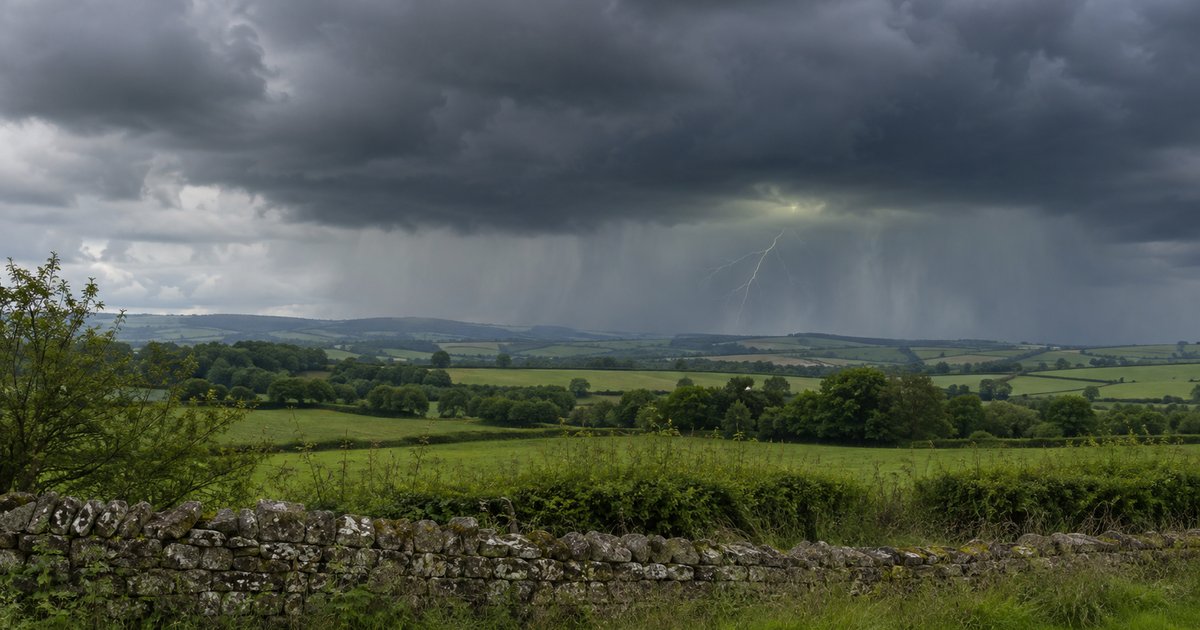
If you hear thunder in the UK, stop the outdoor activity and move into an enclosed building or a metal-roofed car. The Met Office says thunder means the next ground flash can reach you even when a storm is still as far as 16 km (10 miles) away. Check Met Office warnings before an outing, but do not wait for a warning, rain or a map marker before taking shelter.
Before you go out
The Met Office advises checking its forecast before water or outdoor activities and changing the plan if thunderstorms are forecast for your area. Its UK weather warnings page is the official place to check a warning for your location. A warning forecasts possible impacts; it does not report that a bolt has landed nearby. As of November 2026, the Met Office says warnings can be issued up to seven days ahead and may change as the forecast develops.
The Met Office says UK thunderstorms can happen in any season. Summer storms are more likely to bring large hail, sudden gusts and torrential rain, and their effects can be highly localised. A nearby town can have quite different rainfall over a short distance. That matters when deciding whether to walk, cycle or drive: the same storm can bring poor visibility, standing water and lightning. Allow time to reach an enclosed building before a storm arrives rather than waiting for rain at your exact location.
Is there a thunderstorm near me tonight?
For a “thunderstorm tonight” check, use the Met Office's UK weather warnings page and read the affected area and period of any warning for your location. Check its forecast before an outdoor plan, then take shelter if thunder is audible even when no map marker appears nearby.
When you hear thunder
The Met Office says that hearing thunder puts you within range of a possible ground flash; lightning can strike as far as 16 km (10 miles) from the centre of a storm. Stop the outdoor activity and go into an enclosed building or a car with a metal roof and frame. Public Health Wales says no outdoor location protects you during lightning. A tent, isolated tree or open-sided shelter is therefore no replacement for an enclosed lightning shelter.
The Met Office tells people on open water to return to shore immediately and people on hills, ridges or peaks to get to lower ground. Golf, rod fishing and boating are activities it specifically names for avoidance during a storm. On a beach, the route to a building or enclosed car may take longer than it appears; leaving the beach at thunder matters more than watching for rain. If you are camping, move out of the tent and follow the same shelter rule; tent poles and campsites do not make an exposed field protective.
The Met Office describes crouching low with minimal ground contact as a last resort if you are caught in an exposed place with no shelter. It also says not to lie flat. This position does not replace reaching a building or enclosed car. Public Health Wales likewise says there is no protected place outdoors during lightning. If your hair stands on end, the Met Office says to take that low position immediately, but do not wait for that sign before seeking shelter.
Inside a building or car
Public Health Wales advises staying off corded phones and equipment connected to an electrical outlet during lightning. It also advises avoiding showers, washing dishes, windows and doors. The Met Office says landline telephone lines can conduct electricity and advises avoiding a landline except in an emergency. Before the thunderstorm, it advises unplugging non-essential appliances that do not already use surge protection. These precautions are for the storm indoors; they do not justify going back outside to disconnect equipment.
The Met Office advises staying in a car with the windows up when caught in thunder and lightning. In most cars with a metal roof and frame, the frame carries current around the occupants. Fabric-roof convertibles do not offer the same protection. The Met Office warns that current can travel through metal interior parts and electronic systems, so avoid touching them. Its advice on cars and road conditions in thunderstorms also accounts for gusts, hail and reduced visibility: slow down, and if severe hail makes visibility poor, pull over and remain in the vehicle.
Flooding can change the shelter decision. The Met Office warns against underground or low-lying car parks, basements and underpasses because they may flood rapidly. Public Health Wales also warns of flash flooding and downed power lines after storms. Choose a building or vehicle without crossing floodwater or approaching broken cables.
Read the UK warning, then judge the weather around you
Met Office warning colours combine the likelihood of an impact with how serious that impact may be. Yellow does not describe a fixed amount of lightning: it can cover moderate impacts that are likely or more severe impacts with lower certainty. Amber signals an increased likelihood of impacts that may disrupt plans; red means dangerous weather is expected and action is needed. Open the individual warning to read “What to expect,” “What should I do,” the affected area and the impact-likelihood matrix. The Met Office says its warning page lets readers inspect warnings over the next seven days.
| Color | What the Met Office says it signals |
|---|---|
| Yellow | Moderate impacts that are likely, or more severe impacts with lower certainty; not a fixed amount of lightning |
| Amber | An increased likelihood of impacts that may disrupt plans |
| Red | Dangerous weather is expected and action is needed |
A warning area is not a line around every thundercloud. The Met Office says thunderstorm effects can be very localised, so read the warning and watch the conditions where you are. The official UK weather warnings page provides the changing forecast; the separate Met Office lightning map is a destination for observations. Neither should delay the simple action triggered by thunder. For a fuller account of what detections can miss, compare ways to check nearby lightning.
As of November 2026, Lightning Tracker works in the UK and shows recently detected strikes and distance to the nearest detection in its English-language iPhone app; use Met Office warnings for official advice.
After the storm or an injury
The Met Office advises avoiding downed power lines and broken cables after a storm. Public Health Wales also cautions against walking close to damaged walls, buildings and trees. Wait until conditions permit a clear route before continuing your journey. A break in rain alone does not establish that lightning has ended; listen and look for more thunder and lightning before going back outdoors.
The Met Office says a lightning strike can affect a person's heart and cause severe burns. Public Health Wales says a struck person can be touched and given first aid without electrocuting the rescuer. The NHS says to call 999 for a life-threatening emergency; its call handler may give first-aid instructions while help is on the way. Give the call handler the location and what happened, and follow their instructions.
Not a substitute for official weather warnings.
If you hear thunder, seek shelter even if the app shows no nearby strike.
Sources
- Met Office, Thunder and lightning guidance
- Met Office, Three lightning tips
- Met Office, Weather warnings guide
- Public Health Wales, Storms
- NHS, When to call 999