 Lightning Tracker
App Store
Places and activities
Melbourne thunderstorms and lightning: spring storms and official checks
November 19, 2026 · 4 min read
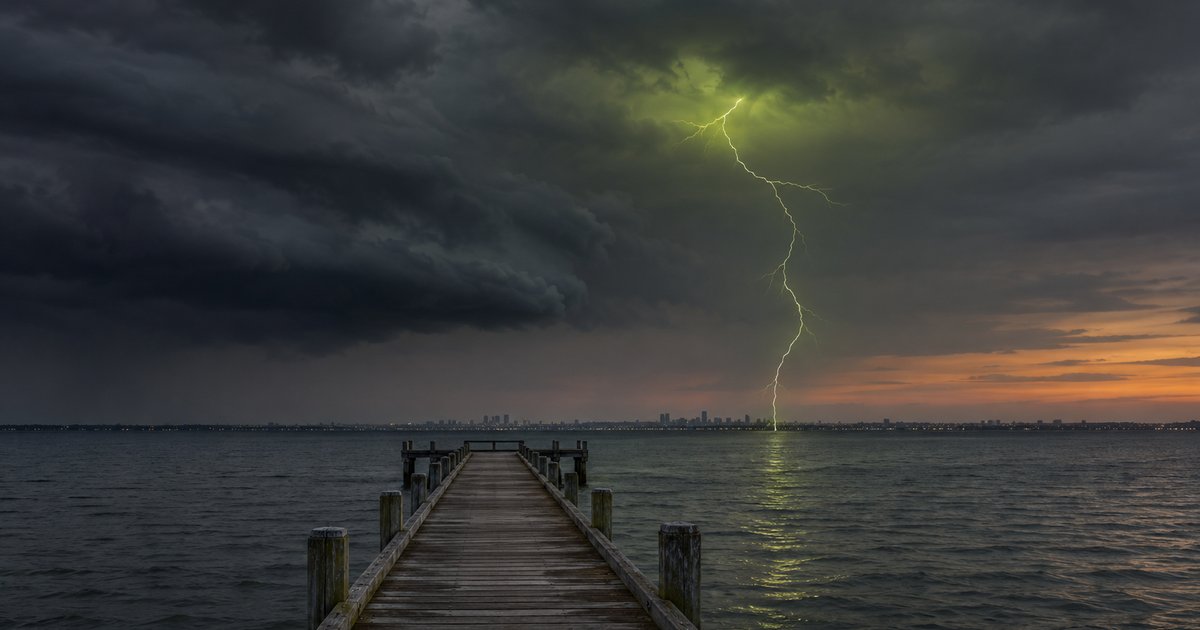
Melbourne gets thunderstorms most often in the warmer months, although active fronts can bring them in winter and spring, according to the Bureau of Meteorology’s thunder-day climate study. For an outdoor plan, check the Bureau’s Melbourne forecast and Victorian warnings, then VicEmergency for emergency messages; neither a rain-radar image nor an empty strike map is an all-clear.
When does Melbourne get thunderstorms?
The Bureau of Meteorology’s thunder-day climate study says storms are most frequent in Victoria’s warmer months, with some winter–spring storms tied to active cold fronts. Its Melbourne histogram appears in the study, but it is a long-term pattern, not a prediction for a particular day. The Bureau’s August 2026 explanation of Melbourne weather adds a local reason for abrupt changes: warm northerly winds can precede a cold front from the ocean, followed by wind, rain and sometimes thunderstorms. A sunny morning can therefore tell you little about the afternoon without a fresh Bureau forecast.
The Bureau’s Storm Spotters’ Handbook says many severe summer thunderstorms in Victoria accompany cool changes from the west or southwest; winter severe storms can accompany vigorous cold fronts. “Severe” here describes the storm’s damaging weather, not a separate kind of lightning. The Bureau’s thunderstorm explainer defines a thunderstorm by thunder and lightning and says storms can also bring heavy rain, hail and wind gusts. A normal cell often lasts around 30 minutes to an hour, while a severe system can last much longer. Those general durations cannot set a return time for a Melbourne park or playing field.
Which official checks matter for Melbourne?
The Bureau’s Melbourne Area Weather page links the city forecast to its Victoria warnings. Its Victorian Warnings Summary is the direct warning route; open the warning itself for its issue time, affected area, hazards and instructions. A broad state listing does not mean every suburb has the same exposure. Before a trip outside the metropolitan area, search the Bureau forecast for the actual destination rather than treating the city-center forecast as statewide.
VicEmergency’s incidents and warnings service gathers agency emergency information for Victoria. Its 2023 website guide says the feed includes Bureau information and lets readers filter by incident type or create a watch zone. This is a separate emergency-information route alongside the Bureau’s forecast and warnings. VicEmergency itself advises checking more than one emergency source.
VicEmergency’s public legend, inspected in November 2026, describes Thunderstorm Tracker as a storm-cell overlay and rain radar as a rainfall display. Its 2019 help article adds that Tracker shows radar-derived ovals and projected positions. Neither overlay plots individual detected flashes. The distinction between rain radar and detected lightning matters especially when a rain image looks quiet. On any strike display, inspect age and coverage before interpreting a blank area; the age and gaps in a lightning map can change what its dots mean.
What do local outdoor rules say?
Melbourne University Soccer Club’s player-welfare page, checked in November 2026, adopts a 30/30 rule. It says to suspend outdoor activity when the interval from a visible flash to thunder is 30 seconds or less, and to wait 30 minutes after the last rumble before resuming. The club is based at Princes Park in Carlton North, making this an actual Melbourne organizer rule rather than a generic warning. Football Victoria’s competition reminder also says its match official may delay or abandon a fixture when lightning makes conditions dangerous.
Tennis Australia’s October 2022 Extreme Weather Policy gives event officials a 10 km trigger for suspending play and moving players, officials, coaching staff and guests from the area, with a large, structurally sound building given as an example of where to go. These are sport-organization rules for their events, rather than a universal public threshold. If you are in a Melbourne park without an organizer, hearing thunder is a reason to leave exposed ground for a substantial building or hard-topped vehicle; an open shelter or tree is not equivalent. Parks Victoria says to check changed conditions and the individual park page before a visit, and to obey closures and ranger directions. Its guidance covers the wider park trip, including damage and closure after storms.
Melbourne University Soccer Club’s return clock starts after the last thunder, not after the rain stops. The 30-minute return rule is useful context for an outdoor plan, but organizers may keep an activity stopped longer. A campsite needs the same advance thought about the route to substantial shelter: a tent does not protect campers from lightning.
Why is thunderstorm asthma a separate warning?
The Victorian Department of Health says Melbourne’s 21 November 2016 epidemic thunderstorm asthma event caused a sharp surge in respiratory presentations and contributed to 10 deaths. The department now runs a separate epidemic thunderstorm asthma risk forecasting program. That health warning concerns a different hazard from a lightning strike or severe-thunderstorm warning; consult the Department of Health’s program for its own information.
Melbourne quick links
For a Melbourne outing, start with the Bureau’s city forecast, then open its Victoria warning details; check VicEmergency for agency emergency messages and any park or sport organizer instructions that apply to your venue. These links lead to the publishers’ own changing products. The seasonal information above explains why storms occur but cannot say whether lightning will occur at your location on a given day.
Lightning Tracker is an iPhone app that works in Melbourne, showing recent detected strikes and alerting for a radius you set, but it does not replace Bureau warnings or local procedures.
Not a substitute for official weather warnings.
If you hear thunder, seek shelter even if the app shows no nearby strike.
Sources
- Bureau of Meteorology, Thunderstorms and Lightning
- Bureau of Meteorology, Why Melbourne can have 4 seasons in one day
- Bureau of Meteorology, Storm Spotters’ Handbook: Thunderstorms
- Bureau of Meteorology, Thunderstorms
- Bureau of Meteorology, Melbourne Area Weather
- Bureau of Meteorology, Victorian Warnings Summary
- VicEmergency, What are the features of the VicEmergency website?
- VicEmergency, What are map overlays and how do I use them?
- VicEmergency, Incidents and Warnings
- VicEmergency, About VicEmergency
- Melbourne University Soccer Club, Player Welfare Policies
- Football Victoria, Weather Conditions – Key Rules Reminder
- Tennis Australia, Extreme Weather Policy
- Parks Victoria, Safety in nature
- Victorian Department of Health, Epidemic Thunderstorm Asthma Program