 Lightning Tracker
App Store
Lightning safety
The 2022 Lafayette Square lightning strike: what the records say
November 19, 2026 · 6 min read
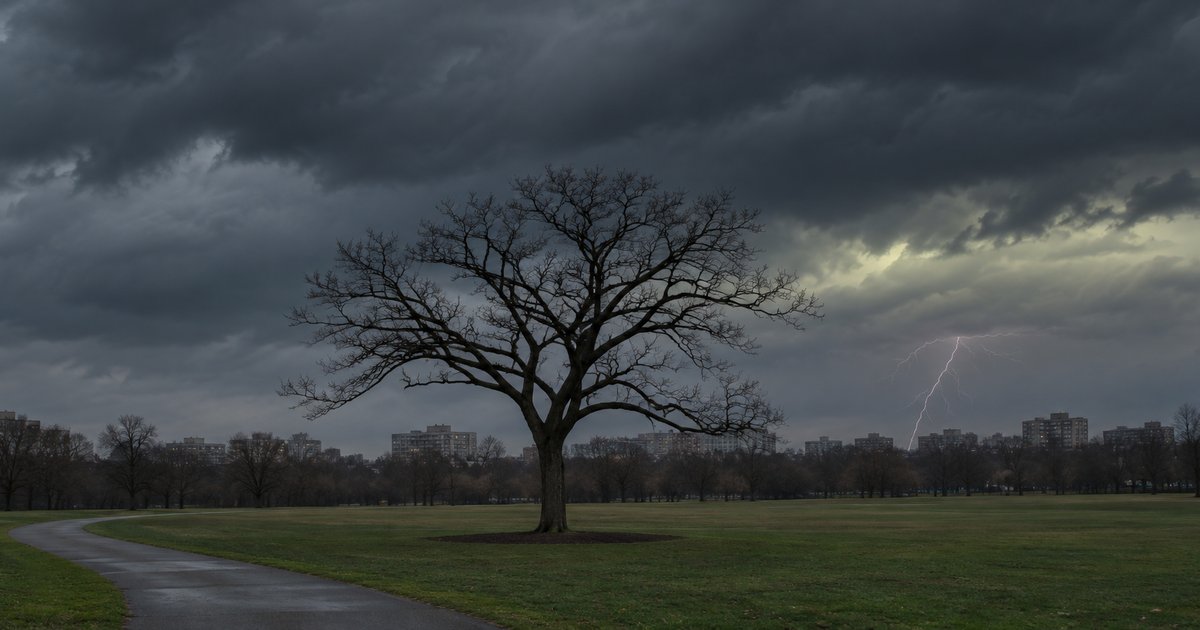
Lightning struck four people in Lafayette Square, across the street from the White House, on the evening of August 4, 2022, and three of them died. The National Weather Service recorded all three as direct lightning deaths in the park. Officials said the group appeared to be near a tree, but the NWS records do not say where each person stood or how the current reached them.
Four people were hurt in Lafayette Square on a Thursday evening, and three died
NPR reported on August 5, 2022 that D.C. Fire and EMS received a report of injured people in Lafayette Park at 6:52 p.m. on Thursday, August 4. NBC News, citing a fire department spokesperson, reported that U.S. Secret Service and U.S. Park Police officers had witnessed the strike and began treating the victims before fire and emergency medical crews arrived, and that the four people, two men and two women, were taken to hospitals in critical condition. NPR added that no property or vehicles were damaged by the strike.
Deaths were confirmed over the next day. NPR reported that two of the four were pronounced dead on Friday, August 5, and the Associated Press reported that evening that a third had died, with one other person hospitalized with life-threatening injuries.
The place has more than one name. The National Weather Service entry says Lafayette Park, across the street from the White House, and NBC News describes Lafayette Square as north of the White House. Every source used here places the strike in the park, not at the building.
The storm was already a warned one. NBC News reported that the National Weather Service had issued a severe thunderstorm warning shortly before responders arrived, citing possible hail and wind gusts up to 60 mph.
The NWS Storm Data entry records three direct lightning deaths in the District of Columbia
The National Weather Service’s Storm Data publication for August 2022, printed on November 29, 2022, lists a Lightning event in the District of Columbia at 18:00 EST on August 4, with three deaths and an emergency manager as the source. Its narrative says three people were killed and another suffered life-threatening injuries when they were struck by lightning in Lafayette Park, and that a couple and an unrelated 29-year-old man succumbed to their injuries the next day.
The time needs a conversion. NWS instruction 10-1605, which governs Storm Data, says to use local standard time throughout the year, so 18:00 EST is 7:00 p.m. EDT (our arithmetic). That is eight minutes after the 6:52 p.m. report time NPR gives, so the Storm Data time cannot be the exact minute of the strike (our reading).
The entry ends with three fatality codes that include the letters OU. The instruction’s location table is a fixed list, and it defines OU as “Outside/Open Areas”; a separate code, UT, means “Under Tree.” The Lafayette Square entry uses OU, and the publication does not say why. The word “direct” in the entry does not describe the path of the current either: the instruction counts as direct a death from the current when lightning struck a person directly and also one when lightning struck nearby.
The NWS 2022 fatality list shows the same three deaths, and the year’s total has changed since
The National Weather Service page “Lightning Fatalities in 2022,” last updated September 26, 2022 and labeled preliminary, lists three rows dated 8/4 in Washington, DC, each with the location “In park.” Two give the activity as tourism and one as business or sightseeing. The same list has a fourth death on August 4, in a parking lot in Parkville, Maryland, so a count of that day’s U.S. deaths is not a count of Lafayette Square. At that update the page listed 19 deaths for the year; the NWS’s multi-year chart, last updated September 22, 2026, shows 20 for 2022, and neither page says which death was added.
| Record | Dated | What it says about the three deaths |
|---|---|---|
| D.C. Fire and EMS spokesperson, via NPR and CBS News | August 5, 2022 | Near a statue of Andrew Jackson; “in the vicinity of a tree” |
| NWS Storm Data, August 2022 | Printed November 29, 2022 | Three direct deaths; location code OU, Outside/Open Areas |
| NWS lightning fatalities in 2022 | Last updated September 26, 2022 | Three deaths on 8/4 in Washington, DC; location “In park” |
NWS instructions say the age, gender and location of each lightning fatality are used in compiling national lightning statistics.
Officials said the group appeared to be near a tree, and the NWS records do not settle it
A D.C. Fire and EMS spokesperson told NPR on August 5, 2022 that the four might have been struck while near a tree during the heavy downpour, and told CBS News that the victims were near a statue of Andrew Jackson and “it appeared they were in the vicinity of a tree.” Both are early descriptions of what responders believed. Neither says whether anyone stood under branches, how far anyone was from the trunk, or whether the tree itself was struck, and the NWS records above give only “In park” and a code for open areas.
The NWS explains why a tree is a poor choice in two ways. A side flash happens when lightning strikes a taller object near a person and part of the current jumps to the person, generally within a foot or two of the object; the NWS says most side flash victims have taken shelter under a tree to avoid rain or hail. Ground current, which spreads outward from the strike through the ground, can reach anyone outside nearby. Side flash is one of five ways lightning injures people. No source for Lafayette Square says which path injured these four, so this explains the NWS’s tree advice and not what happened there.
That advice is firm. The NWS tips page lists “never shelter under an isolated tree” among the actions that may reduce the risk for a person caught outside with no proper shelter nearby, and the NWS lightning overview says no place outside is protected while thunderstorms are in the area. The fire department spokesperson told NPR to seek shelter inside a building or a vehicle and not under a tree; the NWS names a substantial building or a hard-topped vehicle as the shelter that counts.
NWS guidance says to go in at the first thunder, and the reports do not say when these four heard it
The National Weather Service says that if you hear thunder you are likely within striking distance of the storm, and its slogan is “When Thunder Roars, Go Indoors!” The same overview lists a habit that leads to casualties: some people wait until the thunderstorm is overhead and it starts to rain. In its 2022 coverage, 7News quoted lightning safety specialist John Jensenius saying people should not wait for rain because lightning can strike as much as 10 miles from a thunderstorm, and that these were the first lightning deaths in Washington, D.C. since 1991.
The sources reviewed here do not say whether the four had heard thunder, knew of the severe thunderstorm warning, or were heading for a building, so this page draws no conclusion about their choices. What the records do show is four people in an open park on an evening when a severe thunderstorm warning had been issued shortly before, and NWS advice that people outdoors move into a substantial building or a hard-topped vehicle once they hear thunder.
Lightning Tracker, an iPhone app, alerts you when a strike is detected inside a radius you set for each place, 10 miles (16 km) by default, and it does not replace official warnings or local procedures.
Not a substitute for official weather warnings.
If you hear thunder, seek shelter even if the app shows no nearby strike.
Sources
- National Weather Service Sterling (LWX), Storm Data and Unusual Weather Phenomena, August 2022
- National Weather Service, Lightning Fatalities in 2022
- National Weather Service, Lightning Fatalities in 2026 (multi-year chart)
- National Weather Service, NWS Instruction 10-1605: Storm Data Preparation, July 26, 2021
- National Weather Service, How Lightning Causes Death and Injury
- National Weather Service, Lightning Safety Tips and Resources
- National Weather Service, Overview: Lightning Safety
- NPR, A lightning strike near the White House kills 3 people and injures another person, August 5, 2022
- NBC News, 3 dead after lightning strike near White House, August 5, 2022
- CBS News, 3 dead, 1 in critical condition after lightning strike near White House, August 5, 2022
- The Associated Press (via News4JAX), Lightning strike near White House leaves 3 dead, 1 injured, August 5, 2022
- 7News (WJLA), 29-year-old man ID’d, among 3 dead after Lafayette Square lightning strike in DC, August 2022