 Lightning Tracker
App Store
Lightning safety
Lightning in Singapore: storms, alerts and shelter
November 19, 2026 · 5 min read
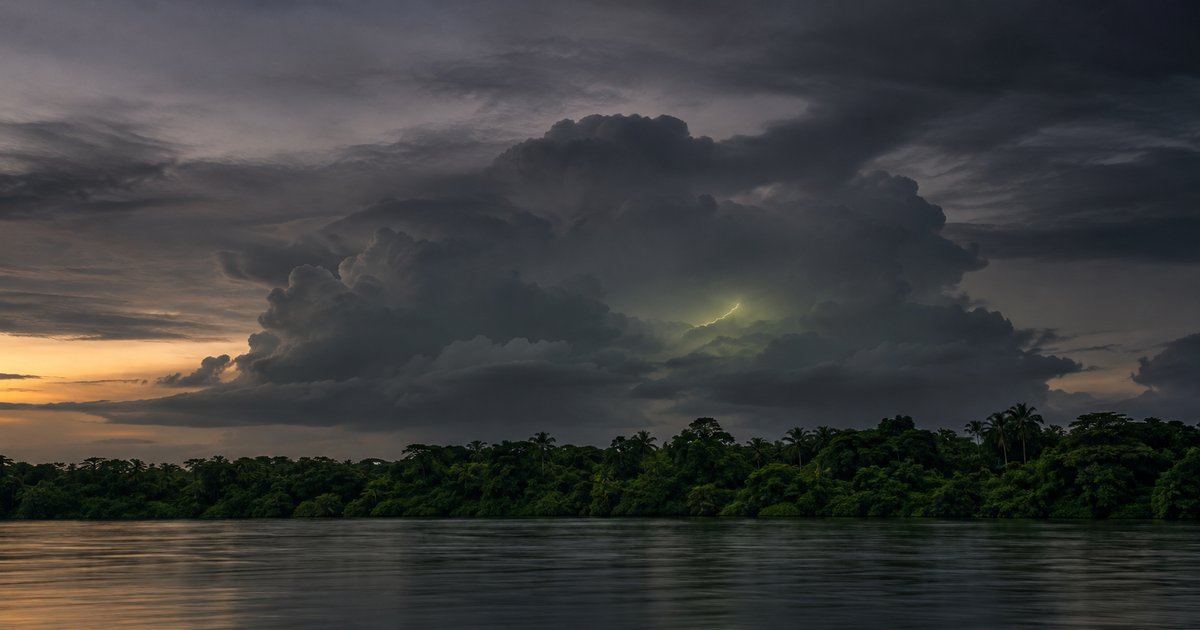
Singapore has frequent lightning: the Meteorological Service Singapore reports about 176 lightning days and 167 thunderstorm days in an average year. Lightning occurs in every month, peaks around the inter-monsoon periods, and calls for shelter as soon as thunder is heard. NEA’s official myENV alerts and forecast help residents plan, but do not wait for a notification to move inside.
Why lightning is frequent here
Singapore's equatorial heat and humid air favor the growth of thunderstorm clouds. The Meteorological Service Singapore (MSS) says sunshine warms surface air, which rises, cools and condenses into towering clouds. Its weather systems page, read in November 2026, reports about 167 thunderstorm days and 176 lightning days in an average year. A “lightning day” means at least one occurrence was detected at the Changi climate station; it does not mean every neighborhood had a strike that day. A day with thunder heard and a day with lightning detected are different measures, so the two annual counts need not match.
MSS says storms can occur year-round, with more in the April–May and October–November inter-monsoon periods. Light, variable winds then favor localized afternoon and evening thunderstorms. November has the highest typical lightning incidence, followed by April and May. MSS says these inter-monsoon months account for more than half of annual lightning strokes. Its 1991–2020 Changi climate table also shows lightning days in every month, from four in February to 22 in November. A November peak is a planning clue, not a reason to ignore thunder in February.
At a particular location, the weather may differ from the island-wide picture. MSS says one cumulonimbus cloud usually grows and dissipates in about an hour and produces less than 30 minutes of thunder and lightning; a longer storm probably involves multiple clouds. Localized development means a person at a beach, school field or construction site should act on the thunder and forecast for that place, even if another part of Singapore is dry.
What Singapore's official alerts tell you
Singapore's National Environment Agency (NEA) provides a two-hour weather forecast by sector. Its weather page says a forecast of thundery showers signals an imminent lightning risk. The page also cautions that lightning can reach more than 10 km (6 miles) from a thunderstorm cloud, although it typically strikes within 6 km (4 miles) of a location. The forecast describes likely weather, while a lightning detection records an observed discharge; neither identifies where the next strike will land. People checking lightning near their location should keep that distinction in mind.
In an August 2026 parliamentary reply, Singapore's Ministry of Sustainability and the Environment said NEA's myENV app sends subscribed location alerts when it detects cloud-to-ground lightning or issues a thundery-showers forecast for the next two hours within 6 km (4 miles) of that location. An alert may therefore be based on an observation or a forecast, and the storm need not be directly overhead. MSS also directs readers to its Lightning Information Service and 24-hour weather hotline, 6542 7788. These are official places to check conditions; hearing thunder is already a reason to take shelter, even before a phone alert arrives.
| Trigger | Basis | Distance from the subscribed location |
|---|---|---|
| NEA detects cloud-to-ground lightning | An observation | Within 6 km (4 miles) |
| NEA issues a thundery-showers forecast for the next two hours | A forecast | Within 6 km (4 miles) |
MSS says four sensors around Singapore detect cloud-to-ground, cloud-to-cloud and in-cloud lightning. Its explanation of how lightning is detected helps explain why an empty display cannot prove the sky is clear. Use the forecast, the alerts and what you hear together; do not wait for a dot or notification after thunder starts.
Where to go when thunder starts
MSS's lightning poster tells people to seek shelter in a building or car. It specifically says not to stay in or near the sea or a swimming pool, or under a tall tree or small structure such as a tent. Put down metal objects such as golf clubs. At Singapore's beaches and on open water, the route to an enclosed building or vehicle can take time; leaving the beach for shelter should begin at thunder, not after rain arrives. MSS notes that lightning can occur without rain at your location because a flash may come from a storm more than 10 km (6 miles) away.
The same MSS poster says to wait at least 30 minutes after thunder was last heard before resuming outdoor activities. Each new rumble resets the 30-minute wait. A break in rain or the end of a forecast period is not the poster's restart cue. For a group, identify a building or enclosed vehicle before going out, so everyone knows where to move when thunder begins. A small outdoor shelter or tent is not the building MSS means.
For outdoor work, Singapore's Ministry of Manpower said in April 2025 that employers should evaluate weather risks and prepare response plans with clear communication, drills, and equipment precautions. Its guideline release covers lightning alongside strong winds, floods, heat and haze. A crew's plan should say who monitors the official forecast and how workers are directed to shelter; the ministry describes its recommendations as broad guidance for workplaces to adapt to their operations.
What the injury figures count
A Changi General Hospital study published in 2012 reviewed patients admitted with lightning injuries from 2000 to 2011. It counted 27 patients, including three who died and six who needed intensive or high-dependency care. Seventeen events were occupation related, occurring at an airbase or open construction sites. These are admissions at one hospital in eastern Singapore, not a national tally of all lightning injuries or deaths. They show why a workplace shelter procedure matters, but cannot be converted into a present-day annual national rate.
The August 2026 parliamentary reply separately referred to a fatal strike involving a paddleboarder near Pasir Ris Beach. That individual incident does not make the 2000–2011 hospital study a continuing national series. If a person is seriously hurt, Singapore Civil Defence Force says 995 is the emergency number for life-threatening conditions and asks callers to give a precise location and describe the person's condition.
Lightning Tracker is available on the App Store in Singapore and works there. Its English-language iPhone app shows recently detected strikes; use NEA and MSS for official forecasts and alerts.
Not a substitute for official weather warnings.
If you hear thunder, seek shelter even if the app shows no nearby strike.
Sources
- Meteorological Service Singapore, Weather Systems
- Meteorological Service Singapore, Climate of Singapore
- Ministry of Sustainability and the Environment, Written Reply to Parliamentary Question on Lightning Alert System
- National Environment Agency, Weather
- Ministry of Manpower, Guidelines on Preparing for Adverse Weather
- Meteorological Service Singapore, Lightning poster for children
- Mok et al. / Critical Care, Lightning injuries in a lightning city
- Singapore Civil Defence Force, Emergency Medical Services