 Lightning Tracker
App Store
Lightning safety
Lightning in South Africa: storms, deaths and what to do
November 19, 2026 · 5 min read
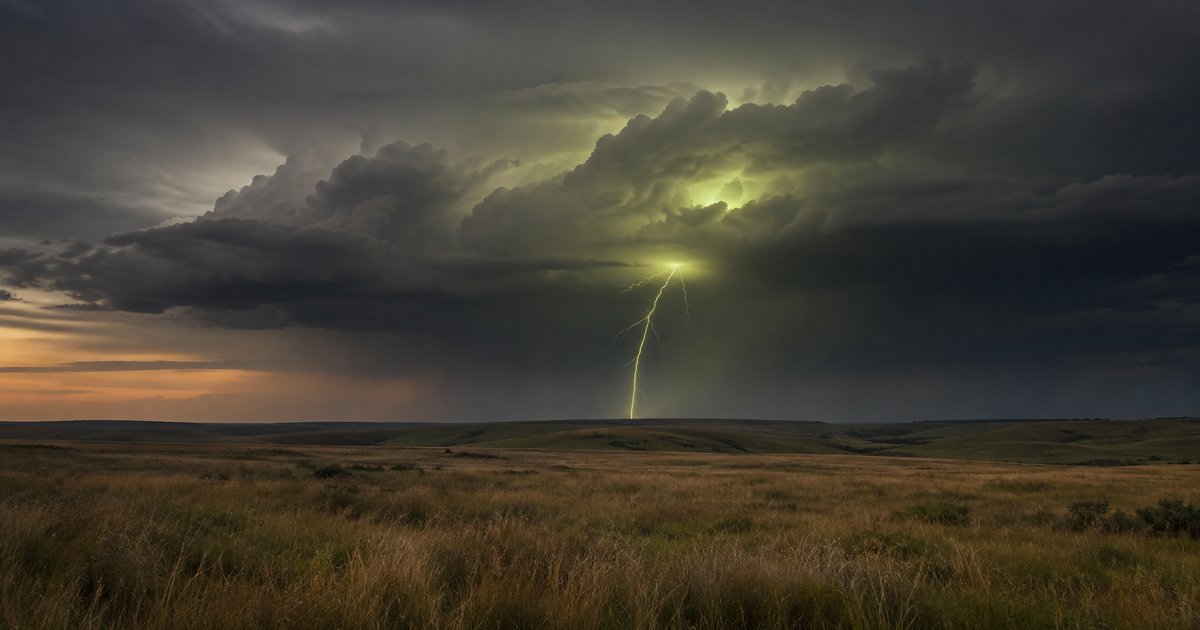
South Africa’s north-eastern interior has the country’s highest long-term ground-flash density, and thunder is the cue to shelter wherever you are. South African Weather Service (SAWS) data for 2006–2022 show local averages above 15–20 flashes per square kilometer (about 39–52 per square mile) in parts of Mpumalanga, Limpopo and northern KwaZulu-Natal. A national forensic study estimated 258 lightning deaths in 2009; that is a one-year estimate, not a current annual count.
Where and when storms are most frequent
South African Weather Service (SAWS) analysis of ground flashes from 2006–2022 places the highest densities in the north-eastern interior: Mpumalanga, Limpopo and parts of northern KwaZulu-Natal locally exceed 15–20 cloud-to-ground flashes per square kilometer (about 39–52 per square mile) in an average year. The central interior, including Gauteng, Free State and North West, runs around 5–10 per square kilometer (about 13–26 per square mile). The western parts have far less of the warm, moist, unstable air that supports deep thunderclouds. These are long-term geographic averages, not a forecast for a particular village or a count of people harmed.
| Region | Cloud-to-ground flashes per square kilometer per year | Per square mile |
|---|---|---|
| North-eastern interior: Mpumalanga, Limpopo, parts of northern KwaZulu-Natal | Locally above 15–20 | About 39–52 |
| Central interior: Gauteng, Free State, North West | Around 5–10 | About 13–26 |
| Western parts | Far less warm, moist, unstable air to support deep thunderclouds; no figure given here | n/a |
SAWS describes intense summer thunderstorms in the north-east and afternoon and evening storms on the Highveld during the summer rainfall season. That makes a late-day outdoor gathering, field job or journey worth planning around the official forecast, particularly in summer. Thunderstorms can still occur elsewhere in the country. A low-density region is not a reason to stay outside when thunder is audible.
The 3 January 2026 event near Majaneng illustrates what a local storm can do, without standing for a typical day. SAWS reported that activity in the monitored area around the village peaked between 5 and 6 p.m. South African Standard Time, with 713 detected strikes in that hour. The weather service said 40 people were reported hit; a 4 January government statement described more than 40 people adversely affected, with injuries and loss of life. These are reports about one event, not an annual national total. The 713 figure counts detected strikes during the peak hour, not injured people.
What the death figures count
A national forensic study published in 2015 estimated 258 lightning deaths in South Africa in 2009, with a 95% confidence interval of 186–330. Researchers drew a nationally representative sample of postmortem investigations and weighted it to estimate cause-specific deaths. Their lightning category was ICD-10 X33, “victim of lightning.” The number is an estimate for one year, with uncertainty from sampling; it is not a verified count of every death in 2009 and cannot establish a trend through 2026.
In an August 2024 speech, a South African deputy minister said lightning was estimated to kill more than 260 people each year. The speech did not give the estimate's source period or counting method. The 2009 forensic estimate and the 2024 statement are therefore two different kinds of evidence, not two points in an annual series. Neither number counts nonfatal injuries. The 2026 Majaneng incident shows why injury figures must keep their event and reporting date attached: “hit,” “adversely affected,” hospitalized and killed are not interchangeable categories.
Read a SAWS warning before the storm
SAWS issues impact-based severe-weather warnings, including severe-thunderstorm warnings. Its November 2024 presentation uses a likelihood-and-impact matrix to assign warning levels. The same meteorological hazard can have different effects in places with different exposure and vulnerability. The warning level is not a promise that every place in the warning area will be hit.
For example, a February 2026 SAWS severe-thunderstorm notice used yellow level 2 for a high likelihood of minor impacts from wind, hail and heavy downpours in part of Northern Cape. Its label combines expected impact with likelihood; it is not a count of lightning strikes. Read the named hazard, affected municipalities, valid time, expected impacts and actions in the individual notice. A warning for disruptive rain or damaging wind may accompany thunderstorm weather, but its level describes that stated impact; it is not a lightning-distance scale. South Africa's government directs the public to the SAWS warnings page and advises following the local disaster management center's instructions.
What to do when thunder starts
SAWS's January 2026 guidance says thunder means lightning is close enough to pose a danger. Stop the outdoor activity immediately and enter a fully enclosed building or a vehicle with closed windows. Open fields, hills, trees, fences, water and temporary structures are places SAWS says to avoid. A temporary structure does not protect a gathering; camping in a thunderstorm calls for a real building or enclosed vehicle.
SAWS advises that if no shelter is available, people should spread out, crouch low with feet together, minimize ground contact and avoid lying flat. This is a last resort while seeking an enclosed shelter, not protection equal to one. Its guidance is particularly relevant to groups in fields or at events: a single nearby ground strike can harm several people. The basic choice is an enclosed lightning shelter as soon as thunder is heard, without waiting for rain or a phone notification. The flash-to-bang distance can describe how far a flash was, but SAWS's action cue is already thunder.
SAWS says to resume outdoor activities only at least 30 minutes after the last thunder. Each new rumble starts that wait again. If someone is struck, SAWS says the person carries no electrical charge and can be helped. Contact emergency services immediately; give CPR if trained to do so. The Western Cape Department of Health and Wellness lists 112 from a cellphone and 10177 for an ambulance, and says callers should provide a precise location and incident details. Keep the local emergency and disaster-management numbers available before an outing.
As of November 2026, Lightning Tracker is available on the App Store in South Africa and works there. Its English-language iPhone app can show recent detected lightning and the distance to the nearest detection; follow SAWS warnings and act on thunder.
Official quick links
The SAWS warning notices are the official source for issued weather warnings. For a storm's local consequences and instructions, follow your provincial or municipal disaster management center; the government's disaster-management notice explains that link in the warning chain. For emergency numbers and the details to give a call handler, the Western Cape government contact guide lists the national cellphone and ambulance numbers alongside regional contacts.
Not a substitute for official weather warnings.
If you hear thunder, seek shelter even if the app shows no nearby strike.
Sources
- South African Government (SAnews), Concern over public safety following North West lightning incident
- South African Weather Service, Early Warning Systems
- South African Government (SAnews), Weather outlook: 16 February–22 February
- World Health Organization Bulletin, Injury-related mortality in South Africa
- South African Government, National Consultative Workshop speech
- South African Government, Mphebatho troop festival lightning incident
- South African Government, Government warns public about severe weather predictions
- Western Cape Government, Know who you can call in an emergency