 Lightning Tracker
App Store
Lightning safety
Lightning in New Zealand: storms, warnings and what to do
November 14, 2026 · 5 min read
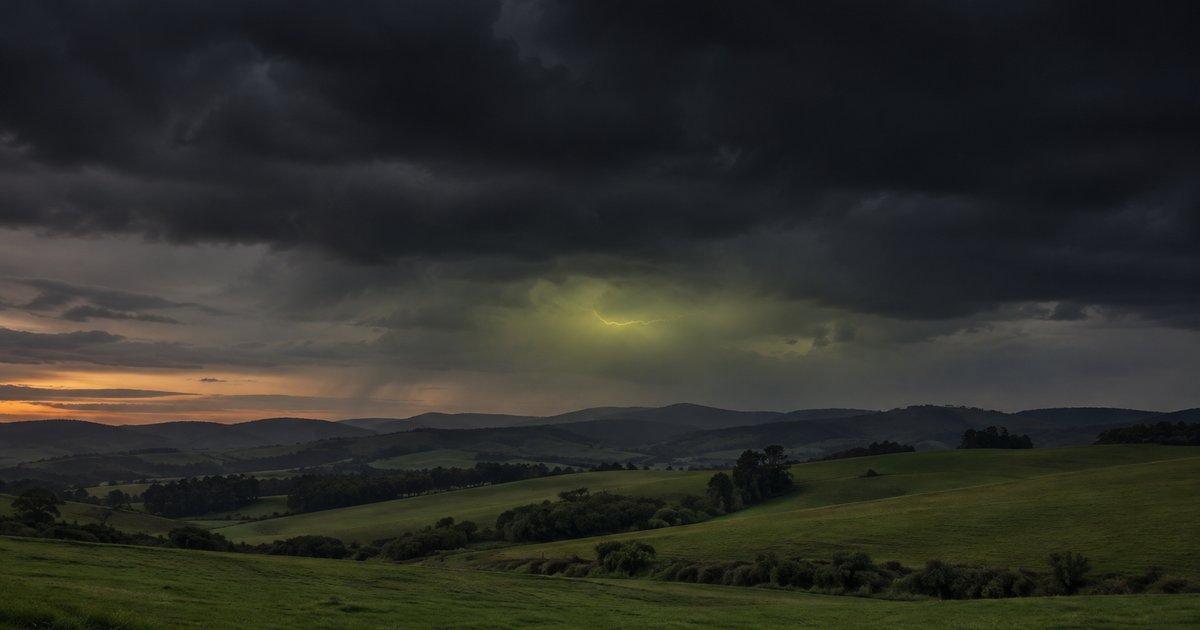
In New Zealand, move indoors when thunder threatens rather than waiting for a Severe Thunderstorm Warning. MetService says warnings are often issued only after a severe storm is active; its November 2026 guidance describes western thunderstorms in any season and eastern and inland storms mainly on spring and summer afternoons. Check MetService before going out, then act on the thunder and weather around you.
Where and when storms form
MetService says severe thunderstorms can happen anywhere in New Zealand, but their timing differs by region. In eastern and inland districts, they are most likely in spring and summer afternoons and evenings. In western districts, they can occur in any season, including winter, and overnight. The west is also where thunderstorms in general are more common. A summer-only plan would therefore miss part of New Zealand's thunderstorm risk.
MetService describes severe thunderstorms as small, localised systems that often last less than an hour. Heavy rain, large hail, strong gusts and even tornadoes can be concentrated in a small area. The Natural Hazards Portal says more than 50,000 lightning strikes occur in New Zealand in a year; that countrywide number describes activity, not the probability of a strike at a particular campsite or address. In a storm, looking beyond rain at your own location matters because the next part of a walk may enter a very different patch of weather.
What the New Zealand casualty figures count
The Natural Hazards Portal gives a long-run description: on average, one lightning death is reported in New Zealand every five to ten years. It does not give an annual injury estimate on that page. NIWA's Historic Weather Events Catalogue records one death and five other people injured by lightning during the April 2008 North Island and Nelson storm, near Dargaville. That is an event record, not a national annual total of injuries. The catalogue also records deaths from other hazards in the same storm; those should not be added to the lightning count.
These counts make the risk tangible without making it predictable for a person outdoors. An average of one death in several years does not mean that any particular thunderstorm has a harmless interval. The 2008 NIWA record shows that a single lightning event can injure several people at once. The useful decision is whether people can reach shelter before exposure begins, especially when a group is spread across an outdoor site.
Read MetService's thunderstorm products in order
MetService issues daily Thunderstorm Outlooks that highlight potential threats. A Severe Thunderstorm Watch can follow up to 24 hours ahead when the risk is high but the timing and location remain uncertain. A Severe Thunderstorm Warning is issued when MetService detects an active severe thunderstorm; it is a red warning calling for immediate action. MetService says radar-based warnings often cover areas likely to be affected only after the storm has begun, because these storms form and move quickly.
| Product | What it tells you | Practical response |
|---|---|---|
| Daily Thunderstorm Outlook | Where forecasters see potential thunderstorm threats | Plan the activity and identify shelter |
| Severe Thunderstorm Watch | Heightened risk of a severe storm, with location or timing uncertain | Stay alert and be ready to change plans |
| Severe Thunderstorm Warning | An active severe storm detected by the network | Act now and follow the warning's instructions |
MetService defines a severe thunderstorm by at least one of four impacts: rain of 25 mm (about 1 inch) or more in an hour, hail at least 20 mm (about 0.8 inch) across, gusts of at least 110 km/h (about 68 mph), or a damaging tornado with winds over 116 km/h (about 72 mph). Lightning itself is not one of those four thresholds. Ordinary thunderstorms can still produce dangerous lightning without a Severe Thunderstorm Warning, so thunder is a reason to seek shelter even if the warning page has no red area over you. MetService says its warning coverage is limited to roughly 150 km (about 93 miles) from weather radar because data quality falls with distance.
For official current information, check the MetService warnings and watches and its Thunderstorm Outlook before an outing. MetService's warning explanation is the place to check what the categories mean; an individual warning gives the affected area, period, forecast and action statements. Current products can change, so read the named area and valid time rather than treating a national headline as your local forecast. Checking lightning near you is useful context, but an empty detection display is not an all-clear.
Move indoors when thunder threatens
MetService advises going indoors for lightning and avoiding tall trees. Its lightning guidance says a house or car is a good place to be during lightning because the structure or car body can carry current around the people inside; it advises avoiding things connected to the outside. A tree is a poor shelter because it can be struck. If an outing takes you far from buildings, decide beforehand how everyone will reach a substantial building or enclosed car; where to shelter from lightning explains why a tent and open shelter do not substitute for those places.
New Zealand Civil Defence's Get Ready storm guidance says to remain indoors during a storm, away from windows, and to avoid baths, taps and sinks because metal plumbing may conduct lightning current. It also warns that storm conditions can bring flooding, fallen trees, and downed power lines. After a storm, it says to treat every fallen power line as live. Those hazards can affect the route back from shelter as much as the thunderstorm itself.
WorkSafe New Zealand's guidance for adventure and outdoor recreation operators specifically lists lightning among storm hazards. It asks operators to use forecasts and local warnings, set clear trigger points for action, and reassess changing conditions during an activity. A lightning event or expected lightning can be a trigger to apply controls or cancel an activity. This matters on remote tracks, worksites and guided trips where the group needs time to reach shelter. For a return to outdoor activity after the last thunder, the 30-minute wait explains the general rule; keep following any local procedure and official warning for the site.
Lightning Tracker is available on the App Store in New Zealand and works there. Its iPhone app shows recently detected strikes, and its interface and alerts are in English; use MetService for official warnings.
Not a substitute for official weather warnings.
If you hear thunder, seek shelter even if the app shows no nearby strike.
Sources
- MetService, Severe Thunderstorms
- MetService, About Severe Weather Warnings and Watches
- MetService, Lightning
- Natural Hazards Portal, Storms and floods
- NIWA, April 2008 North Island and Nelson Storm
- Get Ready / National Emergency Management Agency, Storms
- WorkSafe New Zealand, Adventure and outdoor recreation activities: managing risks from natural hazards