 Lightning Tracker
App Store
Storm basics
How loud is thunder in decibels?
November 17, 2026 · 4 min read
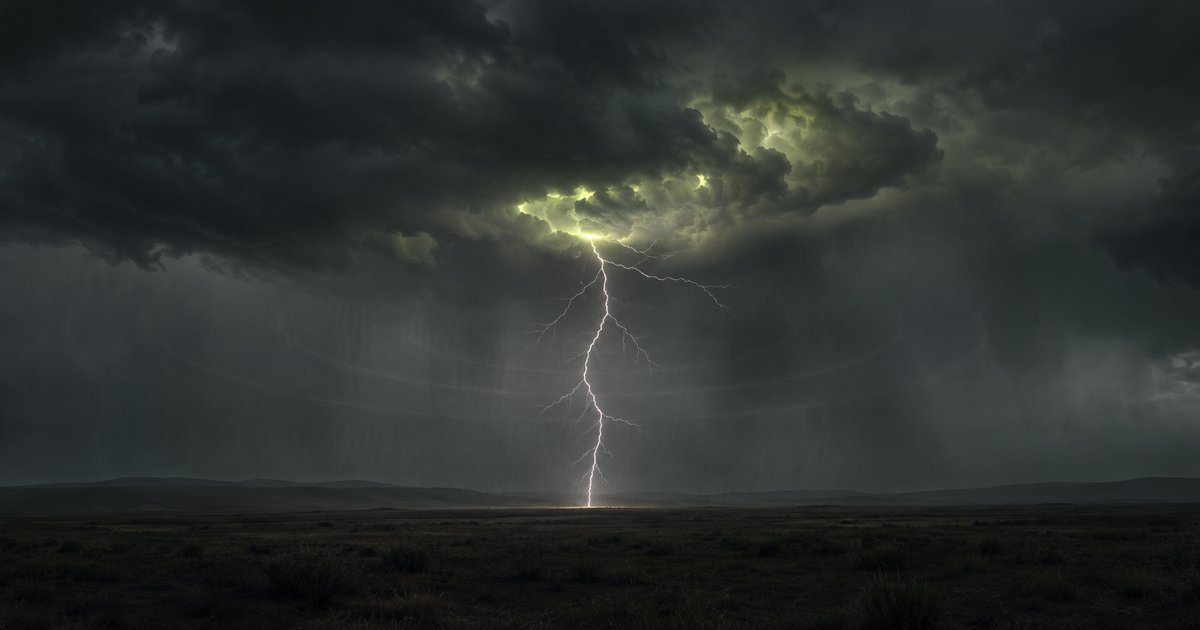
Thunder can reach 165–180 decibels “up close,” according to NASA’s 2015 Spinoff article, but NASA gives no measurement distance for that range; it is not the level every listener hears. The National Park Service’s 2018 sound page gives a 100 dBA thunder example at Arches National Park and says a crack can exceed 120 dB. Your exposure depends on the flash, distance and the path sound takes through the air.
What the published decibel numbers describe
NASA's 2015 Spinoff article puts the sound of a lightning strike “up close” at 165 to 180 decibels. NASA’s article gives the figure without a measurement distance. The number describes an extreme nearby event; it cannot be assigned to someone who merely heard a storm.
The National Park Service (NPS) gives two other examples on its sound page, updated July 2018. Its text says a crack of thunder can exceed 120 decibels. Its table of sound levels measured in parks lists thunder at Arches National Park at 100 dBA. These are different examples, not competing estimates of a single standard thunderclap.
| Source | Level | Context given |
|---|---|---|
| NASA Spinoff, 2015 | 165–180 dB | Lightning strike “up close”; distance unstated |
| NPS text, 2018 | Above 120 dB | A crack of thunder; distance unstated |
| NPS sound table, 2018 | 100 dBA | Thunder at Arches National Park; strike distance unstated |
The NPS table uses A-weighted decibels, or dBA, while NASA and the NPS prose say dB. NPS explains that A-weighting adjusts a sound level to the sensitivity of human hearing at different frequencies. A fair comparison would use the same weighting method and known measurement positions.
Distance and the air change what reaches your ears
Environment and Climate Change Canada says the sound a person hears depends on distance to the flash, air temperature and the cloud and water in the air. Sound spreads outward, so a listener farther from the channel receives a different pressure wave. The agency says higher frequencies are selectively absorbed with distance, leaving a lower pitch. A distant rumble therefore does not sound like a close crack turned down on a volume knob.
The National Weather Service (NWS) says a sharp crack or click can indicate a nearby lightning channel, while a rumble suggests the lightning was at least several miles away. The agency also explains that a flash striking one spot on the ground may travel many miles through the air. Sound from its nearest portion arrives first, followed by sound from farther portions. Counting from flash to bang estimates distance from the delay, while the loudness alone supplies no calibrated distance.
Canada's meteorological agency says sound paths bend as air temperature changes with height. On a summer day, hot surface air can bend waves upward; cooler air near the ground at night can bend them down. A far storm can sound unusually clear in one set of conditions and faint in another. The source also explains why visible lightning with no audible thunder may occur: the sound has not carried to the observer.
A decibel reading needs a place and a method
The NPS calls decibels a measure of sound pressure level or intensity and describes their logarithmic scale. Its explanation says a 10 dB increase represents ten times the sound level and roughly twice the perceived loudness. A microphone near the lightning channel would record a different pressure wave than one farther away.
For everyday context, the NPS table lists conversational speech at 5 meters as 60 dBA and thunder at Arches National Park as 100 dBA. The same NPS page says a crack can exceed 120 dB; those figures describe different settings.
The National Institute on Deafness and Other Communication Disorders (NIDCD), in a page updated April 2025, says a one-time intense impulse sound can cause hearing loss and that extremely loud sounds can be harmful even briefly. It also says distance from the source matters. NASA's up-close range does not diagnose hearing injury after an ordinary clap. NIDCD recommends a hearing test if you think you may have hearing loss; it also describes ringing after loud noise as tinnitus.
Use thunder as a storm warning, not a range finder
The NWS says thunder is generally audible only about 10 miles from a lightning strike and warns anyone outside who hears it to move to shelter. A faint rumble is enough for that decision. At a beach where surf masks thunder, a person may miss a sound that would be heard in quiet surroundings. Silence cannot establish a fixed distance from lightning.
The NWS identifies a substantial building or a hard-topped vehicle as places to seek shelter. The choice of lightning shelter matters more than estimating a decibel level by ear. Lightning Tracker, an iPhone app, shows recently detected strikes on a live map with distance, direction and minutes ago; it does not replace official weather warnings.
Not a substitute for official weather warnings.
If you hear thunder, seek shelter even if the app shows no nearby strike.
Sources
- NASA Spinoff, Sound Modeling Simplifies Vehicle Noise Management
- National Park Service, Understanding Sound
- National Weather Service, Understanding Lightning: Thunder
- Environment and Climate Change Canada, How thunder sounds
- NIDCD, Noise-Induced Hearing Loss