 Lightning Tracker
App Store
Storm basics
Lichtenberg figures: the marks lightning leaves on skin
November 19, 2026 · 6 min read
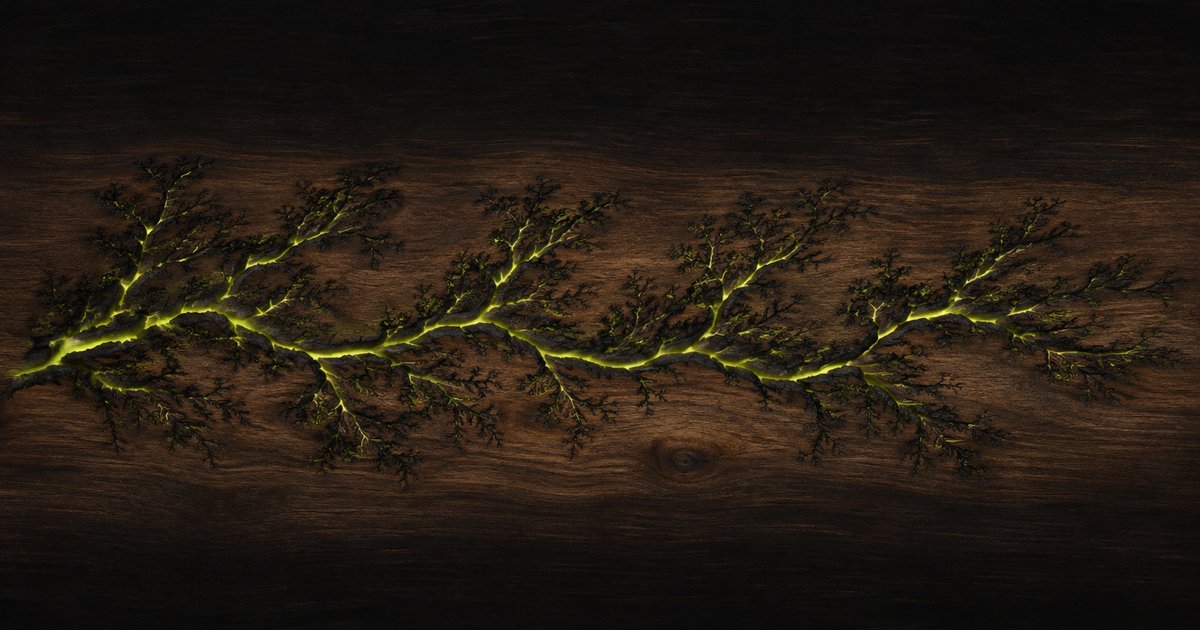
A Lichtenberg figure is a branching, fern-like pattern of red lines that appears on the skin of some people struck by lightning. In the medical papers cited here it shows up within about an hour and usually fades within hours to two days, so it is not a permanent mark. It is also uncommon, which means clear skin says nothing about whether someone was struck.
What a Lichtenberg figure is
A Lichtenberg figure takes its name from the German physicist Georg Christoph Lichtenberg. A 2021 case report in Frontiers in Medicine says he first described the pattern in 1777 while experimenting with static electricity. The same report lists the other names doctors use for the skin version: ferning pattern, feathering, keraunographic markings and arborescent burns.
A 2023 forensic pathology paper describes the marks as transient lines of erythema, meaning redness, in a fern-like pattern. They appear about an hour after a strike and fade within hours in survivors. The paper also notes that the figures have been called “fractal burns,” although there is usually no evidence of burning of the skin.
The name causes confusion online. Captured Lightning, a company that sells acrylic sculptures, uses “Lichtenberg figure” for the branching fractures that a particle accelerator leaves inside clear acrylic. That is a manufactured art object that shares the name, not a skin finding.
Do Lichtenberg figures leave scars?
No source read for this article describes a Lichtenberg figure that left a scar. The 2023 paper quotes earlier researchers on the figures’ “rapid nonscarring resolution,” and they fade within hours to about a week, as the papers below report. Burns from the same strike are a separate injury, and they can scar: a 2018 case report in the Ulster Medical Journal describes a man struck directly, with a deep dermal burn at the neck and a full-thickness burn on a toe, and after his wounds healed it shows a photograph captioned “Lightning burn scar 1 year following the injury.”
The papers give different durations, because each one describes a different person or group.
- Indian Journal of Dermatology, 2016. The author writes that the figures appear within an hour and disappear by 48 hours. The author’s own patient was an exception: her figures disappeared after a week.
- Forensic Science, Medicine and Pathology, 2023. The authors write that the figures appear about an hour after a strike and fade within hours in survivors.
- Frontiers in Medicine, 2021. This report concerns an electrician hurt by a high-voltage arc, not by lightning. His photographs from day 3 show the burn wounds still present and the Lichtenberg figures gone.
So the range in these sources runs from a few hours to a week, with 48 hours as the figure most often given. None of the papers read for this article describes a figure that stayed permanently. The 2023 authors quote earlier researchers who called the rapid, nonscarring resolution of the figures a mystery. Lasting skin damage after a strike is a different matter: the same paper says skin lesions from a strike range from singed hair to extensive deep charring, and sometimes there are no visible effects at all.
Lichtenberg figures and burns are not the same thing
The National Weather Service explains that when lightning flashes over the skin, the heat can produce burns, but the current moving through the body is of greatest concern. The skin is therefore not the main story of a lightning injury, and a victim can have burns, Lichtenberg figures, both or neither.
The 2023 paper describes the two as separate processes. It says Lichtenberg figures are not burns, do not follow nerve or vessel pathways and are not linked to damage to the epidermis, the outer layer of skin. In its autopsy case, the man also had small 1–2 mm burns from arcing, some in the same area as the figures. Cutting into the burns showed bleeding under the skin, while cutting across the figures showed none. The paper adds that such burns not uncommonly accompany the figures. The 2016 dermatology letter likewise lists four kinds of superficial skin change after a strike (linear, punctate, feathering and thermal burns) and says feathering burns are not true burns.
The sources do not fully agree on the label, though. The 2021 Frontiers in Medicine report summarizes a 1987 study as showing that the ferning pattern is a first-degree burn caused by a positive electrical discharge in the skin. A reader who meets the word “burn” in connection with these marks should check which meaning the author intends.
What causes the pattern is unknown
The cause of Lichtenberg figures remains unclear. The 2023 paper states that no theory adequately explains their occurrence. One idea was that the marks follow lines of skin moisture, but the paper points out that the figures were absent from the armpits and groin creases and present on drier, more exposed skin, which does not fit that idea. The idea that they follow superficial blood vessels has been discounted, according to the same paper.
Two case reports looked at the tissue and reached different pictures:
- The 2023 autopsy found only subtle widening of tiny blood vessels in the skin, with no bleeding into the tissue and no inflammation. Widened vessels can return to normal quickly, which would fit marks that fade within hours.
- The 2021 report on the electrician found lymphocytic infiltrates and red blood cells that had leaked out of small vessels in the upper dermis, the layer under the epidermis.
The 2023 authors suggest that earlier reports of bleeding may have mixed up two processes, the arcing burns and the figures themselves. Whether the difference comes from lightning versus an industrial arc, from the timing of the sample or from something else is not settled in these papers.
How common Lichtenberg figures are, and what they prove
Lichtenberg figures are a minority finding. The 2023 paper cites a range of 17–33% of lightning-strike cases. A 2024 review in the International Journal of Legal Medicine counted them in 25 of 270 lightning deaths (9.3%) in a German case collection covering 1951 to 1965, compared with singed body hair in 129 (47.8%). The two numbers come from different material, since the first is drawn from earlier literature and the second from historical German records of deaths, so they are not directly comparable. The German authors concluded that singed hair is probably more useful for diagnosis than the figures.
Doctors once called the figures pathognomonic, meaning they point to one cause alone. That label has weakened. The 2021 report describes a figure after a high-voltage industrial accident, not a storm, and the 2023 paper notes that figures have been reported in such a case, while the 2016 dermatology letter describes them as specific to people struck by lightning. In the right setting, the 2023 authors write, they remain strongly supportive evidence of a strike. They are a clue, not a verdict, and their absence proves nothing either way.
What the marks mean for someone who was struck
The National Weather Service says it is not always possible to know exactly how a victim was struck, and that immediate medical attention, including calling 911, starting CPR and using an AED, may be critically important. The skin does not change that. What to do in the first minutes is the same whether or not a fern pattern appears, and someone who looks unmarked still needs care. Survivors concerned about effects beyond the skin can find medical reports on life after a lightning strike.
The 2016 letter ties the figures to a direct strike, a side flash or ground voltage; the first two are among the five ways lightning strikes people that the National Weather Service lists. Its patient, who the author thinks was probably hit by a side flash, was standing beside her bed inside her house, so being indoors did not rule the marks out. The reliable way to avoid all of this is to avoid the strike itself, which is what sheltering in a substantial building or hard-topped car is for.
This page summarizes what published sources report. It is general information, not medical advice.
Lightning Tracker, an iPhone app, shows recent detected strikes near the places you save, with the distance to the nearest one and how many minutes ago it was detected.
Not a substitute for official weather warnings.
If you hear thunder, seek shelter even if the app shows no nearby strike.
Sources
- National Weather Service, Lightning Science: Five Ways Lightning Strikes People
- Forensic Science, Medicine and Pathology, 2023, “Lichtenberg figures—morphological findings” (PubMed Central; Europe PMC text)
- Indian Journal of Dermatology, 2016, “Lichtenberg figure and lightning” (PubMed Central; Europe PMC text)
- Frontiers in Medicine, 2021, “Unravelling the Mysterious Lichtenberg Figure Skin Response in a Patient With a High-Voltage Electrical Injury” (PubMed Central; Europe PMC text)
- International Journal of Legal Medicine, 2024, “A 15-year review of lightning deaths in Germany—with a focus on pathognomonic findings” (PubMed Central; Europe PMC text)
- The Ulster Medical Journal, 2018, “Lightning injuries in Northern Ireland” (PubMed Central; Europe PMC text)
- Captured Lightning, LLC, Captured Lightning Sculptures (manufacturer’s description of its acrylic sculptures)