 Lightning Tracker
App Store
Using the app
A spring thunderstorm checklist for the places you watch
November 16, 2026 · 6 min read
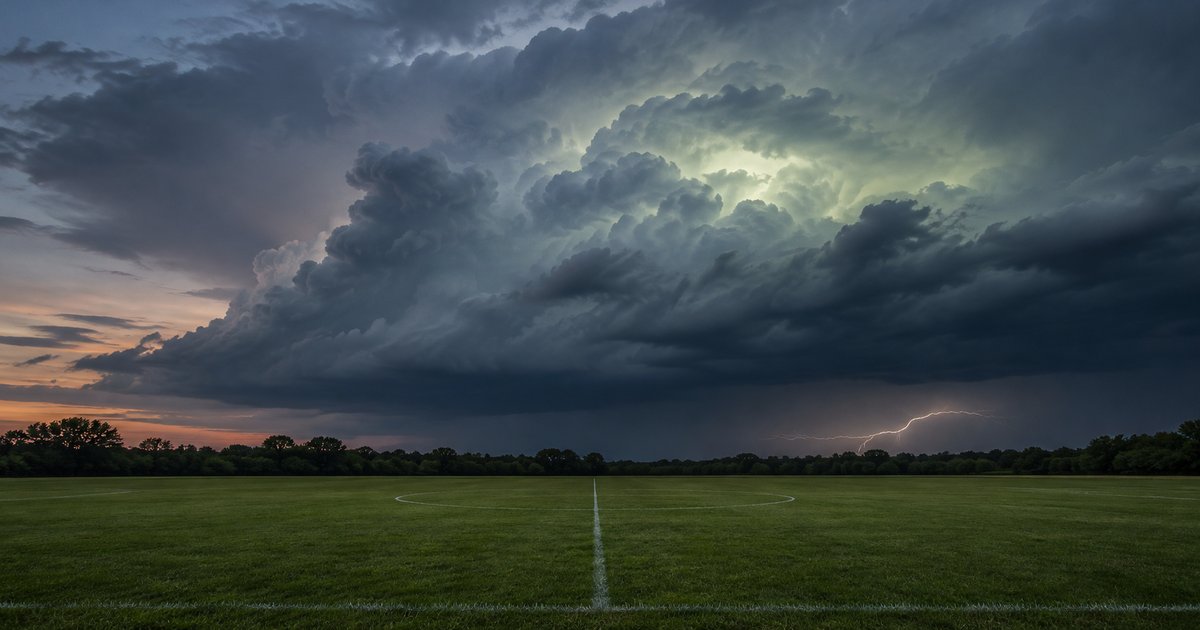
Thunderstorm season has no single start date in the United States: the National Weather Service’s Mobile office puts the peak of severe weather in Alabama, Mississippi and northwest Florida in March, April and May, tornado season arrives later farther north, and by June most areas of the contiguous states have lightning. The time to set up is before your own region’s season starts, repeating the checklist below for each place you watch.
Thunderstorm season starts on a different date in each part of the country
The National Severe Storms Laboratory answers the question “Is there a specific thunderstorm season?” by sending readers to their local National Weather Service forecast office, which knows the local climatology best. The laboratory’s general description is that thunderstorms are most likely in the spring and summer months and during the afternoon and evening hours, but can occur year-round and at all hours. The Weather Service adds that thunderstorms typically develop in the warmer months of spring, summer and fall, and can occur at any time of year over most of the United States.
| Region | What the source says | Source |
|---|---|---|
| Alabama, Mississippi and northwest Florida | The peak severe weather season is March, April and May; a secondary season typically runs from November through December | NWS Mobile/Pensacola, undated page |
| Florida peninsula, lightning | Lightning increases rapidly in May as sea-breeze storms develop; July is the month for lightning (monthly averages for 1986 to 1995) | NWS Melbourne, Florida lightning climatology |
| Contiguous US, lightning | In spring, thunderstorms occur most often over the southeastern states; lightning then spreads north and west until, by June, most areas have it (2005 to 2014 data) | Holle, Cummins and Brooks, Monthly Weather Review, 2016 |
| United States, severe weather | Tornadoes are most likely roughly between March and August, with a peak between April and June; as spring progresses, the highest chance of severe weather spreads north and east across the Plains, the Midwest and the Southeast | NOAA Climate.gov, 2015 |
| Northern states | Tornado season comes earlier in the south and later in the north; New England and the northern Rockies have a small share of their lightning outside summer | NSSL; Holle, Cummins and Brooks, 2016 |
| Arizona | The monsoon season officially runs from June 15 through September 30 | NWS Phoenix |
An early or late start in one year says little about the rest of the season. NOAA Climate.gov wrote in 2015, after an unusually quiet March, that it is best not to draw seasonal tornado conclusions based on March alone. Lightning counts by state and month, which show the same climb from the Southeast in spring to a July peak, are laid out in where and when lightning strikes most in the US.
Severe storm outlooks rate wind, hail and tornadoes, while lightning comes with every thunderstorm
The National Weather Service’s Mobile office says all thunderstorms generate potentially deadly lightning, and that lightning in a thunderstorm does not mean the storm is severe. The Storm Prediction Center issues Day 1, Day 2 and Day 3 convective outlooks that show both non-severe thunderstorm areas and severe thunderstorm threats, so an outlook with no severe risk can still place thunderstorms over a place you watch. Reading a thunderstorm outlook explains what the categories and percentages mean, and watch versus warning explains the difference once a severe storm is forecast.
The National Weather Service’s lightning fatality table shows how quickly the risk climbs after winter. Its 10-year averages for 2016 through 2025, preliminary as of November 2026 and counting direct fatalities only, work out to about 1 death in April, 2 in May, 4 in June, 6 in July, 4 in August and 2 in September. A setup finished before May therefore comes ahead of the months in which the averages rise.
A seven-part checklist applies to every place you watch, whatever its season
The National Weather Service’s lightning safety overview reduces prevention to planning: have a lightning safety plan, and cancel or postpone activities early if thunderstorms are expected. It also says to plan ahead so that you can get to shelter quickly if a thunderstorm threatens. Do the following once for each place that matters, such as home, a child’s field, a cabin or a job site, and before your region’s season starts.
- Name the shelter and time the walk. The Weather Service lists substantial buildings and hard-topped vehicles as the options that protect you, and says rain shelters, small sheds and open vehicles do not. Write down which one applies at each place and how long it takes everyone to reach it.
- Decide who makes the call. The Weather Service says too many people wait far too long to reach shelter, some until the storm is overhead and rain begins. Naming one person per place, such as a coach at a youth sports field or a foreman on a job site, gives that decision an owner.
- Pick an alert distance for each place. The same distance does not suit someone a few steps from a cabin or a car and a crew that needs time to climb down, because the time to reach shelter differs. Choosing an alert radius shows how to size one.
- Add the official channels. Wireless Emergency Alerts reach capable phones without signup, but the Weather Service sends them for a severe thunderstorm warning only when the damage threat is destructive. NOAA Weather Radio broadcasts official warnings, watches and forecasts from the nearest Weather Service office around the clock and needs a special receiver.
- Check the phone itself. Focus modes, Background App Refresh and Low Power Mode can all hold back an alert, as five iPhone settings that decide when a storm alert arrives walks through.
- Agree on the 30-minute wait. The Weather Service says to wait 30 minutes after the last lightning or thunder before going back outside, and warns that many people return after waiting only for the rain to lighten or end. Why the clock restarts with each new strike is the reason to agree on it before anyone is standing in the rain.
- Look ahead on days with thunderstorms in the forecast. A Day 1 to Day 3 outlook can show days ahead that thunderstorms are expected near a place, and the Weather Service advises cancelling or postponing activities early when they are.
Lightning Tracker can keep the places, the radius and the wait in one iPhone app
Lightning Tracker is a free iPhone app on the App Store that shows recently detected lightning strikes on a live map, with the distance and direction to the nearest one and how many minutes ago it was detected. It keeps your current location and, with Premium, the places you save. Each place has its own radius, 10 miles (16 km) by default, and the app alerts you when a strike is detected inside it, again when strikes get noticeably closer, and, if you choose, for every strike. That covers checklist item 3 for your current location in the free version; saved places need Premium.
The alerts about approaching strikes ask iOS for Time Sensitive delivery. The app’s 30-minute wait starts after the last strike detected inside the radius and starts over with every new strike. When it ends, the app tells you what it observed and asks you to judge the conditions yourself; it does not announce that the storm is over. For planning ahead, Premium also shows a thunderstorm forecast for several days with a daily probability, and hourly probabilities when its source provides them.
The limits matter as much as the features. Detection networks miss some strikes, especially weak ones, and data can arrive late; the app marks a delay or a gap rather than treating it as quiet. Alerts are local notifications created after a check, and iOS settings such as Focus, Background App Refresh and Low Power Mode affect whether they arrive. In the background, iOS decides when the app may check for data, so an app that was closed may show the latest strikes only once you open it. The app does not replace official warnings or local procedures, which is why checklist item 4 stays on the list.
Not a substitute for official weather warnings.
If you hear thunder, seek shelter even if the app shows no nearby strike.
Sources
- National Weather Service Mobile/Pensacola, Severe Weather Awareness - Severe Thunderstorms
- National Weather Service Melbourne, Florida Lightning Climatology
- Holle, Cummins and Brooks, Monthly Weather Review, 2016, Seasonal, monthly and weekly distributions of NLDN and GLD360 cloud-to-ground lightning
- NOAA Climate.gov, Quiet March in Tornado Alley (2015)
- NOAA National Severe Storms Laboratory, Severe Weather 101: Thunderstorm FAQ
- NOAA National Severe Storms Laboratory, Severe Weather 101: Thunderstorm Basics
- NOAA National Severe Storms Laboratory, Severe Weather 101: Tornado FAQ
- National Weather Service, Understanding Lightning: Thunderstorm Development
- National Weather Service Phoenix, Monsoon Awareness Week
- NOAA Storm Prediction Center, SPC Products and Services
- National Weather Service, Lightning Fatalities
- National Weather Service, Overview: Lightning Safety
- National Weather Service, Wireless Emergency Alerts
- National Weather Service, NOAA Weather Radio All Hazards