 Lightning Tracker
App Store
Forecasts and warnings
Severe thunderstorm watch vs. warning, and where lightning fits
November 11, 2026 · 7 min read
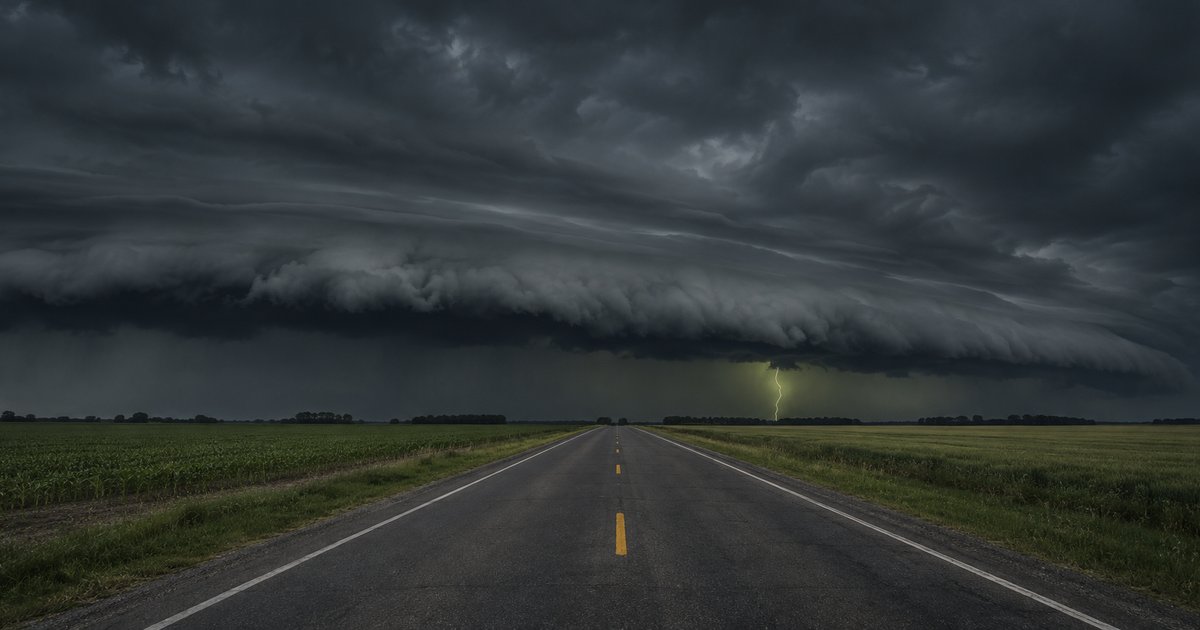
A severe thunderstorm watch means severe storms are possible in a large area, so be ready; a severe thunderstorm warning means severe weather has been reported or shows on radar, so take shelter now. Neither covers lightning: the National Weather Service does not use lightning to decide whether a storm is severe, so a storm with no watch or warning can still be dangerous to anyone outside.
A watch says be ready, a warning says act now
A severe thunderstorm watch and a severe thunderstorm warning are two different messages from the National Weather Service (NWS), and the warning is the more urgent one. The NWS describes a watch as a message that severe thunderstorms are possible in and near the watch area, so you should stay informed and be ready to act if a warning follows. It describes a warning as a message that severe weather has been reported by spotters or indicated by radar, with imminent danger to life and property. The NWS office in San Angelo, Texas, states the same logic for every hazard: a watch is used when the risk has increased significantly but its timing and location are still uncertain, and a warning means people in the path of the storm need to take protective action.
| Severe thunderstorm watch | Severe thunderstorm warning | |
|---|---|---|
| What it says | Severe thunderstorms are possible in and near the watch area. | Severe weather has been reported by spotters or indicated by radar. |
| Issued by | The Storm Prediction Center (SPC), a national NWS center. | The local NWS office for your area. |
| Size of the area | Large: numerous counties or even states. A typical SPC watch covers about 25,000 square miles, about half the size of Iowa. | Much smaller: around the size of a city or small county. |
| Timing | Severe weather is possible during the next few hours. | Severe weather has been observed, or is expected within the hour. |
| What the NWS asks | Stay informed and be ready to act. | Take shelter in a substantial building, and get out of mobile homes that can blow over in high winds. |
Which is worse? By these definitions the warning, because the hazard is already happening or about to. A watch is still not a message to ignore: it is the lead time, and the NWS says a watch is meant to give people who need to set plans in motion enough time to do so.
Who issues what
The Storm Prediction Center issues every Severe Thunderstorm Watch and Tornado Watch, and only watches, while your local NWS office issues the warnings, according to the SPC's own FAQ (as of November 2026). The SPC describes a severe thunderstorm watch as outlining an area where an organized episode of hail 1 inch in diameter or larger and/or damaging thunderstorm winds is expected during a two-to-eight-hour period. A Tornado Watch adds the possibility of multiple tornadoes or a single intense one. The SPC says it issues 500 to 800 watches in most years.
Not every severe storm gets a watch. The SPC explains that many severe thunderstorms affect only a small area for a short time, which makes a watch impractical, and that watches go mainly to areas where well-organized or significant severe weather is possible or where the threat should last several hours. In practice, then, a warning from the local office can be the first notice you get.
Watches are also a different product from severe weather outlooks. The NWS says the SPC provides forecasts of severe weather up to seven days in advance, and severe thunderstorm and tornado watches several hours before storms form.
What counts as severe
The NWS defines a severe thunderstorm by what it can do to property: its severe thunderstorm safety page says severe thunderstorms are storms capable of producing hail an inch or larger, or wind gusts over 58 mph. The SPC FAQ words it as hail at least 1 inch in diameter, and/or wind gusts of 58 mph or greater, and/or a tornado. The two NWS pages differ slightly: one says “over 58 mph” and the other “58 mph or greater”, and only the SPC list includes tornadoes, which also have their own warning. For a reader the practical line is the same, about quarter-sized hail or about 58 mph gusts.
Since August 2021 a severe thunderstorm warning can also carry a damage threat tag, as the NWS announced in a July 22, 2021 release. The tag matters for one reason in particular: it decides whether your phone gets a Wireless Emergency Alert (WEA), the government alert, with its own tone and vibration, that is sent to phones in the warned area.
| Damage threat tag | Hail | Wind | Wireless Emergency Alert |
|---|---|---|---|
| Base (no tag shown) | 1.00 inch (quarter-sized) | 58 mph | No |
| Considerable | At least 1.75 inches (golf ball-sized) | 70 mph | No |
| Destructive | At least 2.75 inches (baseball-sized) | 80 mph | Yes, automatically |
For a “weather emergency” involving a severe thunderstorm, the NWS product to act on is a Severe Thunderstorm Warning, including one tagged “Destructive.” NWS impact-tag guidance reserves the word “Emergency” in warning text for catastrophic tornado or flash flood situations; it lists “Destructive” as the severe-thunderstorm tag. A watch means prepare, while a warning means take shelter now.
The NWS wireless alerts page still lists severe thunderstorm warnings as a WEA trigger only when the damage threat is destructive, as of November 2026. The 2021 release put the average at only 10 percent of severe thunderstorms reaching the destructive category each year. By that figure, most severe thunderstorm warnings never buzz a phone, so a quiet phone is not evidence that no warning is in effect.
Where lightning fits: it is not a severe criterion
Lightning is deliberately left out of the definition of a severe thunderstorm. The SPC FAQ says that although lightning can be deadly, the NWS does not use it to define a severe thunderstorm, because if it did, every thunderstorm would be severe by definition. The NOAA National Severe Storms Laboratory (NSSL) confirms the premise: since thunder comes from lightning, all thunderstorms have lightning. Heavy rain is not a severe criterion either, and flooding has its own watches and warnings.
The consequence follows directly. A storm can stay under the hail and wind thresholds, never earn a severe thunderstorm warning, and still produce lightning that can kill. The watch and warning system answers the question of whether a storm will damage property with hail or wind. It does not answer whether lightning is a threat where you stand.
Some NWS offices flag the in-between storms. The Jackson, Kentucky, office lists a Special Weather Statement for strong thunderstorms that approach or are expected to approach severe criteria, with wind gusts of 40 to 57 mph, hail under 1 inch, or frequent to continuous lightning, among other conditions. That list is one office's local criteria, so read it as an example of the in-between category and not as a national rule. The office also notes that its criteria may be adjusted for expected impact.
The NWS says lightning kills about 20 people a year in the United States and that hundreds more are severely injured. It also notes that lightning often strikes more than three miles from the center of a thunderstorm, far outside the rain, and that “bolts from the blue” can strike 10 to 15 miles from it. See ten lightning myths for those and other beliefs checked against the NWS, and who gets struck by lightning for the pattern in U.S. lightning deaths from 2006 to 2024.
What to do at each stage
Each message calls for a different move, and thunder calls for one more even when no message exists:
- Watch in effect. The NWS asks you to listen to local news or a NOAA Weather Radio to stay informed about watches and warnings, and to know how your community sends warnings, since some use outdoor sirens and others rely on media and smartphones.
- Warning in effect. The NWS says to go to your secure location when you hear a severe thunderstorm warning. At work or school, stay away from windows. Outside, go inside a sturdy building immediately. Taking shelter under a tree can be deadly, because the tree may fall on you and standing under it raises the risk of a lightning strike.
- Thunder, with no watch or warning. The NWS says that if you hear thunder you are likely within striking distance of the storm, so go indoors and wait 30 minutes after the last lightning or thunder before going back outside. Why the 30 minutes restart explains the rule, and where to shelter from lightning covers which buildings and vehicles count.
Where a lightning alert fits next to official ones
Lightning Tracker is an iPhone app that alerts you when a lightning strike is detected inside a radius you set for each place, 10 miles (16 km) by default, and shows recently detected strikes on a live map with the distance and direction to the nearest one. That answers the question the watch and warning system leaves open, namely whether strikes are happening near you now, and it works whether or not a severe warning exists. Choosing the radius is covered in how to choose an alert radius and the alert radius helper.
It does not answer the question the NWS answers. Detection networks miss some strikes, especially weak ones, and data can arrive late, which the app labels instead of treating as quiet. The app does not replace official warnings: its lightning alert is a local notification after a detection check, not an NWS Severe Thunderstorm Warning or a government Wireless Emergency Alert. Check the NWS warning itself and follow its instructions even when the app has shown no nearby strike.
Not a substitute for official weather warnings.
If you hear thunder, seek shelter even if the app shows no nearby strike.
Sources
- National Weather Service, Understand Severe Weather Alerts
- National Weather Service, Watch Warning Advisory Explained (San Angelo, TX office)
- NOAA Storm Prediction Center, Storm Prediction Center FAQ, read November 6, 2026
- National Weather Service, Severe Thunderstorm Safety
- National Weather Service, New “Destructive” Severe Thunderstorm Warning category to trigger Wireless Emergency Alerts on mobile phones, July 22, 2021
- National Weather Service, Wireless Emergency Alerts
- National Weather Service, Understanding Event Tags
- NOAA National Severe Storms Laboratory, Severe Weather 101: Thunderstorm Basics
- National Weather Service Jackson, KY, Warning & Advisory Criteria
- National Weather Service, Lightning Safety Tips and Resources
- National Weather Service, Lightning Myths
- National Weather Service, Lightning Safety Overview
- National Weather Service, Severe Thunderstorm Safety: Prepare
- National Weather Service, Severe Thunderstorm Safety: What to Do During Severe Weather