 Lightning Tracker
App Store
Places and activities
Storm spotter vs. storm chaser: what the Weather Service says, and where lightning fits
November 19, 2026 · 11 min read
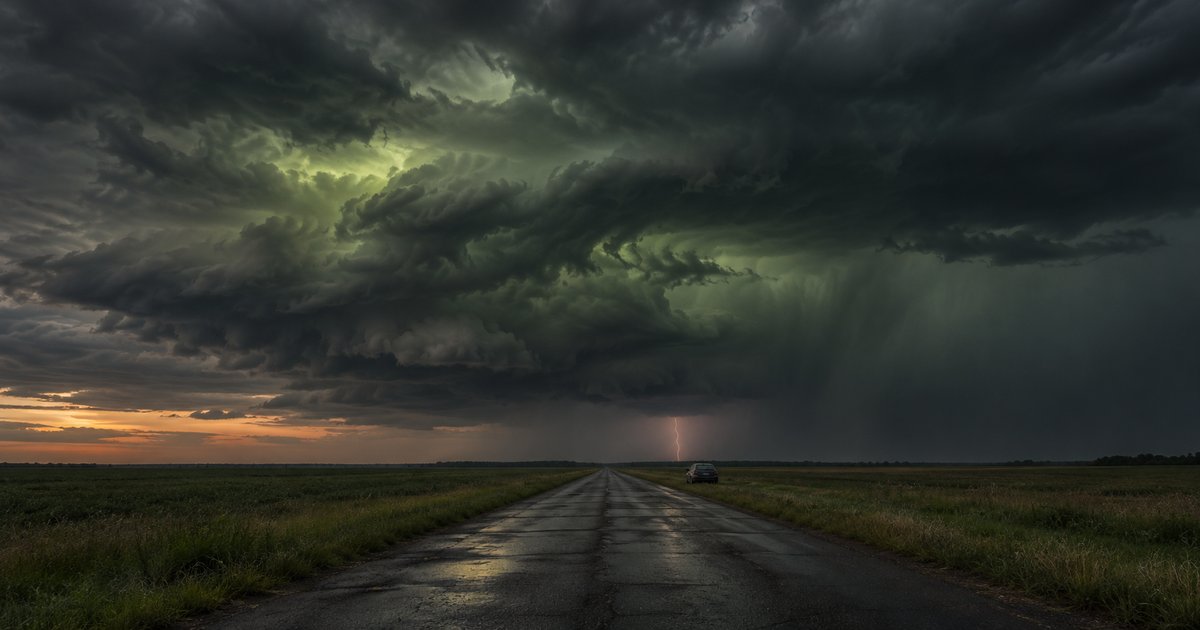
Storm spotting is a volunteer service in which trained people report what storms are doing to the National Weather Service, most often from a fixed place, while storm chasing is traveling to follow storms, which the Weather Service says it does not condone, endorse or recommend. Lightning is a hazard both share: the Weather Service’s spotter guide calls it the most common weather hazard facing spotters and names no outdoor place that protects them.
Storm spotters are trained volunteers who report what storms are doing to the National Weather Service
SKYWARN, the National Weather Service’s spotter program, is a volunteer program with between 350,000 and 400,000 trained severe weather spotters, according to the agency’s SKYWARN page as of November 2026. Spotters give the Weather Service timely and accurate reports, and the page says the focus is on severe local thunderstorms. It dates the program to the 1970s. Training is free and typically lasts about 2 hours. The page lists what it covers: how thunderstorms develop, storm structure, how to identify features of severe weather, what to report, how to report it and basic severe weather safety.
The agency wants spotters even though it has Doppler radar. The Norman, Oklahoma forecast office says radar cannot tell forecasters everything and that spotters still give them the most complete picture of what is happening in and around severe storms. The office explains that spotter reports are combined with radar data to decide whether to issue a warning, cancel one, continue one, warn the next county or change the warning type. A 1999 review in Weather and Forecasting by Doswell, Moller and Brooks says storm spotting began in World War II as an effort to protect military installations and became a public service as public tornado forecasting resumed, and it describes SKYWARN as a civilian-based volunteer organization.
What spotters report is narrow and defined. The Norman office lists the events it wants to hear about as soon as possible: a tornado; a funnel cloud or wall cloud with organized, persistent, sustained rotation; hail of quarter size or larger; wind gusts of 58 mph or higher; flooding that affects roads, homes or businesses; and storm damage. It notes that the criteria vary slightly between spotter networks. Hail of quarter size and gusts of 58 mph are also the thresholds the Weather Service uses to call a thunderstorm severe, and the list does not mention lightning. Spotters learn to look for features such as a wall cloud, a rain-free base and a funnel cloud, and to tell real tornadoes from look-alikes; the office stresses that not all wall clouds produce tornadoes.
Storm chasing means following a storm, and the Weather Service does not endorse it
The Chicago forecast office draws the line in its spotter FAQ. A storm spotter, it says, is a volunteer or a paid county or municipal employee who spots as a community service, usually as part of an organized network. Storm chasing involves following a developing thunderstorm to view or photograph severe weather; it may be done for education or research, the office says, but is mostly done for personal fulfillment. The same office says some spotters are mobile, in vehicles, but most spot from fixed, strategic locations around a community or county. In its mobile-spotter section, the Norman office adds a note: the Weather Service does not condone, endorse or recommend storm chasing, calls it a dangerous practice and says it should not be attempted.
| Question | Fixed spotter | Mobile spotter | Storm chaser |
|---|---|---|---|
| Where | A home, business or other fixed location; most spotters, per Chicago | A vehicle or another position away from home or business; many communities assign locations (Norman) | Follows a developing thunderstorm (Chicago) |
| Purpose | Alert community officials and the Weather Service (Chicago) | Alert community officials and the Weather Service (Chicago) | Education, research or, mostly, personal fulfillment (Chicago) |
| Weather Service position | May have shelter and avoid some mobile hazards, but cannot always leave a storm’s path (Norman) | Lists the road, lightning and the storm as hazards; advises a partner (Norman, Paducah) | Does not condone, endorse or recommend it (Norman) |
The two activities have grown up together. Doswell, Moller and Brooks write that spotter training has evolved with the inception and growth of scientific and hobbyist storm chasing.
Lightning is the most common weather hazard facing spotters, and the Weather Service names no outdoor exception
The Weather Service’s Spotter’s Field Guide says lightning occurs with every thunderstorm and is the most common weather hazard facing spotters. The guide’s reason is position: spotters are frequently in the open or on a hilltop, which makes them especially vulnerable. It calls lightning an underrated killer and says nearly as many people lose their lives to lightning as to tornadoes, but that lightning typically hits one or two people at a time, so the deaths get less publicity. The Paducah, Kentucky forecast office’s sheet on mobile spotting ranks lightning as the second threat to a mobile spotter, after the highway and ahead of the storm itself, and says spotters by the nature of their work are more prone to be struck.
The Norman office names the ways spotters add to their own exposure: being in the open, being on a hill or high spot for a better view, parking or standing next to metal fences or under power lines, standing close to camera tripods and using radio equipment attached to antennas. It says lightning can travel a considerable distance along fences and power lines, so a spotter in an area without frequent lightning can still be reached, and it advises avoiding being the tallest object. The Paducah sheet adds that the first cloud-to-ground strikes often come near developing rain shafts, sometimes right near the spotter.
Warning signs are not a plan. The Norman guide says lightning typically gives no warning, that the first strike a spotter sees may be the last, and that spotters should not wait for a sign such as hair standing on end, or for sounds on AM or other radio equipment, before taking shelter.
The shelter rule is the one everyone gets. The field guide says no place outdoors offers protection from lightning, and it tells spotters to stay in a hard-topped vehicle or an indoor location for at least 30 minutes after the last thunder they hear. If they use radio equipment, it says, they should avoid contact with it and with other metal inside the vehicle. The Weather Service’s lightning overview names substantial buildings and hard-topped vehicles as the shelter options and says rain shelters, small sheds and open vehicles are not. It also says to wait 30 minutes after the last lightning or thunder before going back outside, and it describes the people who wait too long: some stay out until the thunderstorm is overhead and it starts to rain.
The sources cited here give no count or rate of lightning injuries among spotters or chasers. A 2020 case report in the Journal of Investigative Medicine High Impact Case Reports described a storm chaser in Oklahoma who was struck by lightning and suffered burns, ruptured eardrums in both ears and pulmonary edema, fluid in the lungs. Its authors wrote that, to their knowledge, it was the only reported case of a lightning strike injuring a storm chaser. An Associated Press report carried by Voice of America on May 14, 2022 said inexperienced chasers who get too close to storms can be hit by debris or struck by lightning.
Traffic crashes top one Weather Service office’s list of threats to mobile spotters
The Paducah office’s sheet on mobile spotting names the highway as the number one threat. It says spotters are prone to drive with less than full attention, above the speed limit, down roads covered with rain or hail, and to stop and start without warning. The Norman office says driving on a public road can be dangerous even on a sunny day with no storms, and that heavy rain, gusty winds, hail and blowing dust raise the danger sharply. It warns spotters to watch the other drivers, because severe storms in the Plains often draw a crowd that runs from casual onlookers to organized groups of storm chasers. The Weather Service tells spotters to work with a partner so the driver can watch the road, and not to text while driving or look at a radar app on a phone or tablet; the field guide says to pull off the road first. The guide also reports that in 2017 three spotters were killed in a two-car crash when one driver failed to obey a stop sign.
News reporting from outside the agency points the same way. An Associated Press report carried by Voice of America on May 14, 2022 said the deaths of four storm chasers in car crashes over two weeks had underscored the dangers as more people clog back roads and highways. Marshall Shepherd, director of the atmospheric sciences program at the University of Georgia, told AP that on some storms there is such a volume of chasers that it creates potential traffic and other hazards, and that he is not anti-chasing because seeing storms in their natural context has scientific and broader value. Greg Tripoli, a University of Wisconsin–Madison professor who taught a storm-chasing class until the early 1990s, said he warned students that the most likely way they would get hurt is in a car crash. The report adds that the University of Oklahoma has a policy that anyone who chases storms does so at their own risk and that chasing is not part of its meteorology curriculum.
Flash floods, downbursts and hail are the other thunderstorm hazards the spotter guide names
The Weather Service’s field guide says flooding causes more fatalities each year than any other thunderstorm hazard, and that more than half of flood-related drownings happen when a vehicle is driven into hazardous flood water. Two feet of moving water will carry away most vehicles, it says, and six inches of fast-moving water can knock a person off their feet. Flooding is particularly dangerous at night, when it is harder to see that a road is flooded. The Norman office tells spotters never to drive into water that covers a road.
The guide calls downbursts, strong downdrafts with an outrush of damaging wind at or near the ground, another hazard for spotters and says they cause most of the wind damage from severe thunderstorms, with winds that may exceed 100 mph in the most intense storms. On hail, it says hard-top vehicles offer good protection up to about golf ball size and that larger stones will damage windshields. The Norman office says spotters sometimes place themselves in the core of a dangerous storm, which chasers call core-punching, and calls it very dangerous: a driver can meet very large hail, can drive into a tornado’s path with little time to react, and faces low visibility, heavy rain and violent winds.
A 2014 paper on one Oklahoma tornado documents what close approach can do
A paper by Wurman, Kosiba, Robinson and Marshall in the Bulletin of the American Meteorological Society in January 2014 analyzes the large tornado near El Reno, Oklahoma, on May 31, 2013. The abstract says it caused eight fatalities, including storm chasers and researchers who were trying to deploy instruments. Radar measurements in one of the small vortices inside the tornado exceeded 257 mph (115 meters per second). That vortex became nearly stationary near a research team’s vehicle and carried it about 2,000 feet (600 meters), killing the team, and another team’s vehicle was destroyed inside the tornado, causing injuries. The authors conclude that the unusual, likely unpredictable path of the inner vortex probably contributed to the deaths and injuries, and they discuss the risks of chasing and scientific missions near and inside large, complex tornadoes.
The Weather Service’s guidance for a spotter who meets a tornado is the ordinary one. The field guide says never to try to outrun a tornado in an urban or congested area and not to shelter under bridges or overpasses, which it says offer no protection and could raise the chance of injury or death. It names flying and falling debris as the biggest hazard.
Spotting from a fixed location changes the hazards without removing them
The Norman office says fixed spotters may have access to shelter and are not exposed to everything mobile spotters face, but that there are cases where a mobile spotter can get out of a dangerous storm’s path and a fixed one cannot. Its lightning advice for people spotting from a building is the indoor rule: stay away from doors and windows, avoid electrical appliances and plumbing fixtures because they can be pathways for lightning, and stay off corded phones as much as possible.
The Weather Service tells spotters that safety outranks the report
The field guide says spotter reports are vital to a community and the Weather Service, but not at the expense of anyone’s life, and that safety comes first. It tells spotters to obey all laws and the directives of public safety officials. It gives them the acronym ACES: awareness of the situation around them, communication with others about their whereabouts, more than one escape route, and the closest places to take shelter if they cannot reach an escape route. The Paducah office puts the same point bluntly: it would rather not receive a report than put someone’s life in danger. It also says stress, excitement and tension will affect even the most seasoned spotter. The field guide calls nighttime spotting from a vehicle dangerous and not recommended, and the Norman office says storms at night present special problems for spotters.
Training is the entry point, and it is not a license to chase. The Norman office says its web guide cannot replace a 2-to-3-hour training session and that sessions are typically held in late winter and early spring. The Chicago office says spotting is recommended for adults because of the complexity of storm structure and the potential danger, and that it encourages spotters to be retrained every two years.
Lightning Tracker is an iPhone app that shows recently detected lightning on a live map; it is not a storm-spotting or storm-chasing tool, and it does not replace official warnings or local procedures.
Not a substitute for official weather warnings.
If you hear thunder, seek shelter even if the app shows no nearby strike.
Sources
- National Weather Service, SKYWARN Storm Spotter Program
- National Weather Service Norman, An Introduction to Storm Observation and Reporting
- National Weather Service, Weather Spotter’s Field Guide: Safety First
- National Weather Service Chicago, Spotter Frequently Asked Questions
- National Weather Service Paducah, Mobile Spotting Safety Rules (PDF)
- National Weather Service, Overview: Lightning Safety
- Doswell, Moller and Brooks, Storm Spotting and Public Awareness since the First Tornado Forecasts of 1948, Weather and Forecasting, 1999
- Wurman, Kosiba, Robinson and Marshall, The Role of Multiple-Vortex Tornado Structure in Causing Storm Researcher Fatalities, Bulletin of the American Meteorological Society, January 2014
- Shipman et al., The Dangerous Life of a Storm Chaser: A Lightning Strike Injury Causing Serious Injury, Journal of Investigative Medicine High Impact Case Reports, May 2020
- Associated Press, Storm Chasers Face Host of Dangers Beyond Severe Weather, carried by Voice of America, May 14, 2022