 Lightning Tracker
App Store
Places and activities
Hazeltine and Crooked Stick, 1991: two lightning deaths at golf majors
November 18, 2026 · 8 min read
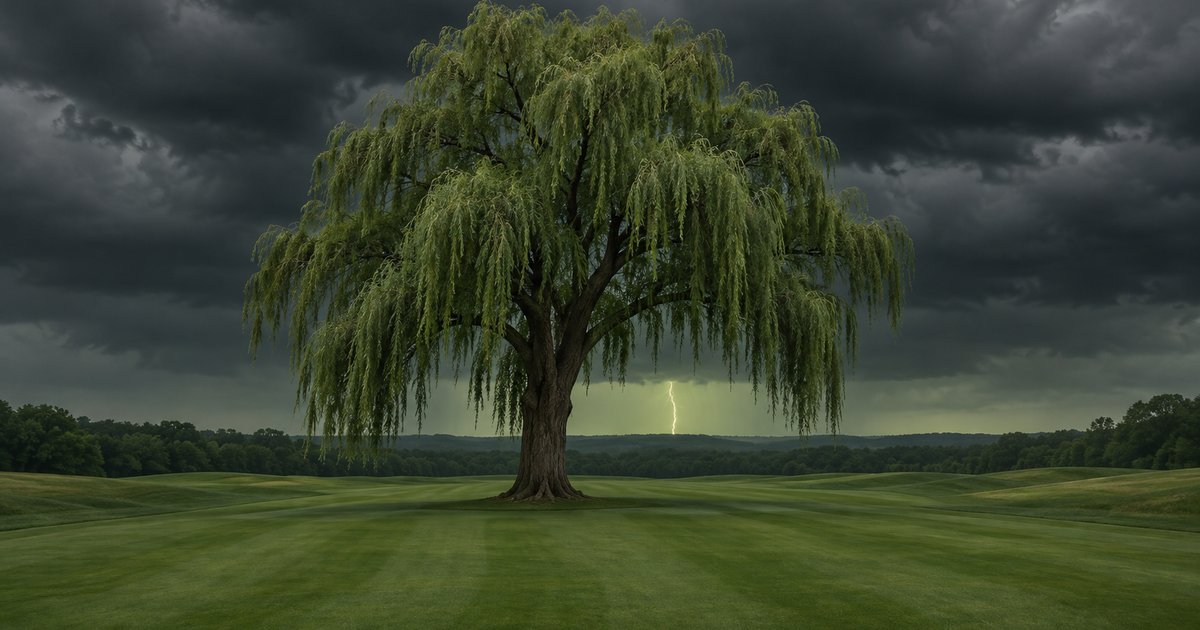
On Thursday, June 13, 1991, lightning struck six spectators who were sheltering near a tree at the U.S. Open at Hazeltine National Golf Club in Chaska, Minnesota, and one of them died. On August 8, 1991, a spectator at the PGA Championship at Crooked Stick in Indiana was killed by lightning while walking to his car, according to UPI. The sources disagree on some details of the Hazeltine strike, including its place on the course and the clock time, and the USGA documents describing its 2017 and 2026 spectator weather plans do not mention either event.
Lightning struck six spectators under a tree at Hazeltine about 10 minutes after play stopped
The Los Angeles Times reported on June 14, 1991 that one spectator was killed and five were injured on Thursday when lightning hit them at the U.S. Open, as a quick-hitting thunderstorm delayed play. It says they were standing near a tree close to the 11th tee, that a tournament official described the six as clustered under the tree within 15 feet (4.6 m) of one another, and that the strike came about 10 minutes after play was suspended at 12:49 p.m. CDT. According to the same report, only 24 players in the 156-man field had finished the first round, play did not resume until 3:30 p.m. CDT, and about 40,000 spectators were on the course.
The Times described the storm as brief but extremely strong, with heavy rain and wind, and said at least one tree was downed. Associated Press (AP) coverage on August 15, 2002, which was written when the PGA Championship returned to Hazeltine, says the strike killed one spectator and left five others hospitalized after they stood under a tree during a driving rainstorm. It adds that the tree was cut down shortly after the accident. Star Tribune columnist Patrick Reusse wrote on July 13, 2021 that the group had gathered under a willow tree and that the bolt found the willow.
The sources place the strike differently and disagree on when play stopped
The Los Angeles Times, the AP and the Star Tribune each give a different description of the spot, and the Times and the Star Tribune give different suspension times. The table states each as its source words it.
| Source and date | Place | Play suspended |
|---|---|---|
| Los Angeles Times, June 14, 1991 | Near a tree close to the 11th tee | 12:49 p.m. CDT |
| Associated Press, August 15, 2002 | Under a tree during a driving rainstorm on the 16th fairway | Not stated |
| Star Tribune, July 13, 2021 | The nook between the 11th and 17th tees, above the 16th hole | 1:49 p.m. |
The three descriptions use different reference points, and none of the sources says which is the exact location. The suspension times are an hour apart, and none of the reports reconciles them: the Times gives 12:49 p.m. CDT in a report dated the day after the storm, and the Star Tribune gives 1:49 p.m. in a column written 30 years later. The Times and the AP agree on six people under one tree and on one death, and the Star Tribune places a group of spectators under one willow.
Officials said there was no way to shelter 40,000 people on the course
David Fay, executive director of the U.S. Golf Association (USGA), told the Los Angeles Times in 1991 that getting 40,000 people on the course to shelter was “not an exact science.” He said marshals went up and down each fairway to tell the gallery that play was suspended, and that four or five air horns were sounding, because the USGA had found over the previous few years that no single device got through on a golf course. Hale Irwin, the defending champion, who was on the 14th green at the time, said the storm was pretty scary and that there was no place for 40,000 people to hide.
Reusse’s column says loudspeakers told the estimated 40,000 spectators to seek shelter, that there were no large shelters for the purpose, and that spectators did what Minnesotans usually do in the open and gathered under the nearest tree. The Los Angeles Times adds that some players went into the clubhouse during the delay, while others huddled in a courtesy bus and a maintenance shed. In the AP’s 2002 account, survivors said fans in the bleachers were getting soaked, afraid of losing their prime seats.
The AP’s 2002 article explains why that tree was struck by saying that a willow’s leaves hold water more easily, so it became a lightning rod. The National Weather Service (NWS) puts the cause differently: it says height, pointy shape and isolation are the dominant factors in where a bolt strikes, and that tall, isolated natural objects like trees and mountains get struck many times a year.
At the PGA Championship, a fan was struck on the way to his car about 46 minutes after play stopped
UPI reported on August 8, 1991 that the spectator was struck in the left shoulder at about 3 p.m. CDT while walking from the course to his car, which was parked in a lot near the 15th hole on the southwest edge of Crooked Stick Golf Club in Carmel, Indiana. According to UPI, he was pronounced dead at 3:42 p.m. at a hospital less than two miles (3 km) away. UPI called it the second time that year that a spectator had been struck and killed at a major golf tournament. ESPN wrote on May 17, 2021 that a weather delay required the course to be evacuated and that the man, walking to his car, was struck in the chest and died at the scene. The two accounts differ on where on his body he was hit and where he died.
UPI’s timeline comes from Jim Awtrey, then executive director of the PGA of America, who said tournament officials used radar and talked with two weather services as the storm approached. Warnings went up on scoreboards at 1:15 p.m., and play was suspended with sirens at 2:14 p.m. Play resumed about 4 p.m. after the storm passed. Awtrey called lightning an unavoidable, dangerous occurrence. Player Ken Green, who shot a 68, told UPI that players were called in before he saw any lightning. By UPI’s times, 59 minutes passed between the scoreboard warnings and the suspension, and about 46 minutes between the suspension and the strike.
| U.S. Open, June 13, 1991 | PGA Championship, August 8, 1991 | |
|---|---|---|
| Where the people were | Six spectators under one tree | One spectator walking to his car |
| Time from suspension to strike | About 10 minutes (Los Angeles Times) | About 46 minutes (from UPI’s times) |
| Outcome | One killed, five injured (Los Angeles Times) | One killed (UPI) |
The USGA describes a spectator plan built around early warnings, not shelter for everyone
The AP wrote on August 15, 2002 that severe weather-detection systems had been upgraded at PGA events since the summer of 1991, and that it was still up to fans to heed warnings. The article does not say what was upgraded. The USGA’s own course evacuation guide, dated November 2017, says that providing shelter for thousands of fans over hundreds of acres is not practical. It describes instead a system of “Weather Warning” signs hung at all status boards when inclement weather is detected within a potentially dangerous range, so that fans have time to move toward shelter before play is suspended, and it tells marshals to pass the word to fans on their hole. The guide says marshals notify fans to avoid wire fences, hill tops and single trees, and that any suspension decision is made by the USGA with the help of an on-site meteorologist.
The USGA’s 2026 U.S. Open fan guide said meteorology staff would be onsite and that alerts on leaderboards, thru boards and video boards would run from blue and yellow for general awareness to orange, which meant fans should be prepared to take action. A Weather Warning was to tell fans that dangerous weather is imminent and that they should take immediate action, including exiting all grandstands. A suspension of play for dangerous conditions was to be indicated by one prolonged air-horn blast, grandstands were to be cleared immediately, and fans were told to avoid open areas, hilltops, high places, isolated trees, golf carts and wire fences. Neither USGA document mentions 1991, and no PGA of America weather policy is cited, so nothing here shows when each practice began or which of them followed these two deaths.
The NWS says hearing thunder means you are likely within striking distance
The NWS says no place outside protects you when thunderstorms are in the area, and that hearing thunder means you are likely within striking distance. Its lightning overview says too many people wait far too long to get to a protected place, and that these delays lead to many of the lightning deaths and injuries in the United States. It names substantial buildings and hard-topped vehicles as the options that work, and it advises waiting 30 minutes after the last lightning or thunder before going back out. NWS guidance on lightning myths adds that being underneath a tree is the second leading cause of lightning casualties, and its tips page says never to shelter under an isolated tree.
The NWS describes side flash and ground current as ways lightning injures people, and says most side flash victims have taken shelter under a tree. The reports do not say how the six spectators at Hazeltine were hurt, so no conclusion is drawn on that. For an outdoor event, the NWS recommends that organizers have a lightning safety plan and follow it without exception. UPI does not say how many spectators were still outside at Crooked Stick when the strike came, so nothing here shows whether an earlier stop would have changed either outcome.
Lightning Tracker, an iPhone app, alerts you when a strike is detected inside a radius you set for each place, 10 miles (16 km) by default, and it does not replace official warnings or a venue’s procedures.
Not a substitute for official weather warnings.
If you hear thunder, seek shelter even if the app shows no nearby strike.
Sources
- Los Angeles Times, One Spectator Killed, Five Hurt by Lightning (June 14, 1991)
- Associated Press via Golf Channel, Survivors Recall Day Lightning Struck Hazeltine (August 15, 2002)
- Star Tribune, A bolt from the sky became an unforgettable tragic memory from 1991 U.S. Open (July 13, 2021)
- UPI, PGA spectator struck by lightning (August 8, 1991)
- ESPN, How John Daly, an unknown golfer then, helped a family dealing with tragedy 30 years ago (May 17, 2021)
- United States Golf Association, Course Evacuation (November 2017)
- United States Golf Association, 2026 U.S. Open Fan Information Guide
- National Weather Service, Overview: Lightning Safety
- National Weather Service, Lightning Safety and Outdoor Sports Activities
- National Weather Service, Lightning Myths
- National Weather Service, Lightning Safety Tips and Resources
- National Weather Service, How Lightning Causes Death and Injury