 Lightning Tracker
App Store
Places and activities
Lightning in Alberta: storms, wildfire and what to do
November 19, 2026 · 4 min read
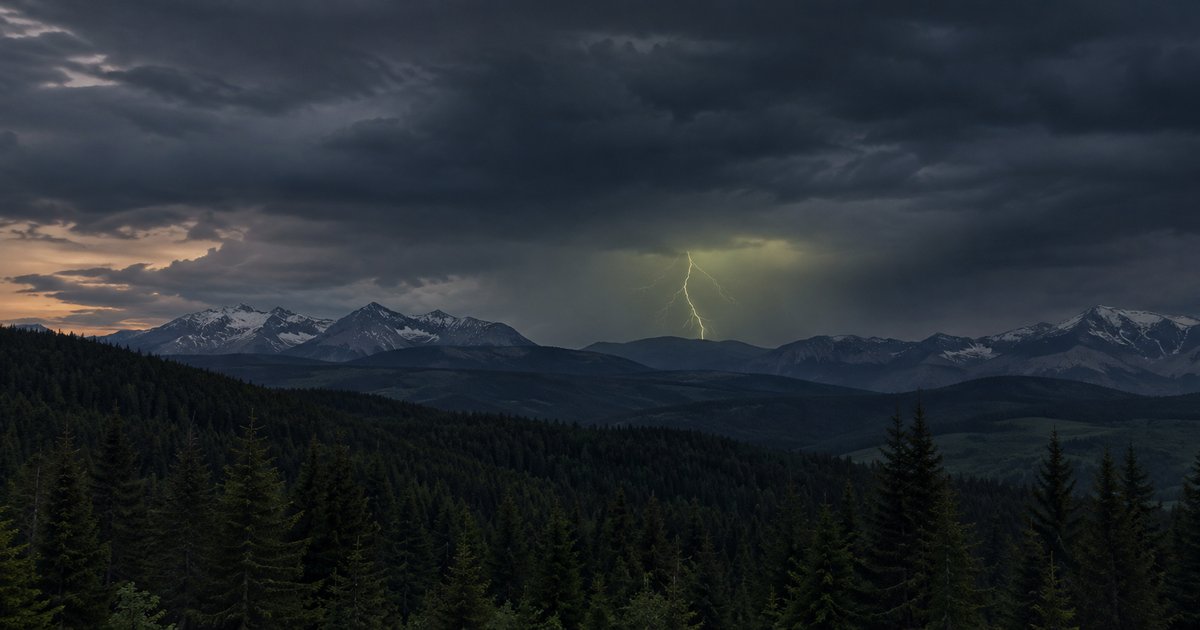
Alberta’s lightning matters to people outdoors and wildfire crews: Alberta Wildfire reported on November 2, 2026, that lightning had caused 34% of the province’s 789 wildfires counted so far that year, with investigations still open. ECCC’s historical map also identifies higher flash density in the Alberta foothills and Swan Hills. For a storm near you, use ECCC warnings and detected-strike information, then move to shelter at thunder; Alberta’s fire maps answer a different question.
Alberta’s foothills have a measured lightning concentration
Environment and Climate Change Canada (ECCC) maps higher lightning activity east of the Rocky Mountain continental divide, especially the Alberta foothills and Swan Hills. Its 1999–2018 Western Canada table gives Alberta an average of 0.5 flashes per square kilometre per year, 0.75 in central areas east of the Rockies, and 1.2 in small areas along a Calgary-to-Edson line. These historical flash densities are not predictions for a campsite or a particular day. The small higher-density areas do not mean all of Alberta has the same exposure.
The Government of Alberta says severe storms occur frequently across the province and can develop quickly. Thunderstorms can bring wind, hail and heavy rain as well as lightning, particularly in summer. Its advice applies even without a severe-weather warning: every thunderstorm is an electrical storm. Check the forecast before a long hike or lake trip and identify a building or vehicle that you can reach before a storm arrives.
Lightning can ignite fires that appear after the storm
Alberta Wildfire’s November 2, 2026, Slave Lake Forest Area update reported 789 wildfires across the province so far that year, with 34% attributed to lightning, 62% to human activity and 4% still under investigation. The agency warned that the shares could change as investigations continued. The 34% is a provisional 2026 share of reported wildfires, not the share of all lightning strikes that start a fire. It does not identify the cause of a fire seen at a particular place.
Alberta Wildfire’s May 21, 2026, Slave Lake Forest Area update explains why a storm can matter after the clouds leave. A lightning ignition can smoulder in the ground for days before becoming visible; the agency calls this a holdover fire. It said crews track strike locations, patrol heavily affected areas and watch for smoke. Dry lightning with little rain can heighten ignition concern, but Alberta Wildfire’s holdover explanation does not require a rain-free storm.
Alberta’s fire-weather service says wildfire products are issued during the March 1 to October 31 wildfire season after snow has melted. The province says fires can occur outside that period too. If you see smoke or flame and suspect a wildfire in a forested area, Alberta Wildfire asks you to call 310-FIRE (3473). For an immediate threat to life or property, the provincial emergency guidance says to call 911.
Different official pages answer different questions
ECCC’s September 2026 Lightning Map page sends readers to the Lightning layer on its Weather Information map or to WeatherCAN for observed strikes. Brown circles represent detected ground strikes; a larger circle means more strikes at that location. ECCC says the layer updates every minute and is not a forecast. It can miss in-cloud lightning, a ground strike the network did not detect, or a strike still waiting for an update. An empty screen is no reason to remain outside when you hear thunder; strike age and map gaps matter when interpreting any display.
Alberta Wildfire’s fire-weather page serves a different purpose. Its meteorologists prepare products for wildfire personnel and other Forest Protection Area stakeholders. Its Vaisala detection system monitors cloud-to-ground lightning across Alberta, and the page links a daily lightning map. Fire managers have a separate real-time display for patrol planning. The public daily map is not a personal lightning warning or a prediction of the next strike. The difference between lightning observations and radar rain matters when rain seems absent but thunder is audible.
Alberta’s Wildfire status page answers a third question: where active wildfires, fire bans and forest-area updates are reported. For warnings, the Government of Alberta says ECCC handles weather-related alerts while local authorities handle fire and flood alerts. Alberta Emergency Alerts identify the affected location and action to take. Before a park outing, Alberta Parks’ advisories list local closures and public notices; read the notice for your destination.
Move at thunder, including at campsites and lakes
Alberta’s thunderstorm guidance says visible lightning or audible thunder is a threat and tells people to seek a fully enclosed building with wiring and plumbing. It says to wait 30 minutes after the last rumble before going outside. Do not wait for a severe-weather warning, rain or a dot on a map. ECCC’s camping guidance says a tent, open picnic shelter and outhouse do not protect you from lightning. Its other named shelter is an all-metal automobile rather than a fabric-sided camper. Campsite shelter choices need to be made before the storm reaches the site.
For a hike in Alberta’s foothills or mountains, ECCC advises leaving peaks, ridges and other high terrain before a thunderstorm arrives. If thunder starts while you are exposed, descend promptly. On a lake, the Government of Alberta says to head for shore immediately. A ditch or depression can lower exposure when no building or vehicle is reachable, and Alberta warns low-lying areas can flood during heavy rain; no outdoor position provides complete lightning protection. Stay away from tall isolated objects, metal fences and water while moving toward shelter.
Lightning Tracker works in Alberta and shows recent detected strikes in its English-only iPhone app. Use those observations alongside official warnings and the thunder you hear, since detection networks can miss or delay strikes.
Not a substitute for official weather warnings.
If you hear thunder, seek shelter even if the app shows no nearby strike.
Sources
- Environment and Climate Change Canada, Map of Canada’s lightning hotspots
- Environment and Climate Change Canada, Lightning Map
- Environment and Climate Change Canada, Lightning safety when camping
- Government of Alberta, Thunderstorms, lightning, heavy rain and hail
- Government of Alberta, Fire weather forecasts and observations
- Alberta Wildfire, Slave Lake Forest Area — November 2, 2026
- Alberta Wildfire, Slave Lake Forest Area — May 21, 2026
- Government of Alberta, Wildfire status
- Government of Alberta, Emergency alerts
- Alberta Parks, Advisories and Public Safety