 Lightning Tracker
App Store
Places and activities
Edmonton thunderstorms and lightning: season, warnings and official checks
November 19, 2026 · 4 min read
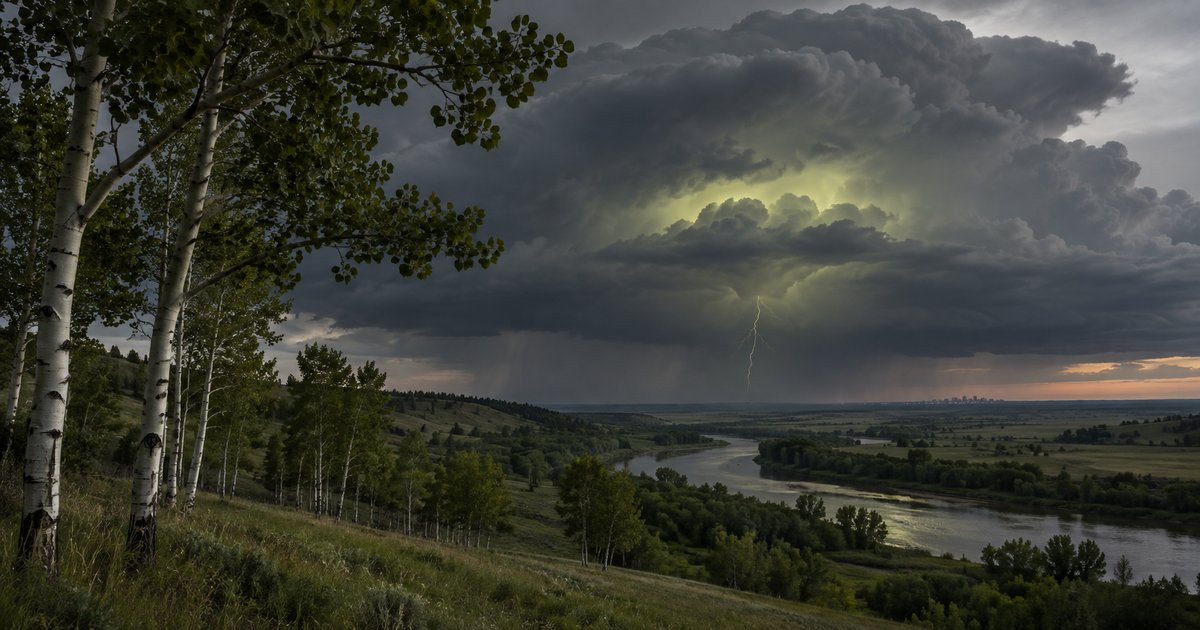
Environment and Climate Change Canada’s 1999–2018 study recorded an average of 36.9 days a year with cloud-to-ground lightning detected within 25 km of Edmonton’s centre. Summer is the main thunderstorm season, but that historical average cannot tell you whether lightning will occur during a particular outing. Check ECCC’s Edmonton forecast and alerts for the conditions ahead, then follow local venue instructions when thunder begins.
When is Edmonton’s thunderstorm season?
Edmonton’s thunderstorms are mainly a warm-season concern. ECCC’s warm-season hazards guide says severe weather, including thunderstorms, is particularly common during Canada’s summer months. Its 1999–2018 lightning statistics show that July had the most cloud-to-ground flashes nationally, followed by August and June. That national ranking describes a pattern across Canada, not a monthly forecast or a precise Edmonton calendar.
ECCC’s city study gives a more local measure: 32,811 cloud-to-ground flashes were detected within 25 km of Edmonton’s centre during 1999–2018, and the average annual number of days with a detected flash in that circle was 36.9. The circle extends beyond municipal boundaries, so the figure is not a count of strikes on city property. A lightning day also says nothing about how long a storm lasted or whether a particular neighborhood was affected. ECCC notes that cities can have similar numbers of lightning days yet different flash totals because storms differ in strength and duration.
Edmonton can have severe-weather impacts alongside lightning. Alberta’s thunderstorm guidance lists heavy rain, hail and strong wind among storm hazards. A 2026 CityNews report described flooding on Edmonton’s Yellowhead Trail after a July storm; that event illustrates why a summer outing may involve more than a lightning check, but one storm cannot stand in for a typical season.
Where should I check an Edmonton warning?
ECCC’s Edmonton forecast and alerts is the first official place to check before leaving. Read the alert’s full text and the named area; a regional alert need not describe the same conditions in every part of the city. ECCC’s weather-alert guide says a watch means conditions favor possible severe weather and is a cue to prepare. A warning is an urgent message that severe weather is happening or expected and calls for action.
The Alberta Emergency Alert system is a second official route for major emergencies. Alberta says ECCC issues weather-related alerts in the province, while the provincial alert system distributes critical information on the location of an emergency and what action to take. Alberta lists TV, radio, websites, its mobile app and compatible phones among distribution channels. A lack of a severe-thunderstorm warning is not a reason to remain outdoors when thunder is audible: Alberta’s storm guidance says every thunderstorm is an electrical storm, whether or not a severe warning is in effect.
Which official lightning map serves Edmonton?
ECCC’s Lightning Map sends readers to the Lightning layer of its Weather Information map and the WeatherCAN app. ECCC says the layer plots detected ground strikes and updates every minute. Its older Canadian Lightning Danger Map has moved; ECCC’s lightning hub directs readers to Canada.ca/weather and the Lightning layer. This page links to that official product but displays no strike positions or live status of its own.
The ECCC map shows observations, not where the next strike will land. Its guide says in-cloud flashes do not appear and ground strikes may be absent because of an update delay or a missed detection. Read the age and gaps on a lightning map before interpreting a blank view. ECCC also says lightning can appear without rain on its radar; radar rain and detected lightning answer different questions. Thunder you can hear is enough reason to leave an exposed spot even when no circle appears on a screen.
What happens at Edmonton pools and sports fields?
Edmonton’s outdoor-pool handbill gives a specific thunder rule: “Should you hear thunder or see lightning the pool will be cleared.” It says patrons move into changerooms and wait 30 minutes after the last thunder, with each new thunder or lightning event restarting the timer. The City’s Fred Broadstock Outdoor Pool page likewise lists thunder or lightning among reasons for an outdoor-pool closure. Follow the lifeguards’ instructions and check the City’s facility notifications before travelling to a pool after a storm.
The City’s outdoor sports fields page takes a different approach to facility status. It directs groups to Facility Notifications for field closures due to inclement weather and says a thunderstorm can prevent a booking from being used. Those notices concern the field’s operation; they do not replace an immediate decision to leave play when thunder is heard. Alberta’s guidance calls for a fully enclosed building with wiring and plumbing when lightning is visible or thunder audible. The choice of lightning shelter matters at a field with open space and small structures.
When can an outdoor plan resume?
Alberta tells people to wait 30 minutes after the last rumble of thunder before going outside. Edmonton’s pool handbill uses the same wait and says a new thunder or lightning event resets the timer. That means a short quiet period is not a signal to resume swimming or play. The 30-minute wait after thunder also applies when rain has stopped but thunder can still be heard.
Lightning Tracker is an iPhone app that works in Edmonton and can send lightning alerts when it detects lightning within a radius you set for a place. Its detections can help you monitor a place, while ECCC alerts and the thunder you hear guide immediate decisions.
Not a substitute for official weather warnings.
If you hear thunder, seek shelter even if the app shows no nearby strike.
Sources
- Environment and Climate Change Canada, Lightning activity in Canadian cities
- Environment and Climate Change Canada, Maps and statistics: lightning in Canada
- Environment and Climate Change Canada, Warm season weather hazards
- Environment and Climate Change Canada, Weather Alerts
- Environment and Climate Change Canada, Edmonton, AB forecast
- Environment and Climate Change Canada, Lightning Map
- Environment and Climate Change Canada, Lightning
- Government of Alberta, Emergency alerts
- CityNews Edmonton, Parts of Yellowhead Trail flooded in north Edmonton after rainfall
- Government of Alberta, Thunderstorms, lightning, heavy rain and hail
- City of Edmonton, Summer Storm Safety Handbill
- City of Edmonton, Fred Broadstock Outdoor Pool
- City of Edmonton, Outdoor Sports Fields