 Lightning Tracker
App Store
Places and activities
Pocono 2012: what happened when lightning hit the parking lot
November 19, 2026 · 8 min read
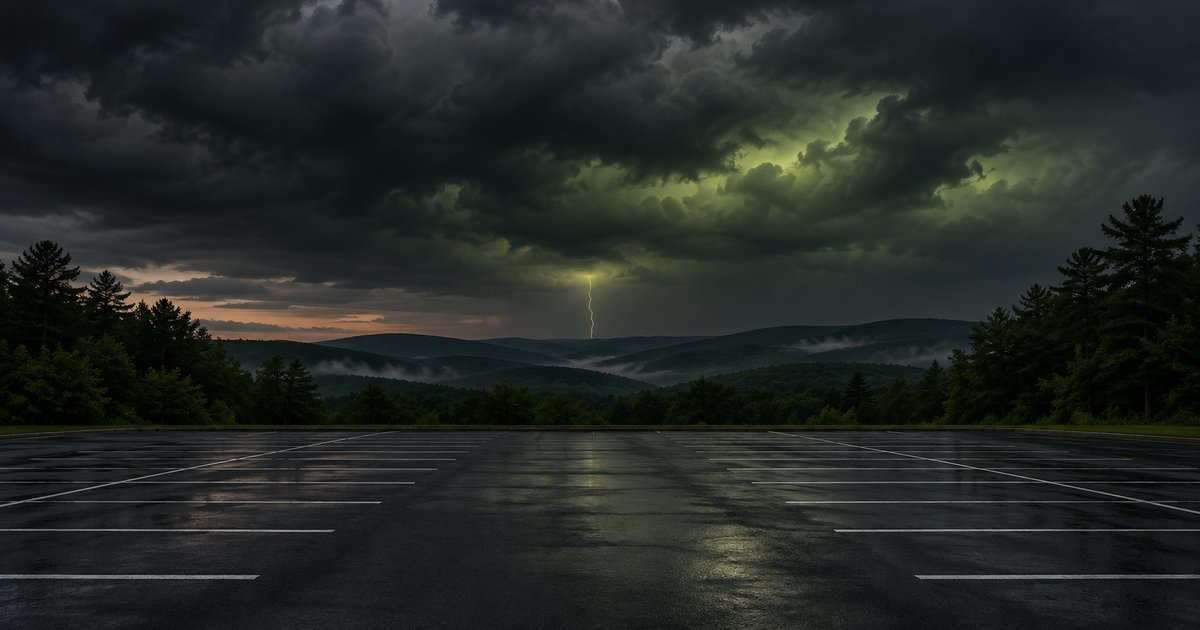
On August 5, 2012, lightning struck fans in the grandstand parking area at Pocono Raceway minutes after the NASCAR Pennsylvania 400 was stopped, killing one man and hurting others. The raceway, the National Weather Service and later court coverage agree on that outline but differ on some times and counts, and a jury ruled for the raceway and NASCAR in July 2016.
Lightning struck the grandstand parking area at about 5:01 p.m. on August 5, 2012
Pocono Raceway’s official statement, dated August 6, 2012, says the first strike occurred at approximately 5:01 p.m. Eastern Time inside its Grandstand Parking area, near Gate 5A. The raceway says a grandstand fire unit stationed nearby saw the strike and reported to the control tower that spectators were hurt, and that a friend started CPR on a 41-year-old spectator. According to the statement, medical personnel and additional emergency services were on the scene within three minutes and took over treatment.
The same statement says the control tower was told of a second possible strike near Gate 3 at approximately 6:35 p.m. and that one person was treated for minor injuries before going to a hospital. It says the man was confirmed deceased at 7:40 p.m. An undated update on the raceway’s site says a total of 10 race fans were struck by lightning in the parking lot after the end of that Sunday’s Pennsylvania 400, that all were taken to local hospitals, and that nine had been released. The Associated Press reported on August 6, 2012 that, according to the Monroe County coroner, the man died as he stood near his car in the parking lot.
The sources support a sequence that runs from a 4:12 p.m. warning to a 5:01 p.m. strike
No single log of the afternoon appears in the sources, so the table below assembles the times each one gives, with the source named in each row. All times are Eastern Daylight Time.
| Time | What the source says | Source |
|---|---|---|
| 4:12 p.m. | The National Weather Service (NWS) issues a severe thunderstorm warning that includes Monroe County, valid until 5:30 p.m. | NWS Mount Holly warning text |
| 4:21 p.m. | The track issues warnings that high winds and lightning are on the way | NBC Sports, July 12, 2016 |
| 4:54 p.m. | The race is stopped after 98 of 160 laps | NBC Sports, July 12, 2016 |
| About 5:01 p.m. | First strike in the Grandstand Parking area near Gate 5A | Pocono Raceway, August 6, 2012 |
| 5:04 p.m. | The NWS preliminary local storm report logs lightning injuries at the raceway | NWS Mount Holly report |
| About 6:35 p.m. | Second possible strike reported near Gate 3 | Pocono Raceway, August 6, 2012 |
| 7:40 p.m. | One man confirmed deceased | Pocono Raceway, August 6, 2012 |
Our arithmetic from the NBC Sports times: 42 minutes passed between the warning and the stop (4:12 to 4:54 p.m.), and 7 minutes between the stop and the first strike (4:54 to 5:01 p.m.). The Associated Press wrote in July 2016 that the lawsuit placed the death about five minutes after the stop. The raceway’s 5:01 p.m. and the NWS report’s 5:04 p.m. differ by three minutes, and the NWS entry lists its source as a newspaper, not an instrument.
On August 6, 2012 the raceway’s president told reporters that officials were going through log books to establish a timeline of the storm, the weather warnings and the final laps, according to the Associated Press. The raceway statements this article reviewed give the strike times but not when its own warnings went out.
The NWS warning text for Monroe County told people outside to move to shelter
The text of the NWS Mount Holly office’s 4:12 p.m. severe thunderstorm warning lists Monroe County, with Mount Pocono named as a city it covers. It says Doppler radar at 4:09 p.m. showed a line of severe thunderstorms capable of quarter-size hail and damaging winds over 60 mph, moving east at 30 mph, with Tobyhanna among the places expected to be reached around 5:00 p.m. The precautionary section calls it a dangerous storm, warns of deadly cloud-to-ground lightning, and says people outside should move to a shelter, preferably inside a strong building away from windows. The same text says a severe thunderstorm watch remained in effect until 9:00 p.m. for eastern Pennsylvania.
In our reading, the first strike at about 5:01 p.m. fell inside that warning’s validity window, which ran to 5:30 p.m. The text describes the storms by their hail and wind potential and mentions lightning in its advice, so it was not written as a lightning alert.
Fans reported not hearing the warnings, and the track reported issuing them
The Associated Press reported on August 6, 2012 that the track posted on Twitter near the end of the race encouraging fans to “seek shelter as severe lightning and heavy winds are in our area,” and that the crowd was also advised over public address systems. The same report says some fans wrote on the raceway’s Facebook page that they never heard the announcements. Another Associated Press report, published by Insurance Journal on August 7, 2012, says the track sent its Twitter messages to more than 22,000 followers.
The AP adds context on why the message is hard to deliver: it calls most such facilities, and the 2.5-mile Pocono Raceway in particular, massive, with fans spread among grandstand seating and a spacious infield where they camp and tailgate. It says NASCAR stays in contact with track officials about weather but that communicating advisories to fans is the track’s responsibility. It also quotes John Jensenius, an NWS lightning safety specialist, who said, without addressing Pocono, that lightning in parking lots typically strikes poles and then spreads out along the ground.
Counts of the people hurt differ between the raceway, the NWS and the news
The sources agree that one man died and that others were hurt, but they split the total differently. The table lists each count as the source words it.
| Source | What it says |
|---|---|
| Pocono Raceway statement, August 6, 2012 | One man deceased; nine other individuals taken to local hospitals after two separate strikes; nine treated after the first strike |
| Pocono Raceway update (undated) | A total of 10 fans struck in the parking lot, nine released, the tenth fatally injured |
| NWS preliminary report, 11:57 p.m. August 5, 2012 | Ten people injured at the raceway: two severe, two moderate, six minor; no death in the entry |
| NBC Sports, July 12, 2016 | One man killed; ten fans injured |
Read together, the sources point to ten people hurt in all, one of them fatally, but they do not agree on whether the nine and the ten overlap. The raceway’s first statement does not say whether the nine treated after the first strike include the man who died, and the NWS entry is a preliminary report written the same night. This article uses a total only where a source gives it.
A jury ruled for the raceway and NASCAR in July 2016
NBC Sports reported on July 12, 2016 that a Pennsylvania jury ruled on Monday, July 11, for Pocono Raceway and NASCAR in lawsuits brought by the widow of the man who died and by others injured in the strikes. The Associated Press, citing the Pocono Record, reported on July 14, 2016 that the widow’s suit said the NWS issued a severe thunderstorm warning at 4:12 p.m., the race was stopped at 4:54 p.m., and the man was killed about five minutes later. The Pocono Record account, republished by lehighvalleylive on July 15, 2016, says the suit claimed more could have been done to warn fans of the approaching weather.
The legal result is narrower than the lehighvalleylive headline, which says the raceway was not at fault. NBC Sports reports that the trial worksheet showed the jury found Pocono Raceway negligent, but answered “No” to whether that negligence was a factual cause of any harm to the man who died, and answered the same way in the two other cases. The jury did not find NASCAR negligent in any of the three, NBC Sports says. A spokesperson for the raceway had no comment, according to NBC Sports. The coverage this article reviewed gives no reasons beyond the worksheet and does not say whether anyone appealed, so this article states no more than that.
NASCAR says its lightning hold policy dates from the Pocono strike
NASCAR’s own website said on May 27, 2026 that the series has used its lightning hold policy since a fan died at Pocono Raceway in 2012. In the same article, NASCAR Vice President of Racing Communications Mike Forde said race control receives text messages for lightning strikes within 20 miles of the track and typically stops a race for a 30-minute hold when a strike lands within eight miles. He said that when weather partners judge a strike within eight miles to be moving away from the track, racing can continue, and that tweaks were made a few years ago to account for lightning moving out of the area. The article does not describe the policy NASCAR followed in 2012 or give the date the hold began.
On warnings, NBC Sports wrote in 2016 that NASCAR and tracks had made severe storm and lightning warnings more noticeable through multiple announcements and posts on video boards and social media. Those two reports are the sources this article found for changes at tracks.
The NWS advice for organizers and spectators starts with thunder and a written plan
The NWS says there is no protected place outside when thunderstorms are in the area, and that someone who hears thunder is likely within striking distance. In its lightning overview it says too many people wait far too long to reach shelter, and that these delays lead to many of the lightning deaths and injuries in the United States. The same overview names substantial buildings and hard-topped vehicles as protective options, and rain shelters, small sheds and open vehicles as not. It advises waiting 30 minutes after the last lightning or thunder before going back outside.
For organized outdoor events, the NWS sports page recommends a written lightning safety plan followed without exception, a person designated to monitor the weather who is not the coach, umpire or referee, and attention to the time everyone needs to get to shelter. The Pocono accounts place the strikes in parking areas after the race was stopped. None of the sources reviewed says how many fans were still outside when the first strike came, so this article draws no conclusion on whether earlier action would have changed the outcome.
Lightning Tracker, an iPhone app, alerts you when a strike is detected inside a radius you set for each place, 10 miles (16 km) by default. Detection networks miss some strikes, especially weak ones, and the app does not replace official warnings or a venue’s procedures.
Not a substitute for official weather warnings.
If you hear thunder, seek shelter even if the app shows no nearby strike.
Sources
- Pocono Raceway, Official Track Statement: Lightning Strike Tragedy (August 6, 2012)
- Pocono Raceway, Update on Lightning Strike Victims (undated)
- National Weather Service Mount Holly, Severe Thunderstorm Warning, 4:12 p.m. EDT, August 5, 2012 (product text archived by the Iowa Environmental Mesonet)
- National Weather Service Mount Holly, Preliminary Local Storm Report, 11:57 p.m. EDT, August 5, 2012 (Iowa Environmental Mesonet archive)
- Associated Press via CBS News, Fan dies, 9 others injured after lighting strikes Pocono Raceway NASCAR event (August 6, 2012)
- Associated Press via Bangor Daily News, NASCAR reviewing Pocono emergency measures after lightning strike (August 6, 2012)
- Associated Press via Insurance Journal, 1 Dead, 9 Injured in Lightning Strike at Pocono Raceway in Penn. (August 7, 2012)
- NBC Sports, Jury rules for Pocono Raceway, NASCAR in lawsuit on fan’s death by lightning (July 12, 2016)
- Associated Press via Sports Illustrated, Jury: NASCAR, racetrack didn’t cause harm in lightning death (July 14, 2016)
- Pocono Record via lehighvalleylive, Pocono Raceway not at fault in 2012 lightning death, report says (July 15, 2016)
- NASCAR, Hauler Talk: Explaining short lightning caution, other weather issues at Charlotte (May 27, 2026)
- National Weather Service, Overview: Lightning Safety
- National Weather Service, Lightning Safety and Outdoor Sports Activities