 Lightning Tracker
App Store
Storm basics
Does lightning strike the same place twice?
November 19, 2026 · 6 min read
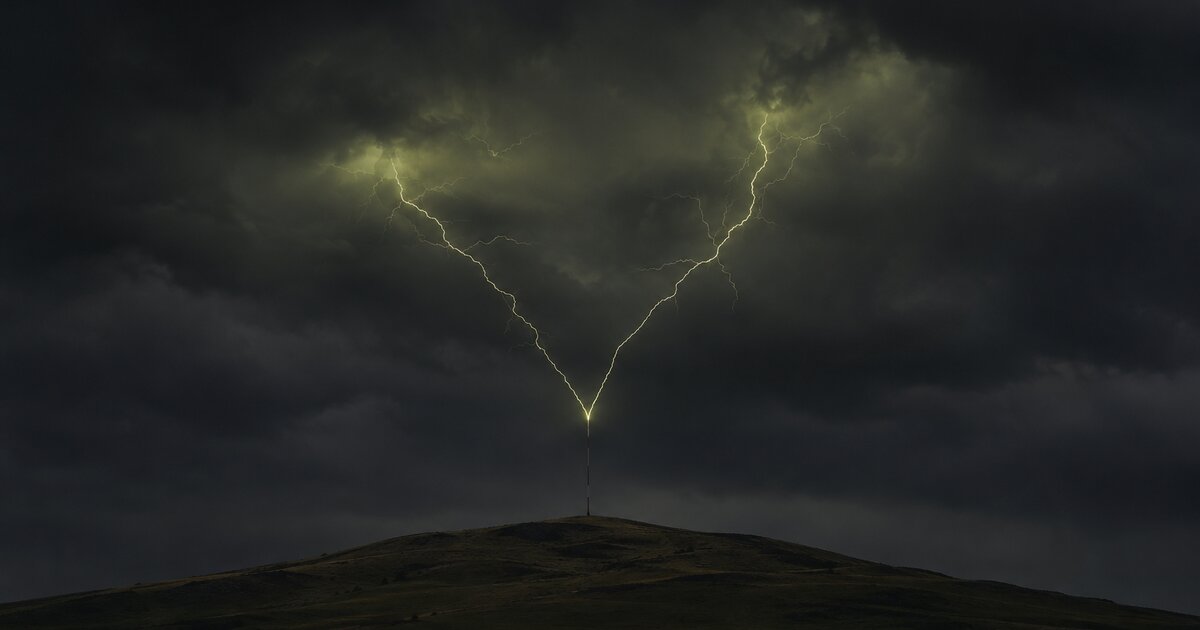
Yes. The National Weather Service lists “lightning never strikes the same place twice” among its lightning myths and says lightning “often strikes the same place repeatedly, especially if it’s a tall, pointy, isolated object.” The saying covers three different repeats: several strokes down one channel within a single flash, several ground points from one flash, and the same object struck again in later storms and years.
The National Weather Service and NSSL both reject the saying
The National Weather Service (NWS) lightning myths page, undated and read on November 19, 2026, pairs “Lightning never strikes the same place twice” with a one-line correction and gives the Empire State Building’s average as 23 hits a year. The NOAA National Severe Storms Laboratory (NSSL) answers its own FAQ question the same way: lightning “does hit the same spot (or almost the same spot) more than once, contrary to folk wisdom.” NSSL offers two possible reasons. One is chance: with all the lightning that occurs, a strike will eventually land near an earlier one within a short time. The other is that something about the site makes it somewhat more likely to be struck.
The word “twice” covers three different kinds of repeat
The saying treats a repeat as one thing, but the sources describe three: strokes down one channel in a single flash, several ground points from one flash, and the same object struck again in later storms.
| Kind of repeat | What the source says | Source |
|---|---|---|
| Several strokes down one channel in one flash | A negative flash typically has an initial return stroke followed by 2 or 3 subsequent ones; some have been observed with more than a dozen | NWS, Subsequent Dart Leaders and Return Strokes (undated) |
| Several ground points from one flash | About half of all flashes have more than one ground strike point; about 23.4 million flashes a year touch about 36.8 million ground contact points over the contiguous United States | NSSL FAQ (undated); Bulletin of the American Meteorological Society, March 2024 |
| The same object in later storms and years | The Empire State Building is hit an average of 23 times a year | NWS, Lightning Myths (undated) |
A tall, pointed or isolated object sends up the streamer that completes the connection
NSSL explains that when lightning strikes something on the ground, the struck object sends a faint channel upward that joins the downward-developing flash, and that taller objects are more likely than shorter ones to produce that upward channel. The FAQ adds that “lightning usually strikes the tallest object” and, in its own words, “Never say always!” The NWS pairs height with shape and isolation: lightning repeats most “if it’s a tall, pointy, isolated object.” Ground conditions can matter too. NSSL lists the salt or moisture content of the ground at the time, rock, standing water, pipes or other metal in the ground, the terrain shape and the shape of leaves or twigs as things that might make one location more likely than another nearby to be struck.
One flash can send several strokes down the same channel
The NWS says that if more negative charge is available in the cloud near the first return stroke, it may start down the conductive path the first stroke left. It says a negative flash typically consists of an initial return stroke followed by 2 or 3 subsequent ones, that some have been observed with more than a dozen, and that multiple return strokes make the lightning flicker. What the eye sees as one bolt can therefore be several discharges along one path, each a separate stroke within a flash.
A University of Groningen release of April 17, 2019 reports why the charge keeps coming. A team led by the university used the LOFAR radio telescope to image two flashes in detail and described their work, published in Nature on April 18, 2019, as showing that the negative charges inside a thundercloud are not all discharged in a single flash. Part of the charge is stored beside the leader channel in structures the researchers called needles, which can be about 330 feet (100 meters) long and less than 16 feet (5 meters) across. The release says that “through these needles, a negative charge may cause a repeated discharge to the ground,” and the first author, Brian Hare, says the finding helps explain why a discharge to the ground may repeat itself a few times. Our reading is that the study describes repeats inside one flash; it does not say why a place is struck again in a later storm.
One flash can touch the ground in more than one place
NSSL says that over the contiguous 48 states an average of 20 million cloud-to-ground flashes have been detected each year since 1989, that about half of all flashes have more than one ground strike point, and that at least 30 million points on the ground are therefore struck in an average year. A March 2024 paper in the Bulletin of the American Meteorological Society re-examined National Lightning Detection Network data and calculated about 23.4 million cloud-to-ground flashes and 36.8 million ground contact points a year; by our arithmetic that is about 1.6 contact points per flash (36.8 ÷ 23.4 = 1.57). The paper’s abstract notes that a single flash may transfer charge to the ground in multiple, widely spaced locations. A draft revision of the U.S. lightning protection standard, NFPA 780, says in its First Revision statements (printed January 21, 2024) that where ground-strike-point density is not available, ground flash density can be converted by multiplying it 1.7 times.
Tall landmarks are hit again every year
Published yearly counts for tall structures show the third kind of repeat at its clearest. Each row quotes its source’s own figure, and the sources do not share one counting method.
| Structure | Published figure | Source |
|---|---|---|
| Empire State Building, New York | An average of 23 times a year (NWS); 25 lightning strikes per year (the building’s Facts & Figures page) | NWS, Lightning Myths; Empire State Building website, both undated |
| Eiffel Tower, Paris | On average 5 impacts every year | Tour Eiffel official website, undated |
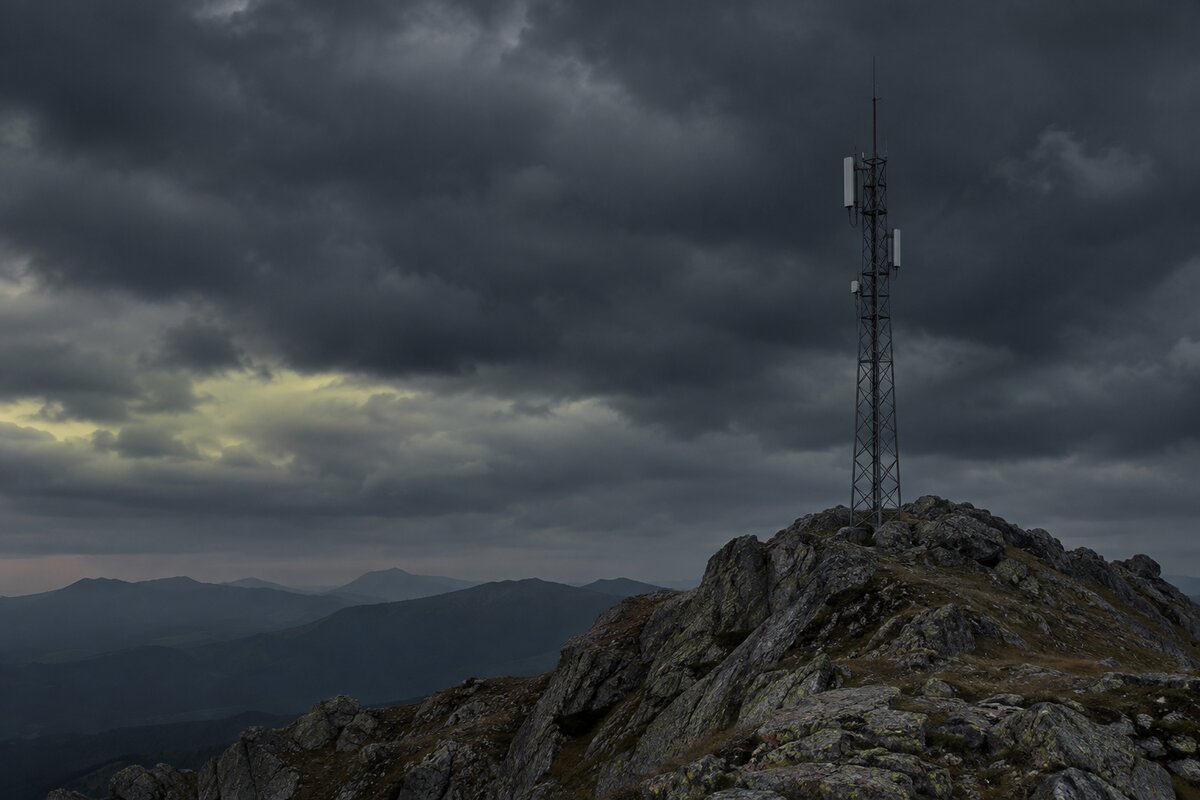
| A 407-foot (124 m) telecommunications tower on Mount Säntis, Switzerland, at 8,205 feet (2,501 m) | Struck more than 100 times a year | IEEE Spectrum, July 11, 2019 |
Guinness World Records lists one person struck seven times
Guinness World Records’ “Most lightning strikes survived” page names ex-park ranger Roy C. Sullivan of Virginia as the only man struck by lightning seven times, with the first in 1942 and the last on June 25, 1977, and records that he survived each one. It is a record entry, not a measure of anyone else’s chances.
A spot that was just hit gets no protection from the strike
Read together, NSSL’s two explanations give no reason to expect a struck spot to be spared: if chance explains a repeat, the spot is no less likely to be hit than any other, and if a feature of the site explains it, the feature is still there. The NWS lightning overview says no place outside protects you when thunderstorms are in the area and that hearing thunder means you are likely within striking distance. It names substantial buildings and hard-topped vehicles as the shelter options, and says to wait 30 minutes after the last lightning or thunder before going back outside.
Lightning Tracker, an iPhone app, shows recently detected strikes on a live map and keeps a 30-minute wait that starts after the last strike detected inside your radius and starts over with each new one. Detection networks miss some strikes, especially weak ones, and the app does not replace official warnings.
Not a substitute for official weather warnings.
If you hear thunder, seek shelter even if the app shows no nearby strike.
Sources
- National Weather Service, Lightning Myths
- NOAA National Severe Storms Laboratory, Severe Weather 101: Lightning FAQ
- National Weather Service, Understanding Lightning: Subsequent Dart Leaders and Return Strokes
- National Weather Service, Overview: Lightning Safety
- University of Groningen (April 17, 2019), Why lightning often strikes twice
- American Meteorological Society (Bulletin of the American Meteorological Society, March 2024), How Much Lightning Actually Strikes the United States?
- National Fire Protection Association, NFPA 780 First Revision statements (draft revision, printed January 21, 2024)
- Empire State Building, Empire State Building Facts: Height, Floors & Figures
- Tour Eiffel, Lightning, thunderstorms and the Eiffel Tower
- IEEE Spectrum (July 11, 2019), This Cell Tower in the Swiss Alps Is Struck by Lightning More Than 100 Times a Year
- Guinness World Records, Most lightning strikes survived