 Lightning Tracker
App Store
Places and activities
Colorado thunderstorms and lightning: counts, timing and checks
November 19, 2026 · 5 min read
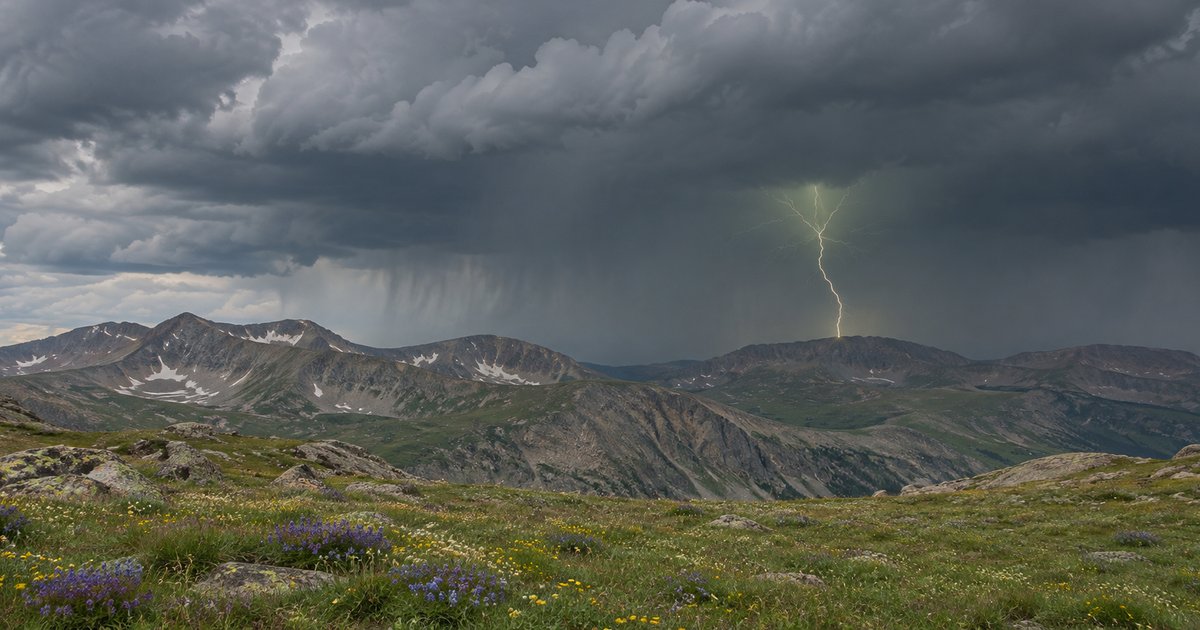
Colorado's thunderstorms can build over the mountains after late morning, and the state had 4,093,315 detected lightning events in Vaisala Xweather's 2025 report. That historical count cannot tell a Denver, Colorado Springs or mountain visitor what is happening today; the National Weather Service's local forecast and warnings are the place-specific check.
What the Colorado lightning count means
Vaisala Xweather's 2025 Annual Lightning Report lists 4,093,315 total lightning events in Colorado, twentieth among states and Washington, DC by count. Xweather defines an event as an individual in-cloud pulse or cloud-to-ground stroke. Several strokes can belong to one flash. The total therefore does not mean that four million separate places on the ground were hit. Its 2025 figure is a detection-network count for a single year, useful for scale but not a forecast for a trail, field or neighborhood. The difference between events and flashes matters when reading national lightning counts.
A National Weather Service-hosted Colorado climatology analyzed cloud-to-ground flashes over 16 years, a narrower measure than Xweather's total-lightning events. That study found its maximum hourly statewide activity around 4 p.m. Mountain activity grew around 11 a.m., then activity near the mountains adjacent to the plains shifted east during the afternoon. Its map placed much activity near the Pikes Peak and Palmer Divide region and the eastern slopes of the southern Sangre de Cristo and Raton Mesa area. These are historical patterns, not a promise that a particular day's storm will follow them. The geography of lightning changes with the measure and time period used.
When Colorado afternoon thunderstorms affect mountain plans
The NWS Denver/Boulder lightning guidance says Colorado mountain thunderstorms typically develop after 11 a.m. and advises planning a climb or hike to be coming down by late morning. It also says to get an updated forecast before heading out and keep checking weather while outside. An early start gives a route back toward shelter; it does not make an exposed ridge protected if thunder develops sooner. The agency names a substantial building or enclosed hard-topped vehicle as effective shelter and says to act when thunder is heard or lightning is seen.
| Time | What the source says |
|---|---|
| Around 11 a.m. | NWS Denver/Boulder says mountain thunderstorms typically develop after 11 a.m.; the NWS-hosted climatology found mountain activity growing around 11 a.m. |
| Late morning | NWS Denver/Boulder advises planning a climb or hike to be coming down by late morning |
| Around 4 p.m. | The 16-year climatology found maximum hourly statewide cloud-to-ground activity |
| After the last thunder | The NWS recommends staying sheltered for 30 minutes |
Colorado Parks and Wildlife's water-safety guidance says most summer storms arise in the afternoon and can arrive quickly, generally from the west. It tells visitors on the water to watch clouds and wind and seek shelter before weather reaches them. A paddler, a summit hiker and a school team have different travel times to shelter, so their plans need to account for the route they can actually take. The NWS's Colorado guidance recommends staying sheltered for 30 minutes after the last thunder. That wait is explained further in the 30-minute rule.
Colorado lightning deaths and school activities
The National Lightning Safety Council's state table records nine Colorado lightning deaths from 2016 through 2025, ranking the state fifth in that ten-year table. It counts fatalities, not injuries, people exposed, storm days or total strikes. The death span and Xweather's 2025 detection year answer different questions; dividing one by the other would not give an individual's risk. A question about a Colorado lightning death today needs a dated official incident record, not this historical total.
The Colorado High School Activities Association's published lightning policy, updated April 2026, calls for a venue-specific emergency action plan and a designated staff member to monitor conditions and decide when play is suspended or resumed. It says a venue should be evacuated when a storm seems imminent, lightning is seen or heard, or a weather app indicates lightning within 10 miles. Everyone should have reached a substantial building or fully enclosed metal vehicle by the time lightning is 10 miles away. The policy says to wait at least 30 minutes after the last thunder or visible lightning before resuming and restart the clock if either recurs. These are CHSAA activity procedures, not a rule for every outdoor venue in Colorado.
Where to check Denver and Colorado Springs thunderstorms today
The National Weather Service's local-forecast search accepts a city and state or ZIP code, then links the serving forecast office above the forecast icons. For Denver, the NWS Denver/Boulder office is the local starting point; for Colorado Springs, an NWS point forecast identifies Pueblo as its serving office. Enter the actual address or trail location, since a city forecast may not represent nearby higher terrain. NWS forecasts and warnings answer what is expected or warned for that place; the Storm Prediction Center's convective outlooks show broader severe-thunderstorm risk. A watch or warning should be read with its issue time and affected area, not treated as a permanent Colorado condition.
A search for a Colorado lightning strike map or Denver lightning map usually asks where detections are now. This article has no live map. The NWS radar route shows precipitation, while Lightning Tracker is an iPhone app that shows recent detected strikes on a map, the nearest detection's distance and direction, and alerts for a chosen radius around a place. Its free version follows the current location, and Premium adds up to 5 saved places. Detection can miss or delay strikes, so use official warnings and the shelter plan alongside the app. For the distinctions among these tools, see checking lightning near you.
Official quick links for Colorado
These links provide a route to the responsible agency and its issued products. Check the location and timestamp on each product before using it for an outdoor decision.
- NWS local forecast and serving-office lookup — enter the city and state or ZIP code.
- NWS Denver/Boulder — Denver area forecasts and warnings.
- NWS Pueblo — Colorado Springs area office.
- SPC convective outlooks — broader severe-storm outlooks.
- NWS radar — precipitation imagery.
- Colorado Parks and Wildlife water safety — weather considerations for visitors on the water.
Not a substitute for official weather warnings.
If you hear thunder, seek shelter even if the app shows no nearby strike.
Sources
- Vaisala Xweather, The Annual Lightning Report 2025
- National Lightning Safety Council, Deaths by State from 2016 to 2025
- National Weather Service, Lightning Climatology for the State of Colorado
- National Weather Service Denver/Boulder, Colorado Lightning Safety Awareness Week
- Colorado Parks and Wildlife, Water Safety
- Colorado High School Activities Association, Sports Medicine Advisory Committee Handbook
- National Weather Service, Contact Your Local NWS Office
- National Weather Service Denver/Boulder, Denver/Boulder Forecast Office
- National Weather Service Pueblo, Pueblo Forecast Office
- National Weather Service, Colorado Springs Point Forecast
- Storm Prediction Center, Convective Outlooks