 Lightning Tracker
App Store
Places and activities
Does Lightning Strike the Statue of Liberty?
November 19, 2026 · 3 min read
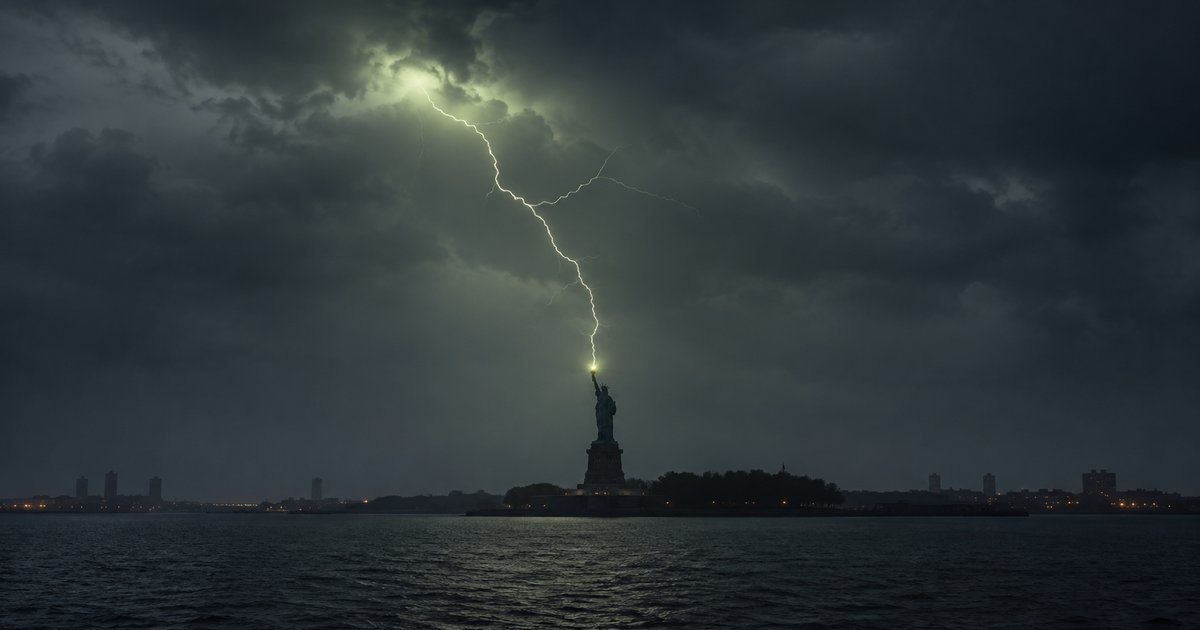
Yes. The National Park Service’s Statue of Liberty FAQ, updated March 26, 2026, says lightning strikes the monument on an “infrequent basis” and that it is grounded through its pedestal. The park gives no annual strike count, so a precise yearly number cannot be drawn from its published answer.
Why a tall monument can be hit again
NPS statistics put the tip of the torch 305 feet 1 inch (about 93 meters) above the ground and the statue itself at 151 feet 1 inch (about 46 meters) from the top of its base to the torch. The March 2026 park FAQ calls it one of the tallest structures in New York Harbor and describes its copper exterior over a metal internal structure. Height makes the monument prominent, but height cannot predict the place or time of the next flash.
The National Weather Service says lightning can strike the same place repeatedly, especially a tall, pointed, isolated object. Its separate explanation of how people are struck says metal does not attract lightning, although it can carry current. The copper surface can provide a path for current after a strike.
What grounding means—and does not mean
The NWS explanation of lightning protection systems says their purpose is to intercept a strike, provide a conductive route for the discharge and spread its energy into the ground. It also says the system does not prevent a strike. The park’s FAQ describes the statue as grounded through its massive concrete and granite pedestal.
The NWS also warns that components must be connected together to reduce sparks and side flashes, and that building protection is distinct from protection against surges entering through wiring and pipes. Its general guidance says a complete building protection system includes surge devices on incoming power, data and communication lines. The park FAQ confirms grounding, but does not describe those other components for this monument.
Can a photograph establish a yearly count?
A photograph can record a dramatic storm moment; it cannot supply a denominator for a yearly strike rate. A camera may show a bright channel aligned with the torch from one viewing position, while the actual termination point remains hard to locate from that single view. A date, viewpoint and independent strike-location evidence would make a particular claim stronger.
An annual average would require a defined observation period and a consistent rule for what counts as a hit on the monument. A nearby ground strike, a flash behind the statue and a channel contacting the torch are different observations. The count would also need to say whether it includes separate strokes within one flash.
What visitors should do when thunder approaches
The NPS’s 2018 park-wide lightning guidance says there is no protected place outdoors during a thunderstorm. It asks visitors to check the forecast before a park trip and to identify where they can take shelter before a storm arrives. A visitor can ask a ranger about designated shelter locations. When thunder is heard, the agency says to move toward an enclosed building, not a picnic shelter, porch or open vehicle. The Statue of Liberty FAQ’s grounding sentence is about the monument, not a visitor instruction.
NPS guidance also tells visitors to wait at least 30 minutes after the last lightning or thunder before resuming an outdoor activity. The rule matters on Liberty Island just as it does at other parks, because the agency says risk persists after rain slows or stops. A nearby strike can injure people through ground current or a side flash without a direct hit to a person. The practical decision is reaching an enclosed shelter, then waiting after the last thunder.
For a storm during your own outing, Lightning Tracker, an iPhone app, maps recent detected lightning strikes and shows the distance and direction to the nearest one.
Not a substitute for official weather warnings.
If you hear thunder, seek shelter even if the app shows no nearby strike.
Sources
- National Park Service, Statue of Liberty FAQs
- National Park Service, Statue Statistics
- National Weather Service, Lightning Myths and Facts
- National Weather Service, Lightning Rods
- National Weather Service, Five Ways Lightning Strikes People
- National Park Service, When Thunder Roars, Go Indoors