 Lightning Tracker
App Store
Places and activities
Toronto thunderstorms and lightning: season, warnings and local rules
November 19, 2026 · 5 min read
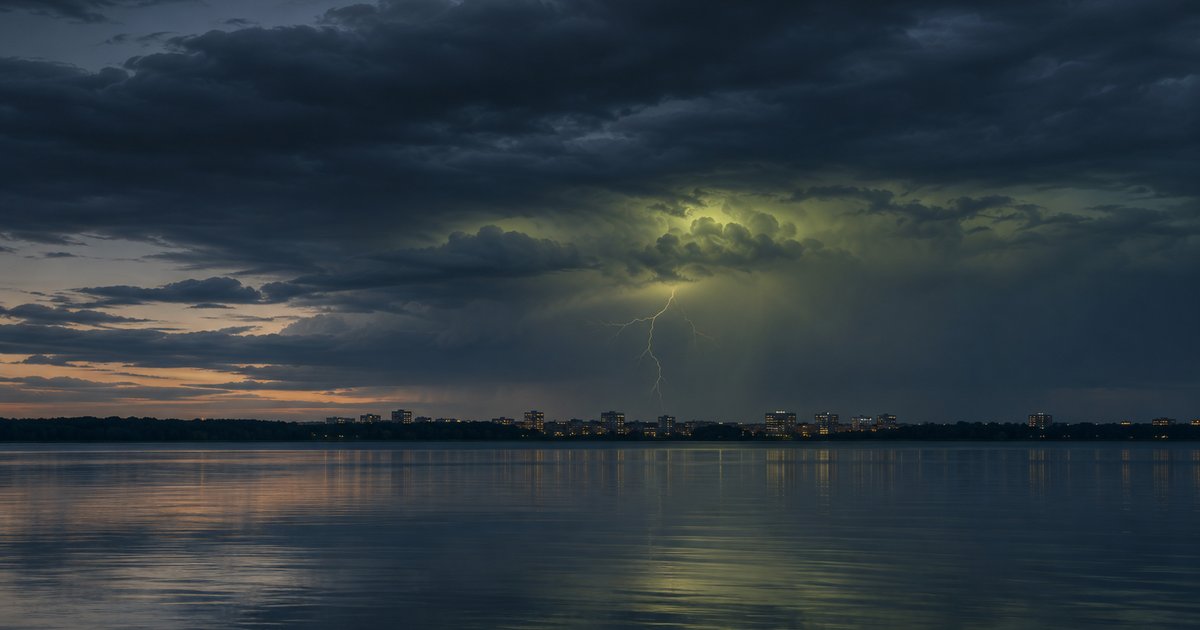
Toronto thunderstorms are most common in Ontario’s broad late-April-to-early-October season, Ontario Parks said in July 2023, but a Toronto outing needs a local check: ECCC issues alerts for “City of Toronto,” while the City says to seek shelter as soon as thunder is heard, even without rain. The city also has specific rules for school-board fields and conservation-area boating.
Toronto’s storm season and the first decision
Ontario Parks’ July 2023 guide says thunderstorms are common across Ontario from late April to early October. Toronto is within that broad planning season, but the dates are not a prediction for a specific weekend. The City of Toronto’s emergency guidance, read in November 2026, describes lightning strikes and injuries in the city as infrequent while warning that lightning-producing weather can arrive with little notice. Check the forecast before an outdoor day; a seasonal average cannot answer what will happen at a field, waterfront or park.
The City says audible thunder calls for immediate shelter even without rain. A grounded building or a metal-roofed automobile is its recommended destination. Stay sheltered for 30 minutes after the last flash, the City says; Ontario’s May 2026 guidance specifies at least 30 minutes after the last rumble of thunder. Use the later sign you actually observe. An enclosed building or metal-roofed vehicle is a decision to identify before walking far from one.
Use the City of Toronto alert area
Environment and Climate Change Canada (ECCC) lists City of Toronto as an alert area on its Weather Information service. Search for the city there, then read the alert text for the actual area, timing, hazard and action. A Greater Toronto Area headline can cover municipalities outside Toronto, while the ECCC product names the place it applies to. The city area is the starting point for Toronto plans; a trip outside city limits calls for a check of that destination too.
ECCC’s August 2026 Weather Alerts guide distinguishes a watch, issued when conditions favour severe weather and people should prepare, from a warning, an urgent message to act because severe weather is happening or expected. Yellow, orange and red describe expected impact severity; they are not measures of lightning frequency. The guide asks readers to open the full alert because it supplies location, timing and likely effects. A thunderstorm outlook and a warning answer different questions: the warning text is the place to read the immediate official instruction.
Since August 2026, ECCC forecasters can draw targeted polygons for severe thunderstorm and tornado warnings. Watches continue to cover broader predetermined alert zones, the agency says. A person near the edge of Toronto should look at the warning’s shape and text rather than infer that every part of a broad watch area has identical conditions. ECCC says its WeatherCAN iPhone notifications can also say a targeted warning is “nearby” when the polygon falls elsewhere within the saved location’s alert zone.
Local outdoor rules are more specific than a weather headline
| Rule | Who sets it | What it says |
|---|---|---|
| School-board sports fields and diamonds | Toronto District School Board | No play when thunder is audible or lightning is visible |
| Conservation-area boating | Toronto and Region Conservation Authority | Leave the water immediately if a thunderstorm or lightning approaches |
| Anywhere in the city | City of Toronto | Seek shelter as soon as thunder is heard, even without rain |
The Toronto District School Board’s February 2023 facility permit rules say play is not permitted on its sports fields or diamonds when thunder is audible or lightning is visible. That is a clear threshold for permit users; a 30-second flash-to-bang count is not a condition for continuing play there. The rule concerns community use of TDSB facilities, not every sports venue in the city. For school grounds, the first sound of thunder at school has practical consequences even before rain starts.
The Toronto and Region Conservation Authority’s park FAQ, read in November 2026, tells boaters to leave the water immediately if a thunderstorm or lightning approaches. Its boating rules apply to watercraft in its permitted park areas. A visitor should check the particular park’s status before arrival, and leave enough time to get off the water and reach an enclosed building or metal-roofed vehicle. The City’s own guidance also says to avoid bodies of water, isolated tall trees and metal fences outdoors.
A Toronto park picnic shelter is an open structure, not the building described in the City’s shelter advice. Ontario’s May 2026 thunderstorm page explicitly lists picnic shelters among places that do not protect people from lightning. The City also warns against using corded appliances, bathing or washing dishes once indoors during a storm. These indoor precautions follow the first decision to get inside; they do not justify remaining outdoors to finish an activity.
Official checks serve different purposes
ECCC’s September 2026 Lightning Map guide calls its lightning layer a display of detected ground strikes, updated every minute, and says plainly that the layer is not a forecast. A blank display can mean the map has not updated, in-cloud lightning is absent from that layer, or a strike was missed. Thunder therefore outranks an empty screen as a reason to seek shelter. Checking detected lightning near you can add context, but it cannot establish a clear outdoor period.
For Toronto, start with the ECCC Weather Information service for forecasts and official alerts, then use its lightning-layer guide if you want to understand recent observations. A lightning map and weather radar show different observations: ECCC says a strike may appear before a radar frame updates. For a sports booking, also check the venue’s rule; for a TRCA water trip, check that park. The City’s first-thunder instruction still applies when a warning has not arrived.
- ECCC Toronto weather alerts — select City of Toronto and read any complete alert.
- ECCC Weather Alerts guide — understand watches, warnings and alert text.
- ECCC Lightning Map guide — learn what its observed-strike layer can and cannot show.
- City of Toronto emergency guidance — local lightning shelter instructions.
Lightning Tracker is an iPhone app that works in Toronto and elsewhere and can alert you when a strike is detected within a radius you set for a place. It watches your current location for free; Premium adds up to five saved places.
Not a substitute for official weather warnings.
If you hear thunder, seek shelter even if the app shows no nearby strike.
Sources
- Environment and Climate Change Canada, Toronto weather alerts
- City of Toronto, Types of Emergencies
- Toronto District School Board, Facility Permits — Rules and Regulations
- Toronto and Region Conservation Authority, Park FAQs
- Ontario Parks, What to do when a thunderstorm rolls in
- Government of Ontario, Thunderstorm
- Environment and Climate Change Canada, Weather Alerts
- Environment and Climate Change Canada, New targeted warnings for severe thunderstorms and tornadoes
- Environment and Climate Change Canada, Lightning Map