 Lightning Tracker
App Store
Lightning safety
Teaching kids about lightning: one rule, and what to skip
November 14, 2026 · 8 min read
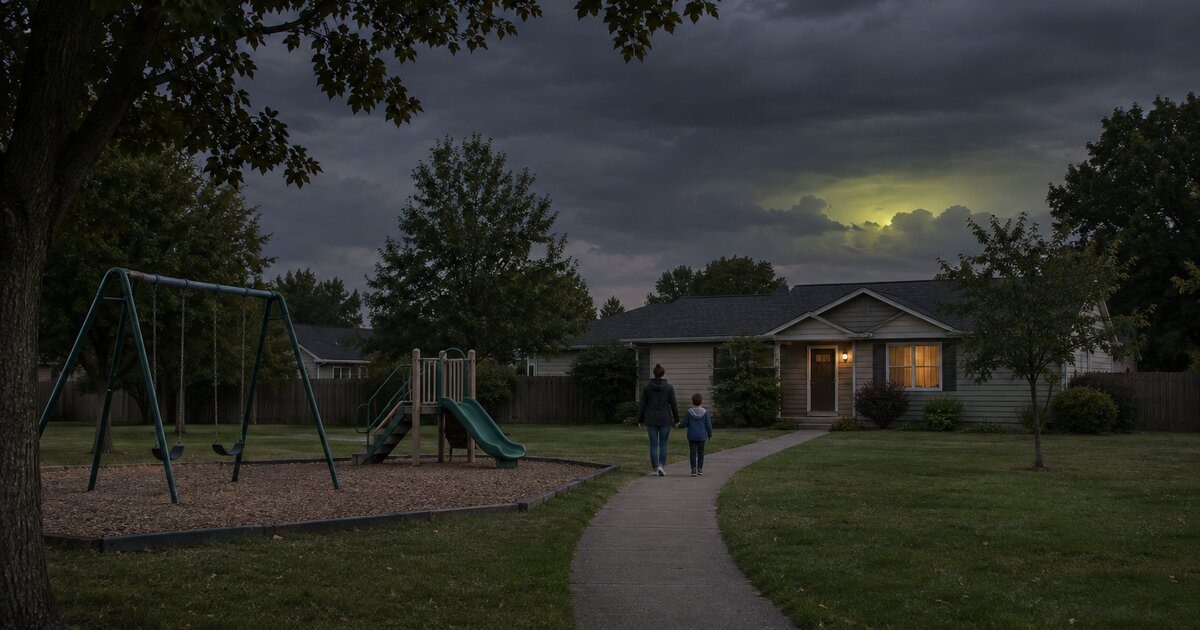
Teach children one rule, the National Weather Service slogan “When Thunder Roars, Go Indoors,” and let an adult be the one who acts on it: the NWS states that adults are responsible for the safety of children in a storm. One caution before you print a kids' handout. As of November 10, 2026, the NWS Lightning Myths page says crouching does not lower the risk outdoors, yet some children's pages still teach it.
One rule for children, with thunder as the trigger
The National Weather Service condenses lightning safety into a short slogan children can repeat: “When Thunder Roars, Go Indoors.” The trigger is a sound, not rain and not a distance. The NWS says thunder can be heard only about 10 miles from a strike, and that anyone who hears it is likely within striking distance of the storm. A child does not have to judge how far away a storm is. If thunder is audible, the game stops.
“Indoors” needs a definition a child can apply. The NWS names two options, substantial buildings and hard-topped vehicles, and says rain shelters, small sheds and open vehicles do not count. Its outdoor sports guidance adds that dugouts do not protect anyone, and that a hard-topped metal vehicle with the windows closed gives good protection when no substantial building is near. For a child, that means a house, a school or a store, or a car with a solid roof. Where to shelter from lightning covers the rest of the list.
A child on a trampoline should stop jumping and go indoors at the first thunder. The NWS says children should leave any outdoor game immediately when they hear thunder. Its lightning-myths page says height, pointed shape and isolation influence where a strike lands; a metal frame does not attract lightning, though metal can conduct current. The trampoline remains an outdoor place, not the substantial building or hard-topped vehicle the NWS names as shelter.
The second half of the rule is the wait. The NWS says to stay inside until 30 minutes have passed since the last lightning or thunder, and it lists going back out too soon, often just because the rain has lightened, among the behaviors that put people at risk. Telling them in advance that one more rumble restarts the 30 minutes takes the argument out of the moment; why the wait restarts with every strike explains the reasoning.
Adults make the call, because timing is the weak point
The NWS Lightning Myths page says that adults are responsible for the safety of children, and that many lightning casualties occur because people do not seek shelter soon enough. The National Lightning Safety Council (NLSC) analyzed the 492 U.S. lightning deaths from 2006 through 2024 and found that many victims were heading for shelter, or only steps from it, when they were struck. For a family, the lesson is about timing. The decision to go in works best when an adult makes it at the first thunder, before anyone has to ask. Who gets struck by lightning has the full pattern.
For organized activities, a page from the American Academy of Pediatrics (AAP), last updated June 16, 2016, tells parents to be sure their child understands the dangers of lightning and the coach's lightning policy. It adds that a parent should step in and remove the child from the field if the coach does not follow the policy. At home, the American Red Cross recommends practicing drills with everyone in the household, so everyone knows where to go before a thunderstorm hits. Camp staff can turn the same adult-led rule into a site procedure with a lightning plan for summer camps.
What to teach at each age
No agency page we found sets age cutoffs for lightning lessons. The NWS lists a preschooler program on its kids and teens resources page, and a lightning safety quiz sorted by age on its outreach page, with versions for kids, teens and adults. The three groups below are therefore our suggestion, built from sourced facts rather than an official curriculum.
| Age group | What to teach | Where it comes from |
|---|---|---|
| Preschool and early grades | The slogan, said out loud. Thunder is lightning's sound, so hearing thunder means lightning is in the storm. Walk the route to the door or car the family will use. | NWS (slogan); NOAA National Severe Storms Laboratory (NSSL), which says thunder is caused by lightning; Red Cross (household drills) |
| Elementary school | Lightning is a giant spark of electricity. Inside a storm cloud, rising ice crystals collide with soft hail called graupel, and the two end up with opposite charges. Thunder is the sound of air heated by the spark, and it seems to go on because every point along the channel makes its own sound. | NSSL Lightning FAQ; NWS pages on thunderstorm electrification and thunder |
| Teens | The rule applies to them too: the NLSC found most deaths between ages 10 and 60. Its list for all ages starts with fishing, beach activities, boating and camping. At the beach the surf may mask thunder, so watch the sky as well as listen. Do not lie flat or stand under a tree. A person who was struck carries no charge, so help can start at once. | NLSC analysis (ages, activities, surf); NWS Lightning Myths (lying flat, trees, victims) |
Counting the seconds between flash and thunder suits children who like numbers, with one condition from the NWS: the counting should happen from inside shelter. The NWS method divides the seconds by 5 to get miles, so 5 seconds is about 1 mile and 15 seconds about 3 miles. Flash to bang explains why a long count is never a reason to stay out. For teens, what to do if someone is struck covers the first minutes.
Check any kids' handout against current NWS guidance
Children's lightning pages circulate for years, and some still carry advice that the NWS now rejects. As of November 10, 2026, the NWS Lightning Myths page says crouching does not make a person any safer outdoors, and that lying flat raises the chance of being hit by ground current. Yet an NWS handout titled “Lightning Safety for Kids” (a PDF with no date) tells children in a field to crouch on their knees and bend over. Weather Wiz Kids, which shows a 2015 copyright notice, advises crouching in the open at a distance from a tree of twice the tree's height. The AAP page from 2016 describes a crouching position, weight on the balls of the feet, for a person who feels skin tingling. We found nothing on those pages that explains the difference from the Myths page.
The same pages give different yearly death counts. The table sets them beside the NLSC count for 2006 through 2024.
| Source | Date shown | Deaths a year, as stated |
|---|---|---|
| NWS handout “Lightning Safety for Kids” | None | About 100, counting deaths from fires that lightning caused |
| Weather Wiz Kids | © 2015 | 75 to 100 |
| Little League, Appendix A, citing the NWS | None | An average of 73 |
| AAP HealthyChildren, citing the NWS | June 16, 2016 | An average of 49 |
| NWS, Lightning Safety and Outdoor Sports Activities | None | About 30, from cases documented in recent years |
| NLSC analysis, 2006 through 2024 | January 2025 | 492 deaths in 19 years, about 26 a year (our division) |
The pages do not state matching periods, so the figures cannot be compared year by year, but the older handouts give the larger numbers. If you teach a number at all, take it from a dated count and say which years it covers.
If a child is caught outside
The NWS says no place outside protects anyone when thunderstorms are in the area, so the lesson is to start moving toward a building or a hard-topped vehicle at the first thunder, not to learn a pose. For a last resort the NWS lists actions that may reduce the risk: get off hills, ridges and peaks, get out and away from ponds and lakes, never shelter under an isolated tree, and never lie flat. The NWS also says that standing under a tree is the second leading cause of lightning casualties. The AAP adds that a child should never be permitted to swim during a lightning storm. Ten lightning myths goes through the other beliefs children pick up.
Indoors, the NWS tells people not to touch anything plugged into an outlet, plumbing or corded phones, and it says cell phones and cordless phones are fine. That gives children a short list: skip the bath and the shower, and leave the corded phone and anything plugged into an outlet alone.
Helping a child who is frightened by thunder
Nemours KidsHealth, in a parent guide reviewed in August 2023, advises talking with children about storms ahead of time, in terms that fit their age. It suggests saying that thunder and lightning can look and sound scary, especially when close, but that staying inside helps protect them. For young children it suggests comparing going inside with the way squirrels, birds and other animals take cover. It also advises asking children who seem afraid to talk about it, giving them a small job, and staying calm yourself, because children notice a parent's mood and reactions. If a child's behavior changes, for example not sleeping or eating, avoiding people or worrying all the time, KidsHealth says to call the child's doctor or a behavioral health care provider.
Where a lightning app fits in a family routine
Lightning Tracker is an iPhone app that shows recently detected strikes on a live map, with the distance and direction to the nearest one and how many minutes ago it struck. For a family, two parts matter. The app alerts you when a strike is detected inside a radius you set for each place, 10 miles (16 km) by default, and its 30-minute wait starts after the last detected strike inside that radius and restarts with each new one. When the wait ends, the app reports what it observed and asks you to judge conditions. It does not declare the storm over. How to choose an alert radius shows how to fit the radius to the time your children need to reach shelter.
The app has limits that matter when children are involved. Detection networks miss some strikes, especially weak ones, data can arrive late, and iOS decides when a closed app may check for data, so a closed app may show the latest strikes only after you open it. It does not replace official warnings or local procedures, and it does not replace the child's rule: a child who hears thunder goes in, whatever the screen shows.
Not a substitute for official weather warnings.
If you hear thunder, seek shelter even if the app shows no nearby strike.
Sources
- National Weather Service, Lightning Safety Overview
- National Weather Service, Lightning Myths
- National Weather Service, Lightning Tips
- National Weather Service, Lightning Safety and Outdoor Sports Activities
- National Weather Service, Understanding Lightning: Thunder
- National Weather Service, Understanding Lightning: Thunderstorm Electrification
- National Weather Service, Classes, Games, Slideshows and Links for Kids and Teens
- National Weather Service, Lightning Outreach
- National Weather Service, Lightning Safety for Kids (PDF, undated)
- NOAA National Severe Storms Laboratory, Severe Weather 101: Lightning FAQ
- National Lightning Safety Council, J. Jensenius, A Detailed Analysis of Lightning Deaths in the United States from 2006 through 2024 (PDF, January 2025)
- American Academy of Pediatrics, Lightning & Sports Safety: When Thunder Roars Go Indoors (HealthyChildren.org, updated June 16, 2016)
- American Red Cross, Thunderstorm Safety
- Nemours KidsHealth, Storm Stress: Helping Kids Stay Calm (reviewed August 2023)
- Little League International, Appendix A, Lightning Safety Guidelines
- Weather Wiz Kids, Thunderstorm Safety (© 2015)