 Lightning Tracker
App Store
Places and activities
Chicago lightning: storms, skyline and local checks
November 19, 2026 · 4 min read
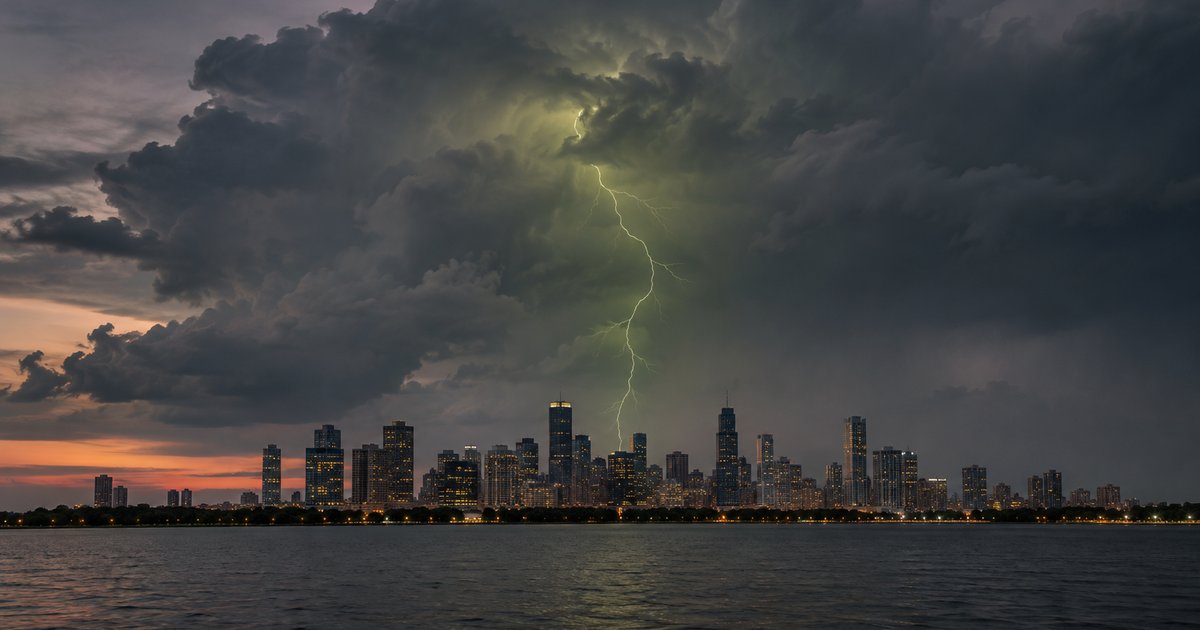
Chicago's regional severe-weather reports peak in June and July, but they do not predict lightning for a particular neighborhood. The NWS Chicago record covers a broad forecast area, so a local forecast matters for each outdoor plan. Before an outdoor plan, use NWS Chicago’s local forecast and alerts; at a city beach, follow Chicago Park District swim status and lifeguards.
When Chicago thunderstorms are most common
The NWS Chicago severe-weather climatology places the busiest part of its regional severe-weather season in June and July. Its 2001–2020 chart calls April through September the season with at least one reported severe-weather day per month on average; June and July average at least seven such days each. These figures cover the whole NWS Chicago forecast area, not a count of thunderstorms over downtown or the lakefront. They also count storms with reported wind, hail or tornadoes rather than every storm that makes lightning.
A dated example shows why the season is context, not a schedule. NWS Chicago's July 2026 summary describes four rounds of severe storms across its area from July 2 through July 4 and another intense period on July 27. Neither event pattern says that any particular Chicago neighborhood gets lightning every July afternoon. The regional thunderstorm outlook categories help with planning, while a location forecast is the next check for a specific outing.
What Lake Michigan changes
Lake Michigan can shape a storm boundary, but “lake effect” does not mean that every Chicago thunderstorm is generated over the lake. The NWS explains that a lake breeze is onshore air moving from the cooler water toward warmer land. Its leading edge may focus afternoon showers and thunderstorms when moisture and instability are present. A lake breeze can also suppress cloud growth in cooler air behind the boundary. Those effects depend on the larger weather pattern; the lakeshore is not a permanent thunderstorm shield.
For one Chicago-area case, an NWS Chicago report on the July 8, 2025, flash flood says a lake breeze retreated toward the shore as a thunderstorm outflow boundary moved northeast. Heavy showers and thunderstorms formed along that outflow boundary, including a particularly heavy storm over central Chicago around 9 p.m. CDT. The report says the storm's small size made its exact location hard to predict in advance. That case illustrates why a lake-breeze story alone cannot locate the next storm. The lake-breeze boundary in this case is a specific summer mechanism, not a label for all Chicago storms.
Why the skyline can be struck
Chicago's tall buildings are visible lightning targets, but a tower strike does not say where the rest of a storm will strike. In a January 2024 analysis of 2023 detections, lightning-network operator Vaisala reported 38 strikes on Willis Tower and 15 on 875 North Michigan Avenue. Vaisala also cautioned that strike activity at individual buildings varies considerably from year to year. These are dated building counts, not a citywide rate or a prediction for a person standing nearby.
Vaisala's analysis reported that Chicago had a higher average lightning density than New York City, while New York's One World Trade Center had been struck more often than Chicago high-rises over the preceding five years. The comparison underlines how a city's background lightning and a particular building's count answer different questions. A dramatic skyline photograph can show a real strike; it cannot establish that an exposed lakefront path, rooftop or plaza is protected by neighboring towers.
Chicago beach and outdoor-event decisions
The Chicago Park District says swim bans and advisories may be imposed for weather conditions “such as lightning or high winds.” Its beach rules say not to swim under a red flag and to follow lifeguards' instructions. The Park District's beach page also says status may change during the day. Before a beach visit, check the Park District's beach rules and swim status; at the beach, follow the posted flag and lifeguard. A flag addresses swimming permission. It does not turn the open sand into shelter from lightning.
NWS Chicago's Weather Watcher Guide says all thunderstorms produce lightning, warnings are not issued for lightning alone, and people who hear thunder are close enough to be struck. The guide's outdoor-event appendix says tents and pavilions are not suitable lightning shelters. If thunder reaches a festival, park, ballfield or lakefront trail, head to a substantial enclosed building or an enclosed metal-topped vehicle with its windows up instead of waiting for a severe-thunderstorm warning. The lightning shelter choices matter more than the view of the storm from the shoreline. If you see a flash and hear thunder, a flash-to-bang distance estimate can describe how far away it was, but the guide's thunder rule already calls for going indoors.
Official checks for a Chicago plan
NWS Chicago's Outdoor Event Weather Watcher page gathers the local Hazardous Weather Outlook, graphical outlook, weather story and current watches and warnings. Open the local forecast for your exact place from NWS Chicago before leaving; check the outlook for potential hazards, then look again for issued alerts as conditions evolve. The NWS Chicago warning-criteria page says a severe-thunderstorm warning concerns storms capable of hail greater than 1 inch or wind of 58 mph. Lightning may occur without either threshold, so the absence of a severe-thunderstorm warning is no all-clear for an outdoor plan.
Lightning Tracker is an iPhone app that can alert you when a detected strike enters the radius you set for a place. Use it alongside the NWS Chicago products and local instructions, not as a replacement for them.
Not a substitute for official weather warnings.
If you hear thunder, seek shelter even if the app shows no nearby strike.
Sources
- National Weather Service Chicago, NWS Chicago Severe Weather Climatology
- National Weather Service Chicago, July 2026 Climate Summary
- National Weather Service Binghamton, Weather in Action: Lake Shadow/Breeze
- National Weather Service Chicago, Summer 2025 Flash Floods in Northern Illinois and Northwestern Indiana
- Vaisala, Report reveals the most lightning-prone U.S. metropolitan areas and at-risk wind farms
- Chicago Park District, Beaches
- National Weather Service Chicago, National Weather Service Weather Watcher Guide
- National Weather Service Chicago, NWS Chicago Outdoor Event Weather Watcher Page
- National Weather Service Chicago, Watch, Warning, and Advisory Criteria
- National Weather Service, Lightning Tips