 Lightning Tracker
App Store
Lightning safety
Lightning safety questions: short answers and where to read more
November 19, 2026 · 5 min read
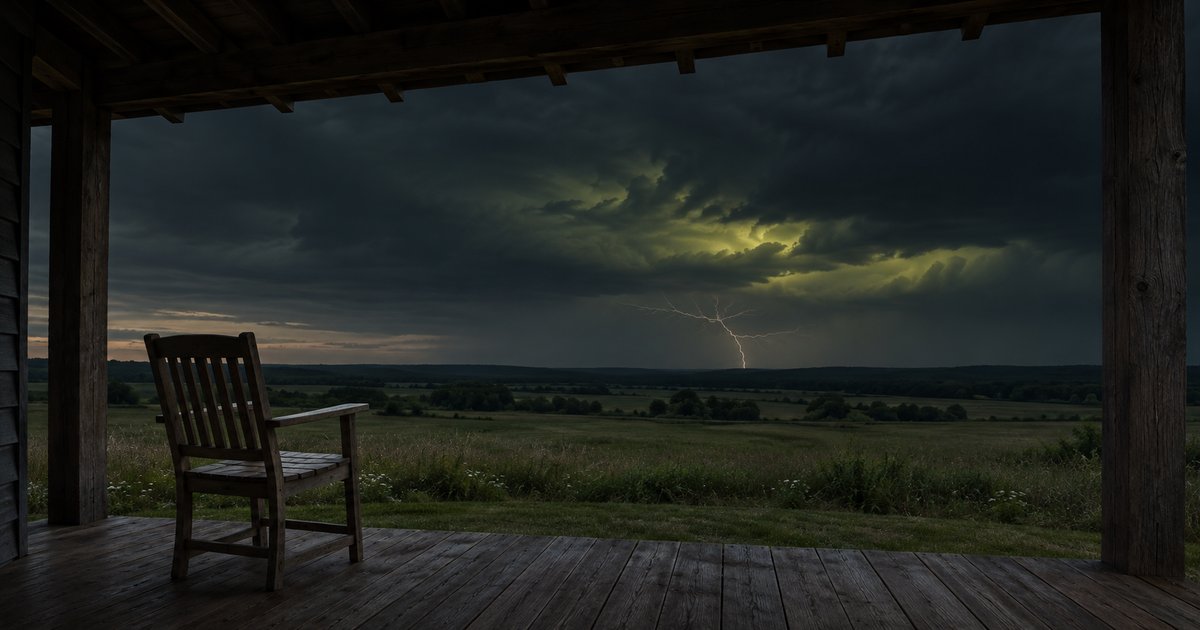
Hear thunder? Go into a substantial building or hard-topped car now. NOAA’s lightning guidance, checked November 2026, says audible thunder means lightning may be close enough to strike; use these short answers to find the right detailed page.
During a storm
What should I do when I hear thunder?
Go into a substantial building or a hard-topped vehicle with the windows up as soon as you hear thunder. NOAA’s lightning guidance, reviewed November 2026, says thunder means a strike may be close enough to reach you, even before rain begins. The places that protect you from lightning include few outdoor structures. (Source: NOAA)
Can lightning strike when it is not raining here?
Yes. The CDC’s July 2026 lightning FAQ says a strike can land as far as 10 miles from rainfall. Do not wait for rain before moving inside; lightning without nearby rain is still a lightning threat. (Source: CDC)
Does a car protect me from lightning?
Only a fully enclosed, hard-topped vehicle with the windows up counts as shelter, according to the CDC’s July 2026 FAQ; convertibles, motorcycles and golf carts do not. The National Weather Service credits the car’s metal shell rather than its rubber tires, and driving in a thunderstorm covers what to do on the road. (Sources: CDC, NWS)
Can I touch someone struck by lightning?
Yes. The CDC’s July 2026 FAQ says a person struck by lightning carries no electrical charge. Call 911 and give first aid or CPR immediately; helping someone after a strike explains the emergency steps. (Source: CDC)
Distance and timing
When can I go back outside?
NOAA’s lightning guidance says to stay in shelter for at least 30 minutes after the last thunder, and any new rumble restarts the count. The reason for that length is in why wait 30 minutes. Check official warnings and conditions before resuming activity. (Source: NOAA)
How far away was the lightning I saw?
NOAA’s lightning guidance gives a rule of thumb: count the seconds from flash to thunder and divide by five to get miles, so 10 seconds is about 2 miles. It is a rough figure for one flash, and flash-to-bang distance explains where it breaks down. If you hear thunder at all, go inside. (Source: NOAA)
Does a 30-second flash-to-bang count mean I can stay out?
No. NOAA’s November 2026 guidance treats any audible thunder as a reason to go inside; it does not ask people to wait for a particular count. The flash-to-bang calculation estimates where one flash occurred, not where the next one will land. (Source: NOAA)
Why can I see lightning but hear no thunder?
Usually the storm is simply too far off for its thunder to carry. NOAA’s NSSL says the popular name “heat lightning” describes ordinary lightning, not a separate kind. The heat lightning page explains why the name stuck. (Source: NOAA)
Maps and alerts
What does a lightning-map dot mean?
A dot is a network’s estimated location of detected lightning activity, not a pinpoint observation you should treat as exact. NSSL explains that radio signals from multiple stations are timed to locate a stroke and that accuracy varies with station coverage. Check the time window and legend when reading a lightning map. (Source: NOAA)
Why is the map blank when I hear thunder?
A blank display cannot rule out lightning. NSSL says flashes outside a detection network can have larger location errors and may not be detected. Follow the thunder and official warnings; how detection networks miss strikes gives the technical reasons. (Source: NOAA)
Is weather radar the same as a lightning map?
No. The National Weather Service describes radar as measuring echoes from precipitation, while NSSL describes lightning networks as listening for radio signals from discharges. Since rain and strikes are different measurements, the two screens can disagree; lightning map versus radar sets them side by side, and neither decides when you are sheltered. (Source: NWS)
Where can I check lightning near me?
NOAA recommends weather.gov forecasts and NWS local radar when planning outdoor activity; a detection map can add observed strikes, but it can miss some. If you hear thunder, enter shelter regardless of what any screen displays. Ways to check nearby lightning compares those signals. (Source: NOAA)
The app
Why did a lightning alert arrive late or not at all?
Lightning Tracker is an iPhone app that checks qualifying detections before issuing alerts. Its support FAQ, checked November 2026, says network gaps, connectivity, notification settings, Focus and background scheduling can affect delivery. Check iPhone storm-alert settings; missing alerts do not mean the storm has passed. (Source: Support)
Can I watch a place without granting my location?
Only with Premium. In Lightning Tracker the free version watches the current location only, which needs location permission; Premium adds up to 5 saved places. The support FAQ, checked November 2026, says a manually saved place works without device location permission. Choosing an alert radius helps set a radius for the time needed to reach shelter. (Source: Support)
Does the app’s timer give an all-clear?
No. Lightning Tracker’s support FAQ says its timer reflects observed strikes and settings, so completion does not establish that a storm has ended. NOAA’s 30-minute rule is measured from the last thunder, and new thunder restarts it. The 30-minute wait timer explains how to count. (Source: Support)
Does the app work outside the United States?
Yes. Lightning Tracker works beyond the United States, according to its November 2026 product rules, but detection coverage and accuracy can vary by region. Check lightning map coverage and sources before relying on a map in a new area. (Source: Support)
Lightning science
How does lightning form?
NOAA’s NSSL describes ice particles colliding inside a storm cloud and sorting electric charge into separate regions. Once the field grows strong enough to break down the air between them, a discharge follows; the leader and return stroke are laid out step by step in how lightning forms. This short answer cannot tell where the next flash will strike. (Source: NOAA)
Is thunder possible without lightning?
No. NSSL explains that thunder begins with the shock wave caused when a lightning channel heats and expands the surrounding air. You can, however, see a distant flash without hearing its thunder. The heat in a lightning channel explains why thunder follows a flash. (Source: NOAA)
What is dry lightning?
NSSL uses the term for lightning that reaches the ground with little or no rain nearby. The discharge is the same as in any storm, and dry fuel is what raises wildfire concern; see dry lightning and wildfires for the difference. (Source: NOAA)
Can lightning strike the same place twice?
Yes. The CDC’s July 2026 FAQ says lightning can strike the same place repeatedly, especially tall, isolated objects. Lightning myths and facts explains why a previous strike does not protect a place. (Source: CDC)
Not a substitute for official weather warnings.
If you hear thunder, seek shelter even if the app shows no nearby strike.
Sources
- National Oceanic and Atmospheric Administration, Lightning Safety
- Centers for Disease Control and Prevention, Frequently Asked Questions About Lightning
- NOAA National Severe Storms Laboratory, Lightning FAQ
- NOAA National Severe Storms Laboratory, Lightning Detection
- National Weather Service, Weather Radar
- National Weather Service, Lightning and Cars